Genomics 101: What are cancer vaccines?
By Florence Cornish onIn this series, ‘Genomics 101’, we go back to basics and explore some of the most important topics in genomics. In this blog, we explain what cancer vaccines are and how they work.
Before we explore cancer vaccines, what is cancer?
In short, cancer is the uncontrolled growth of cells in the body.
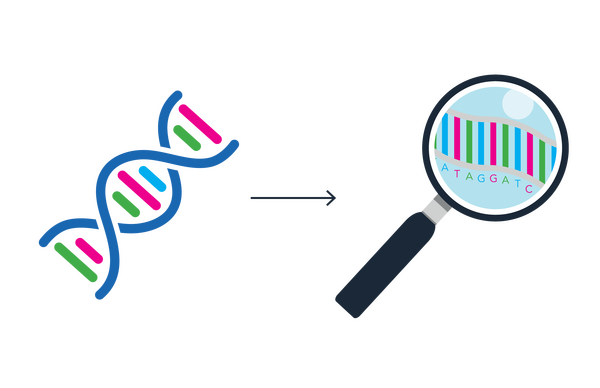
Our bodies are made up of millions of building blocks called cells. Each of these cells contains an instruction manual, known as the genome, and this tells the cell when to grow and divide.
For example, if we get a cut or a wound, our skin cells will divide more rapidly to heal the wound and replace damaged tissue.
However, it is also important that our cells know when to stop dividing.
When the instructions to stop dividing go wrong, cells can start dividing uncontrollably, and in some cases can spread around our body and damage other tissues.
This is what we call cancer – the uncontrolled growth of cells.
How do we treat cancer now?
There are several types of cancer treatments currently used in the clinic.
Some people with cancer might have surgery to physically remove the cancer from the body. Others might have radiotherapy, which uses radiation such as X-rays to damage or kill the cancer cells.
People might also be given medication via injections or oral tablets, for example if they're receiving chemotherapy or immunotherapy. In these therapies, medication travels round the body via the bloodstream to target and kill the cancer cells.
So then, what is a cancer vaccine?
A cancer vaccine is a type of vaccine designed to train the body's immune system to recognise and destroy cancer cells.
Just like how a vaccine for flu helps our bodies to detect and attack the flu virus, cancer vaccines do the same for cancer.
They fall under the group of immunotherapies mentioned above.
But, how do cancer vaccines work?
As we already mentioned, cells have instructions telling them how to divide. When these instructions go wrong, cells can grow and replicate too quickly.
Our immune system can often spot when there is a problem with a cell’s instruction manual, and destroy the cell before cancer occurs. However, sometimes the immune system doesn't detect the problem, in turn leading to uncontrolled cell growth and cancer.
What cancer vaccines do is help the immune system to recognise the problem, allowing it to attack and kill the cells.
Are there different types of cancer vaccines?
Yes! There are 2 broad groups of cancer vaccines.
One of these groups is preventative cancer vaccines.
As their name suggests, preventative vaccines are given to patients before cancer arises, to reduce the risk of it ever occurring.
These preventative vaccines are different from existing vaccines that target viral infections that can cause cancer later, such as the HPV vaccine. Instead, preventative cancer vaccines aim to target the actual cancer cells, and are still in early stages of development.
The second group of cancer vaccines are the therapeutic vaccines.
These vaccines are given to people who already have cancer, or who have had surgery to remove cancerous tissue.
The aim of therapeutic vaccines is to boost the immune system to reduce the chance of the cancer coming back or spreading.
One type of therapeutic vaccines are mRNA vaccines.

What is an mRNA vaccine?
Well, let's start by splitting this into two different words: mRNA and vaccine.
We already know what a vaccine is from the sections above.
mRNA is a molecule in the body that acts as a messenger between our DNA (the instructions) and the parts of the cell that use these instructions to make proteins.
Cancer cells have different mRNA than healthy cells, which means they produce proteins that healthy cells do not produce.
By giving patients mRNA that helps the immune system to recognise these cancer proteins, this will help them to detect and destroy the cancerous cells.
If you think of our immune cells as the police, the mRNA vaccine provides a wanted poster of the cancer, so they know exactly what to look for.
Are cancer vaccines already being used in the clinic?
Though cancer vaccines aren't being used yet as standard clinical practiceI, they are being given to patients as part of clinical trials.
These trials cover lots of different cancer types, and often involve using vaccines alongside other existing cancer treatments as well.
How long until cancer vaccines are used routinely?
Cancer vaccines are still a while away from being used in day-to-day cancer care. However, there is lots of work and research going into making this happen.
The NHS Cancer Vaccine Launch Pad, set up by NHS England and Genomics England, aims to speed up access to cancer vaccine trials for people diagnosed with cancer who are receiving treatment in the NHS in England.
It aims to provide up to 10,000 patients with personalised cancer treatments in the UK by 2030.
And finally...
Prefer to listen? Checkout our Genomics 101 Podcast: How do cancer vaccines work?
You can also read more about cancer vaccines from Cancer Research UK.