Genomics 101: What is genomics?
By Florence Cornish onIn this series, ‘Genomics 101’, we go back to basics and explore some of the most important topics in genomics. In this blog, we explain the term genomics, and how it is advancing our understanding of rare conditions and cancer.
First things first, what is the genome?
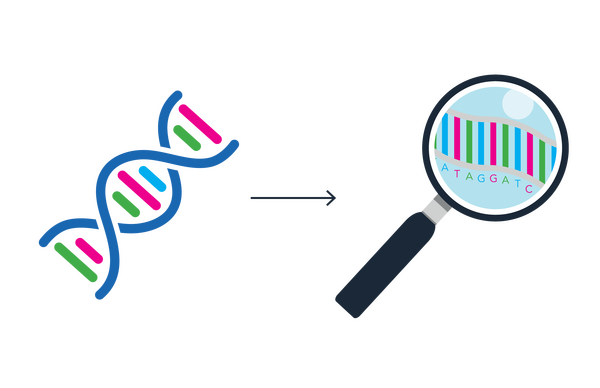
The human genome is the complete set of DNA present in each person.
DNA is a molecule found in all living things. It carries the information we need to survive, function and grow, like an instruction manual for our body.
DNA sequences are made up of 4 different ‘bases’, which we represent using the letters A, T, C and G.
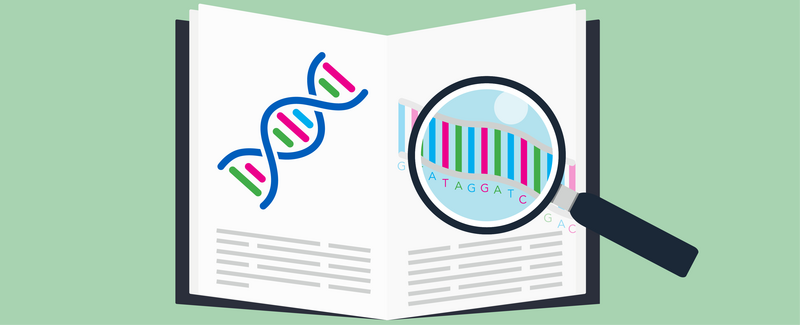
The cells in our body can read this sequence of letters, almost like reading a book, and produce all the different proteins we need.
So then, what is genomics?
Genomics is the study of the human genome.
In other words, how our DNA affects our health, development, and other functions of the body.
There are lots of different ways that scientists can do this.
For example, older, more traditional methods of studying the genome let us look at small sections or a few genes at a time.
However, technological advances now allow us to sequence the entire thing through tests such as whole genome sequencing.
Why is genomics important?
Our genome encodes all the vital information we need to survive. This means if there are problems in the genome, it can sometimes affect our health.
Think of our genome as a recipe book. Now imagine there is a typo in the recipe, like a missing ingredient or mixed-up steps. This changed recipe could affect the final dish, just as changes in our genome could result in a health problem.
Can you give an example?
Sure! Rare conditions are one of the key areas that genomic research is helping us to better understand.
There are estimated to be over 7,000 rare conditions, around 80% of which have a genetic component.
Recent research using data from the National Genomic Research Library uncovered 5 new genetic causes of retinitis pigmentosa – a rare eye condition that causes gradual blindness.
Researchers estimate that this discovery could provide a diagnosis for thousands of people, with over 150 having received a diagnosis already, demonstrating the value of genomics in rare condition research.
You can read more about this research in our previous news story.
What about genomics and cancer?
Cancer occurs due to changes in the genome that affect our ability to control how our cells grow and replicate.
This means that genomics is vital to help us better understand these genetic changes, how they develop, and how we can treat the cancer most effectively.
You can learn much more about this topic in our previous Genomics 101 blog: How can genomics help us understand cancer?
The 100,000 Genomes Project
The 100,000 Genomes Project was a landmark initiative that sequenced over 100,000 genomes from 85,000 participants affected by rare conditions or cancer.
It was carried out by Genomics England in close partnership with the NHS, aiming to find answers for participants whilst making whole genome sequencing part of routine care.
Though sequencing for the project was completed in 2018, approved researchers are still looking through the DNA sequences every day to try and find answers for participants and their families - just like the genetic causes for retinitis pigmentosa mentioned above.
The project led to the formation of the National Genomic Research Library and laid the foundations for the NHS Genomic Medicine Service.
This service allows NHS patients with rare conditions and some cancers to continue to have their genomes sequenced and stored, so that researchers and clinicians can help to diagnose them.
And finally...
Information about DNA and genes can feel complicated, but there are lots of simple resources you can use if you want to learn more.
Checkout our other Genomics 101 blogs, or our Genomics 101 podcast series.