How does participant data enable research?
By Eve Miller and Cong Chen onThe National Genomic Research Library (NGRL) is a research database managed by Genomics England. It brings together genomic and health data from participants who have consented to support research, whether through studies such as the 100,000 Genomes Project or through the NHS Genomic Medicine Service.
Approved researchers use the NGRL to study thousands of genomes alongside health data. By exploring these, researchers can deepen our understanding of rare conditions and cancer, paving the way for earlier diagnoses, more effective treatments and better patient outcomes.
The impact of participants
Every participant with data in the NGRL has their own unique reason for taking part. Whether that’s a personal experience with cancer, supporting a child affected by a rare condition, or to contribute to research for the benefit of others.
Whatever their motivation, genomic and health data are deeply personal. We take our responsibility to ensure this data is handled securely and used appropriately very seriously.
To safeguard participants, all research findings are carefully reviewed before they can be taken out of our secure Research Environment. This process, known as Airlock, ensures that published data complies with participant consent, ethical standards and data protection regulations.
Research projects in the NGRL use de-identified genomic and health data linked to unique participant IDs, meaning researchers do not know who the participants are. As part of the Airlock review process, we collect information on which IDs were used in each study, giving us a unique insight into how participant data is supporting research and advancing our understanding of health and disease.
Participants enable a broad range of research
A single participant’s data can support many different areas of genomic research. Since 2021, the average participant in the 100,000 Genomes Project has contributed to 137 research projects – 61 projects in 2025 alone.
More recently, NHS patients who have used the NHS Genomic Medicine Service have also had the opportunity to donate their genomic and health data to NGRL. This data first became available to researchers in 2023, and is already helping to drive new discoveries.
Researchers working across 54 different projects have generated findings using this data, with the average NHS Genomic Medicine Service participant contributing to 6 research studies so far.
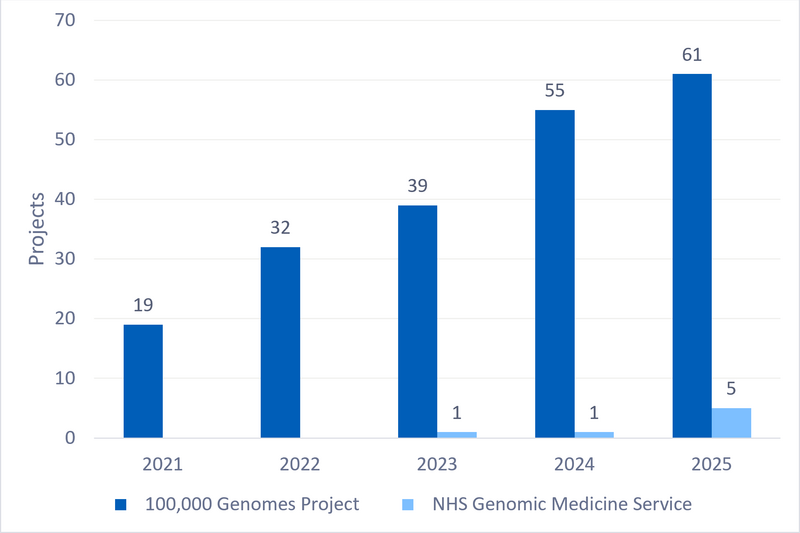
Figure 1A: The average number of projects requesting to export results derived from a participant’s data each year.
In 2021, the average 100,000 Genomes Project participant contributed to 19 different projects, whereas in 2025 they contributed to 61 projects. Projects can run and make requests over many years.
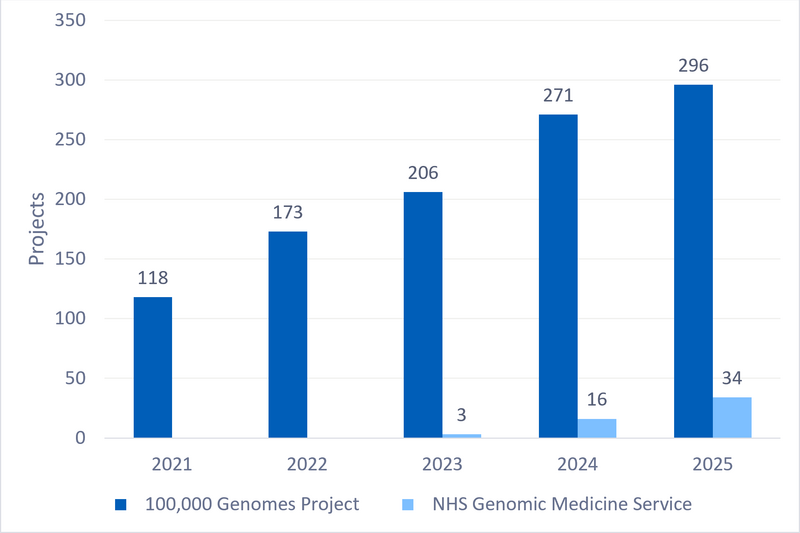
Figure 1B: The total number of projects requesting to export results derived from participants each year.
Projects can run and make requests for multiple participants over many years.
Researchers often need access to large and diverse datasets, including the genomes of people who do not have the condition being studied. By comparing thousands of genomes and health records, they can identify which genetic differences are linked to a condition, and which are part of normal human variation.
As a result, data from a single participant can support studies spanning multiple areas of genomics, accelerating discoveries into many different topics.
Projects from the National Genomic Research Library
Projects using data from the NGRL are organised into 8 research communities. These focus on areas of genomics from pan-cancer and molecular oncology, to variant discovery and clinical interpretation.
90% of 100,000 Genomes Project participants have contributed to research projects in all 8 of these communities, whilst 92% of Genomic Medicine Service participants have already supported projects across 5 communities.
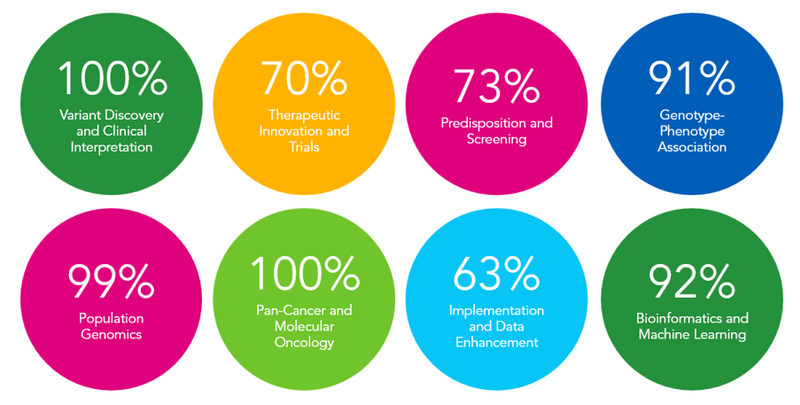
Figure 2A: The percentage of participants who have contributed to projects in each of the Research Network communities.
Projects can be in up to three communities.
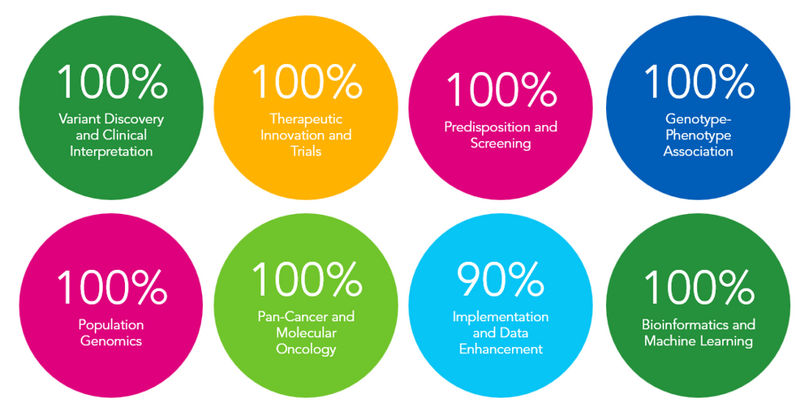
Figure 2B: The percentage of 100,000 Genome Project participants who have contributed to projects in each of the Research Network communities.
Projects can be in up to three communities.
Enabling rare research: ReNU syndrome
One example of research using data in the NGRL that we are particularly proud of, is when researchers used data in the NGRL to discover ReNU syndrome.
This neurodevelopmental disorder is linked to genetic variants in a noncoding gene called RNU4-2. It affects how the brain functions and can impact learning, speech, movement, and behaviour.
The genomes of 2 people, one with ReNU syndrome and one without, may differ in thousands of ways. However, most of these differences have nothing to do with the condition, which means researchers need to compare the genomes of many people to identify the relevant genetic changes.
For this discovery, researchers analysed data from 114,200 participants. They were able to identify a number of variations in the RNU4-2 gene that can now be used to diagnose the syndrome, and are currently helping to advance our understanding of this rare condition.
Clinical Collaborations and the Diagnostic Discovery pathway
Researchers working on ReNU syndrome were able to collaborate with clinical teams caring for patients included in the discovery.
Through the Clinical Research Interface team we have at Genomics England, over 70 requests were submitted to contact clinicians involved in the care of participants. This gave them the opportunity to share more data for research into this novel condition.
Furthermore, findings like ReNU can enable new diagnoses for participants with data in the National Genomic Research Library.
Researchers can share their findings with Genomics England, which can then be returned to NHS laboratories through the Diagnostic Discovery pathway, potentially leading to a new diagnosis.
It is not always possible to provide a conclusive genetic diagnosis for a participant. However, our Diagnostic Discovery team continue to analyse our participants’ data to identify diagnostically relevant genetic variants on the basis of new research.
What’s next?
The National Genomic Research Library continues to grow. By 2030, it will expand to over 500,000 whole genomes from participants in the 100,000 Genomes Project, the NHS Genomic Medicine Service, the Generation Study and other research programmes.
We are continually improving the ways researchers can discover and use data, helping to unlock new opportunities for research. As the library grows and new studies develop, participants will be able to contribute to an increasingly broad range of research, supporting discoveries that could lead to better diagnoses, treatments and care for future patients.
If you want to learn more about the work happening at Genomics England, checkout our other blogs or listen to our podcast.