What does a User Researcher do?
By Adrian Bussone onUser research means studying users to understand their specific needs, motivations and behaviours, so that services and products can be designed to meet them. It can involve methods such as interviews, surveys, and testing, to make sure that products and services are helpful and easy to use.
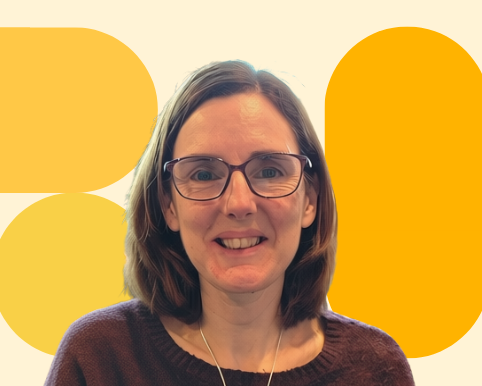
In this blog, Adrian Bussone, Principal User Researcher for Genomics England, shares more about her role and how it impacts patients.

What is a User Researcher?
As a Principal User Researcher, my role centres on creating a deep understanding of the people – users – who interact with systems and services, with the aim of improving their experiences or outcomes.
At Genomics England, we have a surprisingly broad user base, spanning patients, participants, clinicians, researchers, clinical scientists, and more. But we also have internal users, our colleagues, which is what my work lately has been focused on.
Though each day is different, I am always focused on the same task; finding the best method to gather insights on our users. I am a mixed-methods researcher and believe in taking a creative approach to getting answers, so I might be doing desk research, interviews, or shadowing someone as they do their job. I don’t just uncover pain points or opportunities; I create empathy through storytelling and contextual immersion.
A key part of my role is building strong relationships across teams and networking with colleagues in all parts of the organisation. By making these connections, I build advocates for user-centred approaches, helping to keep the focus on building inclusive and efficient products and services.
This is one of my favourite parts of my job, and I’ve found that it not only enhances how we work together within the organisation, but also improves external user experiences, ultimately supporting Genomics England’s mission.
My road to Genomics England
I’m not the kind of person that plans their life out, so I never expected that I would be working at Genomics England!
I’m from the USA, which is where I did my undergraduate degree. I graduated with a Bachelor of Fine Arts in Industrial Design, and took on a role at a medical device consultancy shortly after. That’s where I moved from design to research, and I have never looked back.
I have since worked on everything from human-use studies to evaluations for FDA submissions, and learnt some of the most important lessons in carrying out effective and ethical research.
Eventually, I decided to pursue a master’s degree in human-centred systems, which brought me to the UK. I loved learning so much that I applied for a PhD studentship at the same university, before going on to work at a large pharmaceutical organisation.
Then, about 4 years ago, I discovered Genomics England, and I knew it was the perfect place for me.
The impact of my work on patients and participants
What I love is that every person working at Genomics England has, in some way, an impact on patients, participants, and the use of genomics in healthcare. We all help to achieve the mission together.
Personally speaking, my work allows my colleagues to do their jobs more effectively, efficiently, and safely. That means their work gets done better and quicker, which in turn means that patients, participants, and researchers, see benefits faster.
It’s all connected, and we’re all working towards the same thing.
"What I love is that every person working at Genomics England has, in some way, an impact on patients, participants, and the use of genomics in healthcare. We all help to achieve the mission together."
What makes me passionate?
I have always loved that ‘aha!’ moment; that moment when you finally figure out a particularly confusing topic or scenario.
At Genomics England, I am lucky enough to get that moment at least once a month. I joined because I love research, and I love making sense of complicated things in a way that simplifies it for others. The fact that I can do that over and over again and constantly learn new things? Pure bliss.
And finally, what's coming up next for me?
I’ve just finished some discovery work on a set of tools that will positively impact the entire organisation. I’m hoping to get involved in the implementation of those tools, particularly with a lens on developing smoother, user-centric processes that make everyday activities better for our engineers.
I’m also planning on taking some classes to refine my strategy skills and, outside of work, embark on some long-awaited travel.
If you want to learn about some of the other fascinating roles at Genomics England, checkout our careers blog series.