Genomics England Research Summit: Driving genomic medicine forward
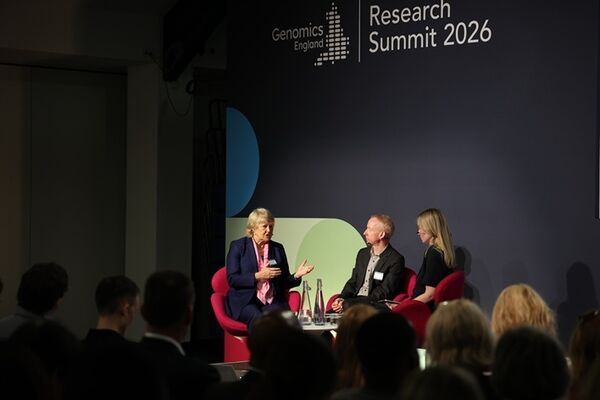
Genomics England’s 2026 Research Summit brought together researchers, clinicians, industry partners, and technologists in a showcase of the science driving genomic medicine forward.
This year’s programme had a strong focus on innovation and next-generation technologies, with the summit highlighting new opportunities for discovery, collaboration, and real-world impact. Those in attendance heard about some of the most exciting breakthroughs that are shaping clinical care today as well as some of the advances and developments in genomic medicine that could revolutionise how healthcare is delivered in the future.
The event featured talks, panel discussions, posters and exhibitions from some of the world’s most prominent figures across genomic research, government, industry and the NHS, and patients and participants in genomic research.
Genomics is a key focus of the 10 Year Health Plan for England, being identified as one of the 5 transformative technologies that will personalise care, improve outcomes, increase productivity and boost economic growth. Genomics England has a key role to play in this through its digital systems and by generating the evidence to inform how genomics could be embedded into routine care - shaping future approaches to earlier diagnosis, prevention and more personalised treatment.
Some of this year’s talks from the Research Summit included:
- The Generation Study: Speakers from Genomics England and University College London discussed emerging evidence and results following more than 50,000 participants joining. The Generation Study – led by Genomics England in partnership with NHS England - is using whole genome sequencing to look for more than 200 rare conditions in newborns that can be hard to diagnose and for which NHS treatment is available.
- Pharmacogenetics: do you have your DNA passport?: Adverse drug reactions have been estimated to account for one in 16 hospital admissions in the NHS. This session detailed implementing pharmacogenetics in the Netherlands, successes and challenges, and how DNA passports could revolutionise patient care through more informed drug choices.
- The next version of the Research Environment: Genomics England’s Research Environment allows researchers to access one of the largest and most comprehensive genomic datasets for rare conditions and cancer. This session covered ongoing work towards a new environment to improve researchers’ ability to analyse data within the National Genomic Research Library (NGRL).
- ReNU syndrome: updates and progress towards therapies: ReNU syndrome is one of the most prevalent known neurodevelopmental disorders and was discovered through data in the NGRL. This talk outlined some of the key developments since this discovery was made in 2024.
- Can genomics transform health outcomes for the adult population: Speakers presented early findings from Genomics, Healthcare and You. This is an engagement programme to inform the design of a new research study led by Genomics England that will explore how genomics could be used in routine, preventative healthcare for adults.
The event was closed by Dr Sergei Yakneen, Non-Executive Director on the Board of Genomics England and Strategic Advisor to Isomorphic Labs Limited. Dr Yakneen discussed the UK’s global leadership in genomics, with NHS integration being a key differentiating factor behind this. He gave his reflections on artificial intelligence and its intersection with genomics, drawing on his own extensive experience in the space, also highlighting Genomics England’s role more broadly in translating research into patient benefit at scale.
“Our Research Summit is one of my personal highlights of the year, when we celebrate what everyone is achieving together and the difference that we’re all making.
“In the past year, the publication of the 10 Year Health Plan for England and the Life Sciences Sector Plan has provided a clear path forward for us. There’s great potential in genomics and just as importantly a real optimism that we can harness that potential. Our mission is to provide digital systems and evidence so that by 2035 genomics could play a role in up to half of all healthcare interactions, and the UK’s position as the best place to discover, test and benefit from genomic innovation is secured.”
Professor Rich Scott
Chief Executive Officer of Genomics England