The Generation Study helps detect baby’s rare growth condition
Doctors at Cambridge University Hospitals are “thrilled” by a baby’s positive response to treatment after her rare genetic condition was diagnosed following results from the Generation Study.
The Generation Study is a world-leading research study led by Genomics England in partnership with NHS England that is using whole genome sequencing to screen 100,000 newborns and look for more than 200 rare genetic conditions.
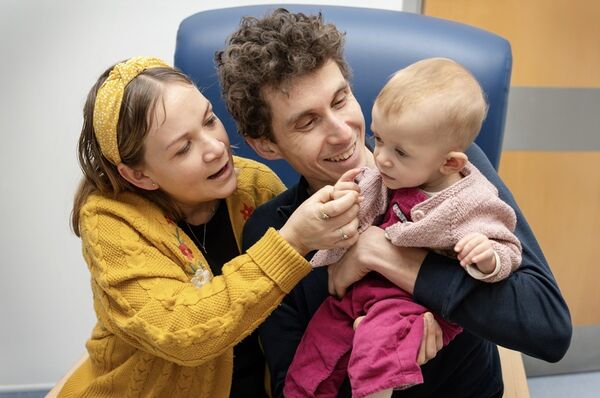
Safi Ford from Cambridgeshire is one of the participants and was diagnosed with isolated growth hormone deficiency (IGHD) shortly after birth, meaning she was able to start treatment early.
Between 60 and 150 babies are born in the UK each year with IGHD, a condition which affects their growth leading to them being much shorter than average.
Now 13 months old, Safi is catching up with other children her age and has grown 15cm since starting treatment. If treatment continues, her adult height is expected to be within a typical range and unaffected by IGHD.
Although Safi is the first in her family to have genetic testing she has relatives with the condition. Her mother, Dorka, her brother and her father all have IGHD but were diagnosed later in life.
"I'm grateful for the opportunity for Safi to take part"
Safi’s mum, Dorka, said: “The Generation Study has given my family answers and allowed Safi to avoid unpleasant tests and start treatment sooner. Having the genetic result meant we could all stop worrying. I'm grateful for the opportunity for Safi to take part in it.
“I couldn’t start treatment early. I only started the therapy when I was about 17 and by then it didn’t make a huge difference to my height. I would have liked to have started sooner and I’m glad that Safi will get that chance.”
People with IGHD can be treated with growth hormone therapy that, if started early enough, stops the effects of the condition and allow them to grow at a more typical rate. Safi started treatment in July 2025 and will need daily injections of growth hormone until she is around 25 years old.
IGHD is caused by genetic changes that affect the production of growth hormones, chemicals produced by our bodies to drive growth. Treatment replaces these missing hormones with an artificial substitute.
“We believe genomics can transform healthcare in this country and be used to get ahead of serious illness. It’s been incredibly moving to see the lifechanging impact the Generation Study is having for families.
“Every year thousands of babies are born in the UK with rare genetic conditions, but they can be hard to diagnose. On average, it takes around five years for a rare condition to be diagnosed, at which point it has often progressed to the point where treatment, if it exists, is far less effective."
Dr Rich Scott
Chief Executive Officer of Genomics England
"The team and I are thrilled with how well Safi is responding to the treatment. It is very positive to see her growing and that her size is starting to catch up with what we would expect for a child of her age.
“With the help of the Generation Study we have a clear genetic diagnosis for Safi. It has made it much easier for us to identify the right treatment and to get her started on it sooner. If all goes well, her life should be unaffected by her condition.”
Dr Emile Hendriks
Consultant paediatric endocrinologist at Cambridge University Hospitals NHS Foundation Trust, who is treating Safi