Can we change the rules of medicine?
Advances in genomics are making it possible to develop treatments for individual patients with rare genetic conditions. But how can we get these treatments to the people who need them when traditional medicine development is designed for much larger groups of patients?
In this episode, our guests explore the challenges of developing and approving personalised medicines, and how researchers, regulators and patient advocates can work together to bridge the gap between scientific advances and patient access.
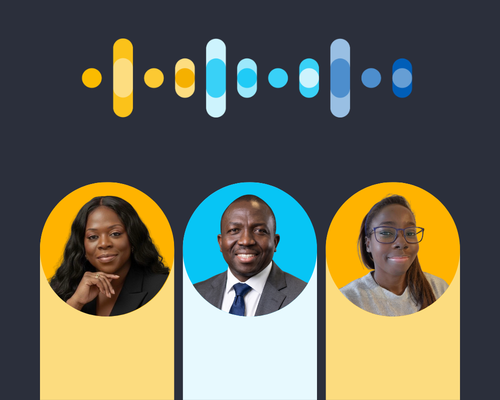
Our host Sharon Jones is joined by:
- Dr Dan O’Connor, Executive Director Regulatory, Association of the British Pharmaceutical Industry (ABPI)
- Julia Vitarello, founder and CEO of Mila’s Miracles Foundation
- Professor Rich Scott, CEO of Genomics England
If you enjoyed today’s conversation, please like and share wherever you listen to your podcasts.
“The technology's there, and it's now just saying, "Well, actually, can the system catch up?" And that's really the clear message I think we have to do. We've got to somehow align with the fast-evolving opportunities that new technology will offer us, and ensure that patients get the medicines they really need.”
You can download the transcript, or read it below.
Sharon Jones: Hello and welcome to Behind the Genes, the podcast that brings you the stories, research, and innovations shaping the future of genomic healthcare. For decades, medicines have been developed and tested for large groups of people, but advances in genomics are opening up new possibilities, including treatments tailored to an individual's genetic condition.
So how do you adapt a system built for thousands of patients when there may only be a handful of people in the world who could benefit from a particular treatment?
[00:00:30] Today, we're exploring how researchers, regulators, and patient advocates are working together to rethink the way new medicines are developed and approved.
I'm Sharon Jones, and joining me today are Dr. Dan O'Connor, executive director regulatory, the Association of the British Pharmaceutical Industry; Julia Vitarello, Mila's mum, and founder and CEO of Mila's Miracles Foundation; and Professor Rich Scott , CEO of Genomics England.
[00:01:00] By the way, you're going to hear a powerful story from Julia about her daughter, Mila.
Sharon Jones: If you want to hear it in full, the episode is called Mila to Millions, and you can find it in the episode description. Julia, I'd like to start with you. You've shared your story with us on the podcast before, but for listeners who may not know it, can you briefly explain what's brought you here today?
Julia: Yeah. Thank you, Sharon.
[00:01:30] My daughter, Mila was born completely typical and was running around and hiking and singing and playing like other children until she was six when she was diagnosed with 100% fatal rare genetic disease called Batten Disease. And I was told in just one minute that my daughter would lose all of her abilities and die in the next few years.
As you can imagine, my life in many ways ended in that moment. All my hopes and dreams of my daughter just were erased in one minute to the next.
[00:02:00] But I saw her fighting. I saw her lose her vision. I saw her lose her ability to eat by mouth and have a G-tube put in and start having up to 30 seizures a day, and she was still smiling and laughing.
And I just said, "You know, if she can fight, I can fight." And I started a foundation and raced against time alongside Boston Children's Hospital and Dr. Timothy Yu. And in a very miraculous, Herculean effort to save my daughter's life, we moved to Boston one year later, and my daughter started receiving a medicine called Milasen that was named after her.
And the reason it was named after her is because while her condition was already very small with only 25 children in the world at the time, she was the only one that shared that specific mutation and the only one that could benefit from that medicine. And at that time, my daughter then became the first person in the world to receive a medicine for one person.
It stopped her disease for the first year, um, but it wasn't in time for her. When she was 10, she died.
[00:03:00] And the reason that I am still here is because my daughter showed what was possible, that we now have the incredible science and technology to be able to find the root cause of disease, often a single mutation, and design a medicine, even if it's unique to one person.
And so I have been on a mission here to try to figure out how to help the millions of other families like mine in need.
Sharon Jones: Julia, thank you for sharing that. I mean, you know, it's a difficult listen and, you know, thank you for kind of going through what you've been through for, you know, numerous times on this podcast and sharing with listeners how, how hard that was.
Milia's story is incredibly powerful, and what really comes through is how much you fought to find answers. You know, that advocating, that determination, and how that journey has gone on to open up possibilities for, for many others. So, thank you for sharing that.
So Dan, to help us understand the system that families are currently navigating, can you talk us through what happens when a treatment is discovered and what currently has to happen before a patient can receive it?
Dan: Yeah. Thanks, Sharon, and thanks, Julia, for highlighting Milia's story. It's been really inspirational, I think, for some of the work that we've seen in the UK. Yeah, so when you, when you get a discovery, it's just the beginning of, of the journey to patient access, and I think sometimes patients and families, I'm sure Julia can understand this as well in her story, that it seems frustratingly slow.
[00:04:30] There's a lot of different hoops and jumps that you have to go through to ensure what we all want for the medicines, that the medicine works, it's got what's called efficacy and that it's safe. And those are really important aspects to any new medicine. So once you've got that discovery, there's a number of things that have to happen, as you move through that medicine through initially what are called non-clinical studies.
[00:05:00] So those are the studies before you enter the clinic, and then hopefully you learn sufficient information about the medicine during clinical trials that you progress through to a medicine that you hope the benefits are gonna outweigh the risks. And it's really important that we do those tests so that we don't create medicines that don't work as well as they should.
But equally, we have to balance the timing, that we have to try to really be careful around missing the opportunity to treat children as early as possible because that can be really important in their disease.
Sharon Jones: [00:05:30] And in terms of kind of how long that takes, what kind of timeframe are we looking at?
Dan: I think traditionally we always said it takes almost 10 years, sometimes longer, to develop a medicine. I'm really pleased to say that I think things with the really exciting 21st technology that we've got, things are definitely moving faster now, and I think we are seeing the huge opportunity, the advances in diagnostics, in the life sciences, using even synthetic data is really coming through.
[00:06:00] So data that is generated using different computer programs. All of those, I think, are converging in a way that's really, really exciting. And then we have these new treatment therapy modalities. So cell therapies using I'll call oligonucleotides, so genetic therapies, gene therapies. So we're at an amazing time of opportunity.
I think what we really need to do, and we've done a lot of this thinking in the UK but also in other countries, is so how do we really bridge the science to the patient, and how do we ensure that we don't put up barriers, but we, we make sure that the journey to treatment is as safe as possible.
Sharon Jones: [00:06:30] Thank you. And so one of the initiatives around putting that into practice is the Rare Therapies Launchpad. So Rich, can you explain to listeners what the Rare Therapies Launchpad is, and how is that helping to deliver this new era of individualized medicines?
Rich: So the Rare Therapies Launchpad is a collaboration of a number of different parts of the system in the UK and people who really want to change how rare therapies can have an impact for patients and families. [00:07:00]
We've heard from Julia, and Julia's been at the heart of the Rare Therapies Launchpad from the outset, really setting that, the clarity on the challenge. As we've heard, these rare conditions can be really serious from the outset. The potential impact on and, and often with quite high level of confidence we can say there will be a, you know, really difficult course for someone with a particular diagnosis.
[00:07:30] What we need to do is look at that journey, which we know we've heard can be, you know, months, in fact years, substantial numbers of years in the standard way in which therapies are identified, tested, and validated in terms of their impact, and really say, "How can we bring together different bits of the system and look end to end and say, 'How can we speed this up?'"
Because the balance here for serious rare conditions that have really challenging and, you know, bad outcomes for patients means that we need to do better than we are today. So it's looking across the end to end. So saying, "How can we find answers for people soon enough that we can even be thinking about finding a treatment?"
Then, how can we move from just finding an answer to very quickly, and not just in families, in situations like Julia, where Julia had to be so proactive and creative in finding a path and finding a group like Tim's, all of this was above and beyond, outside the norm.
How can we make that process with the new science that's coming along, with our ability and the infrastructure we have in the UK to hold data in ways that should make it possible to find these answers sooner? How can we streamline that and how can regulators and policymakers adapt the approaches so that they're proportionate and work, and that this is a cost-effective approach end to end?
And finally, how do we do that not just thinking about it one patient, one family at a time. How can we actually recognize that the current setup is really challenging for rare therapies? The UK is uniquely placed to provide quite a few of those links in the chain that are already there, some of the basics.
But also, for example, our regulator, the MHRA, has shown real open-mindedness in terms of saying, you know, "We want to look at what, what needs to change so that this can work, so that this is sustainable, and so that the evidence is there. This isn't about saying we move away from expecting that evidence.
[00:10:00] It's about learning from early experience how we can create a system that really works in that joined-up way, and that's what the Rare Therapies Launchpad is about.
Sharon Jones: Thank you. It feels like there needs to be - you've touched on that kind of collaboration piece and, you know, the stuff around funding and the cost of it all and the speed this needs to happen.
Meanwhile, it does make you sort of wonder how, how possible this is and how quickly this can happen.
[00:10:30] So Julia, having seen this current process from the sort of patient and the advocacy side, what do you think regulators and the wider healthcare system need to understand about the lived experience of families trying to access these kinds of therapies?
You were racing around trying to find answers, raising your other children. What do you think needs to change?
Julia: That's a good question. I mean, I think the reality, what I learned in this was that the system was obviously made for population medicine, for large diseases. And when it comes to genetic conditions, there aren't that many that are large that fit the current system, and one might say that that works really well if you have tens or hundreds of thousands, or probably hundreds of thousands and more probably per patient, patients per medicine.
But for genetic diseases, maybe that's a dozen that are large. And there are 10,000 that are small. My daughter's was just one of those, right?
[00:11:30] And a system made for, like Dan said, for 10 years, maybe even if it's less, it's still, you know, eight years and probably nearly a billion dollars or pounds, and it's just too much, right?
And even when you whittle it down to a smaller clinical trial, unfortunately, we not only have 10,000 small genetic conditions, but those patients are being further sub grouped, like we saw with Mila, by mutation, which means now we have tens of thousands of very, very, very small groups of one or a few or a dozen or so, and the system was really not made for that.
[00:12:00] And so I think that regulators and the system in whole needs to understand that science is changing, and we have the ability now to pinpoint this root cause. And then as a result, we now are going to have extremely small cohorts of patients, and we're gonna have 10,000 plus of them, you know?
So we're gonna need to change the way we do things, and I think what I've learned is a few things.
[00:12:30] One of them is parents selling cookies and lemonade and raising millions, and clinicians becoming drug developers and also having to raise money, often with grants, and somehow dropping everything they're doing for, you know, a one or two-year sprint for a single child, is there's nothing sustainable or even scalable about that.
So, what I've also learned is that changing a mindset is extraordinarily difficult for almost all humans, and it is very hard after many, many decades of doing things a certain way to accept that the status quo is just not acceptable. And parents are learning that their children are amenable to today's incredible science and that they just can't access it, not because of science anymore.
That used to be the problem. You couldn't find Milas and you couldn't certainly make medicines for them, but now you can. And so I think when parents realize that, it really becomes an incredible moral imperative and, and you can't have the regulator, for example, impede access just because they say that this is just how you do it.
[00:13:30] So I think the MHRA is doing a really great job at starting to open that door and starting to shift the mindset, but that's what we need.
Sharon Jones: Yeah. Thank you. And, and one of the things you touched upon is evidence. Dan, what counts as enough evidence where there may only be, like, a handful of patients worldwide?
Dan: I think as Julia said, I think it's increasingly recognized by regulators and others that it's just not feasible to collect the type of evidence that we would have done in the past.
[00:14:00] And in rare diseases, you have many different challenges when you're thinking about collecting that evidence. As highlighted, you've got small numbers of patients.
It's harder to design the clinical studies. Many rare diseases are positioned in the paediatric setting, so for children, and that adds to the complexity. Smaller populations mean that the data that you get is often more likely you'll have missing data, so you might have the wrong interpretation of that, of that data.
[00:14:30] And, and often in rare diseases, we don't really always understand the natural history, so how, how does the disease progress? So it's really important that when we're thinking about collecting that data, we measure the right things that are important to patients. And sometimes that's missed because we don't know what to measure, and we don't know how to measure those really important things.
And it's often families and the patients themselves that will tell the regulators, "No, no, I saw a difference in my child. I saw that difference." And the question is, how do we capture that in a meaningful way?
[00:15:00] But I think the really good news is that we increasingly have the tools to do that using digital technology and what are called wearables, so you can sort of have opportunities that we didn't have in the past to be able to, to monitor and collect that evidence.
But there is definitely a need for that mindset change. I think we are seeing that mindset change with regulators. I think regulators want to authorize drugs that work well in patients, but they also wear the hat of ensuring safety for those patients.
[00:15:30] And I think we are seeing a shift in the thinking around how we measure the benefits and risks of medicines development.
But I think there are still a number of challenges that we still need to try to resolve to make sure that patients get the medicines as soon as they possibly can.
Sharon Jones: What else is needed? What do you think will sort of, you know, move the dial even further?
Dan: There's, there's no doubt there's a need for a sort of cultural shift across the ecosystem. You know, some drug development is considered to be quite conservative.
[00:16:00] It's always done a certain way, and so it's kind of moving through thinking about a new way of working. I think what we really need is some good examples of how we can get it to work. As Rich said, that end-to-end pathway, how do we really ensure that we can demonstrate that we can do this, and that we can do this in a way that is safe and proportionate, and then we can scale that, and we can bring out the right roles and responsibilities, the right accountability, and that we can deliver these medicines at the right time to the right patient using the 21st-century science that we now have in our hands.
[00:16:30] And I think we are getting there. We're starting to see some really good examples of where treatments are coming through to patients. But we really need to accelerate that. Ninety-five percent of rare disease patients don't have any opportunity for therapy. And we, if we continue down the current approach to how we develop drugs, I mean, we'll be here for thousands of years before we've managed to reach every single patient, and I think we collectively all think that's completely unacceptable.
[00:17:00] We have to work harder to try to think, "How can we move faster, but how can we move faster in a way that is proportionate and safe and really has the patient focus in mind?"
Sharon Jones: Yeah. There's also something about access as well. I know, Julia, you touched on that point about access and how do people find their way through what seems like a very complicated and not necessarily joined up system at the moment.
Sharon Jones: So making this work requires a huge amount of collaboration, as we've kind of just touched upon.
[00:17:30] Rich, with that in mind, how important is it that organisations across research, healthcare, regulation, and patient advocacy work together as these rules change and develop?
Rich: It's absolutely crucial. As, as we've been saying, this is about a sort of an end-to-end long journey.
You heard from Julia right at the beginning about what she had to go through and how much of that took that, that tenaciousness, that ability to navigate a really complicated process all the way from a family back to a family receiving something that should have some benefit via healthcare, via researchers, understanding all of the different pieces in the chain.
You know, the first thing, and you've heard it really clearly here, the current system was not designed to work in this setting for, for rare therapies. The first thing that's really important is to, and that's happening through the Rare Therapy Launchpad and the work more broadly on rare therapies here in the UK, is recognising that the current system is not set up to work for this.
The status quo is not okay. We need to have this as something that is the expectation for patients and families with rare conditions. We've got a number of the links in the chain that mean that we're relatively well-placed in the UK, but that doesn't mean that we have all of them.
[00:19:00] So there are gaps, and there are linkages between the different pieces of the chain that need joining up. And it's only when you really come together and look, align on where you're all aiming to head and really do the, that detailed work to identify where you need to get better alignment, or whether you need to fill in a gap, whether you need to work with another group, another organization to make sure that that piece really works.
[00:19:30] And crucially, to have the families and the families' voice there to be at the heart of it and really be clear. This is about balancing risk and benefit. And the people who are going to be making those choices, they need experts to support and think about where we are, how we establish and use some of these technologies.
But the bottom line is this is putting people in a position to make the right choices with enough information about what we know about the benefits and what we know about the risks.
These are families in a situation where the risks of no action are often very clear. What we need to do is create a system that puts them in a position to be empowered to make choices without having to become experts themselves.
What's so exciting that it really is realistic for us to think about rare therapies being the norm for rare conditions. How can we get to that position?
Sharon Jones: Thank you. I mean, Julia, reflecting on what Rich has just said, what do you feel about that, having been through this yourself?
Julia: I mean, I think what Rich is saying is, is spot on, and I think that going back to the difficulty of changing mindsets, it really starts with that. So if people in positions of power at all the different pieces along the way of that chain that Rich described don't change their mindset then and just sort of default to how we've always done things, then we'll be here having this podcast and having the same discussion in 10 years, which is what that means actually is millions of children's lives around the world.
[00:21:00] It's been 10 years next month since Mila was diagnosed, and I've seen great progress in some ways, and I've also seen and experienced incredible frustration at the inability to realize that Science and technology are changing, and the system has to change with it. And I think that the Rare Therapies Launchpad was really started - I remember talking with Dan for the first time, and we sort of, like, picked it up and ran with it and put all the people, including Rich and Genomics England at the table to think, instead of just talking about this, how do we demonstrate it?
That's really where things change, 'cause it's great having the discussions, but until you actually start treating dozens and then hundreds and eventually more of children that have fatal and life-threatening conditions starting in the UK and, and you won't really see the system change because you might see words on paper and, and we have seen that with the MHRA, and it's really exciting.
It absolutely opens the door to doing things differently.
[00:22:00] But until you actually push these cases through and force everyone at the table to figure out something that's never been done, it just becomes hypothetical, and I've watched that now for so many years, and the only measure that I use to see whether or not we're successful, we as in the whole field, is very simple.
It's – are there exponentially more children like Mila being treated? And the answer is no. So whatever we're doing is not working. So we need to take it a step further now that people are actually changing their - they're looking over there and not over here, then now we need to actually make it possible for companies which can't exist in this space 'cause these medicines are not approved.
They're Hail Mary, one-off academic experiments until they're approved and until we're able to group many, many medicines that have a commonality within parameters at the same time. You know, going one by one, we can do the math. We'll be here in, I don't know, a few thousand years. So I think we've opened that door.
[00:23:00] Now we have to actually demonstrate, and I think to Rich's point, the UK is very, very well positioned to be the one to demonstrate that, but that does mean actually doing it and not just saying it
Sharon Jones: Yeah. And Dan, are you, are you in agreement with that?
Dan: Yeah, fully, aligned with that. I think we've got a really exciting opportunity in the UK.
I think we've got many of the pieces of the jigsaw, we've got to really pull them together, and we've got to demonstrate we can work it, at scale and then in a way that's really sustainable. Because if we treat one or two patients, that's of course excellent for those patients and their families.
But ultimately, with the fantastic work that Rich and the teams at Genomics England do and elsewhere, we're going to find more and more of these patients as we scale up our diagnostic capabilities in newborn screening and other opportunities. So we really have to fix this disconnect between the science and the patient.
We really have to do that.
[00:24:00] And I think through initiatives like the Rare Therapies Launchpad, the MHRA's new rare disease framework, there's really an opportunity to think differently. But not only to think differently, but to act differently. And I think if we can bring all those together, and we can demonstrate that we can do this, and as Julia says, if we can start to treat those patients and demonstrate visibly that we can do this and that we can do this at scale, then hopefully everything else will fall into place, and we can persuade policymakers and others that actually this is really something that we can do, and we can do it really well.
Dan: [00:24:30] And it makes an impact not only to patients, but broader public health and the UK as a whole from an economic perspective because we can drive innovation in life sciences by creating the opportunities to develop and access medicines in the UK.
Sharon Jones: Yeah. It sounds like there's, there is that opportunity. It's just that drive and that thought into action and that collaboration piece just all coming together, and we're not quite there yet. So Rich, looking to the future, how can advances in diagnosis, screening, and personalised treatments work together as one connected system to deliver better outcomes for patients with rare conditions and the NHS?
Rich: Just reflecting on a number that we just heard, which is that 95% of patients with a rare condition don't have a specific targeted treatment that we can offer. I think, genuinely think, as I said before, we can shift from that, that being the exception to that being the norm, and to that being something which the whole health system is just able to deliver in the standard flow, and that we can continue to learn as we go so that this doesn't always have to be in a sort of very separate sort of trial setting.
We've heard from Julia, this is about sort of recognising that in many ways, each of the individual people who benefit from these treatments, often they're unique. We need to be able to continue to learn so that we can build that knowledge for those patients and those in the future.
Sharon Jones: [00:26:00] So we've covered a lot today from the challenges of developing treatments for a very small number of patients to how genomics, regulation, and collaboration could find a way forward.
Sharon Jones: But before we finish, I'd like to ask each of you the same question. What are you most hopeful about when it comes to innovation in medicines? And I'll start with you, Julia.
Julia: [00:26:30] I am most hopeful that the UK will be the place that actually will demonstrate regulatory shifts that instead of approving one medicine for one disease for one child at a time, it will really approve the process, a standardized process for developing those medicines, and that will allow for exponentially more children to access today's technology when they're actually amenable to it.
I think the MHRA's recent rare disease framework that came out earlier this year is very, very promising and opens the door.
[00:27:00] It's not all the way there, so it's gonna require even further shift. And my hope is that when sponsors, whether they are for-profit, non-profit, doesn't matter, show up to the MHRA, that they respond well to that and that they work over the next few years to really demonstrate that shift towards what I would call process approval.
I think the door is open to do that, so I'm very hopeful that the UK will create a blueprint and then other countries around the world, it'll be easier for them to understand what this is 'cause it's a concept right now, and then be able to replicate a version of that in other countries and then now we start seeing what we all hope, which is exponentially more sick and dying children to start with accessing today's incredible science and technology.
Sharon Jones: Yeah. Thank you. And Dan.
Dan: Difficult to follow that one, I think, but I would say, I mean, we live in an amazing time of new opportunity, and innovation is embedded in that. It's in, it's embedded in the science, it's embedded in the technology, it's embedded in the regulators. And so to me, I think we just need that clear alignment.
We need that shared vision that we can use the fantastic science that exists, the opportunity to treat patients with these new therapeutic modalities, and we can find this end-to-end pathway which will allow us to treat patients at scale in a sustainable way.
And I think if we look where we were maybe twenty or thirty years ago, the, you know, the blockers was the science.
[00:28:30] The blocker was the fact we couldn't do this. We just technically couldn't do it. That's no longer the case. In many disease areas actually, we've seen a fundamental shift in the opportunities. Have we got it all right? No. And there are areas we still need to learn so much more.
But the technology's there, and it's now just saying, "Well, actually, can the system catch up?" And that's really the clear message I think we have to do. We've got to somehow align with the fast-evolving opportunities that new technology will offer us, and ensure that patients get the medicines they really need.
Sharon Jones: Yeah. There's definitely something about pace there. And Rich?
Rich: So our vision as an organisation, and, and shared with the NHS from a genomics perspective, is a world where everyone can benefit from genomic healthcare. And I think what Julia describes is what we need to do for people with rare conditions and their families.
It's to really live up to that where that is a democratised routine access to what the science can allow with the evidence, with the support around it, with a health system able to provide it, and I'm really optimistic that we can get there.
Sharon Jones: Thank you. And on that positive note, we'll wrap up there.
Sharon Jones: A huge thank you to our guests, Dr Dan O'Connor, Julia Vitarello, and Professor Rich Scott for joining me today as we discussed whether we can change the rules of medicine.
Julia: Thank you.
Dan: Thanks for the opportunity. Thank you.
Sharon Jones: [00:30:00] If you enjoyed this episode and you'd like to hear more, please subscribe to Behind the Genes on your favourite podcast app.
Sharon Jones: I've been your host, Sharon Jones. Behind the Genes is produced by Deanna Barac, Sophie McLachlan, Florence Cornish, and Patrick Wallace at Bespoken Media. Thank you for listening.