How is genomic research being guided by patient and participant voices?
In this episode, we celebrate 10 years of the Participant Panel and explore how genomic research is being guided by patient and participant voices.
Made up of people who have consented for their genome, or the genome of their loved one, to be included in the National Genomics Research Library, the Panel plays a vital role in shaping how research is designed, how data is used, and how genomics is communicated. From influencing policy discussions to to advising the Genomics England board, their work helps ensure lived experience is embedded from the very beginning.
Over the past decade, the Panel has driven meaningful change. From advocating for greater transparency and accessibility, to challenging how the genomics community talks about genetic conditions. But beyond the impact, this episode focuses on the people behind the work: their motivations, experiences, and the realities of representing a wider community.
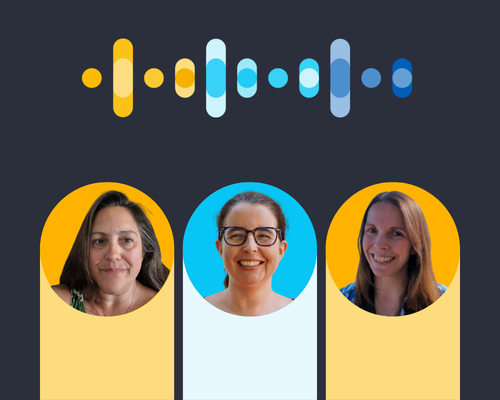
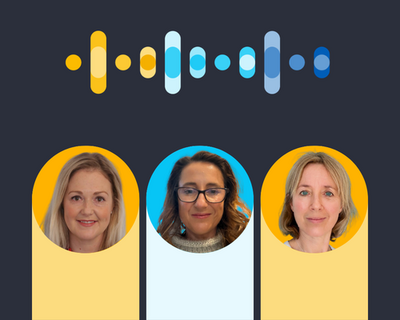
Our host, Sharon Jones is joined by:
- Kirsty Irvine – Chair of the Participant Panel and member of the NHS Genomic Medical Service People and Communities Forum
- Lisa Beaton - member of the Participant Panel, panel member for the North East and Yorkshire GMSA and research and development for Harrogate Hospital Foundation Trust
- Frances Allan – member of the Participant Panel and member of the following:
-
- CRUK Women+s Cancers PPIE at Cambridge
- MHRA Yellowcard Biobank
- Northumberland NHS health forum
- Ovacome Healthforum
- IMPRESS cancer diagnostic tool study participant
You can find out more about the Participant Panel in our recent Genomics 101 episode which Lisa featured in, titled ‘What is the Participant Panel?’, and you can read about their timeline of achievements over the last 10 years.
“One of the things as participants that we're always really keen to get across, particularly to the scientists, is that behind every piece of data is a face and a name”
You can download the transcript, or read it below.
Sharon Jones: This time on Behind the Genes, we'll be celebrating the 10th anniversary of the Participant Panel, and we'll discuss how genomic research is being guided by patient and participant voices. The panel is made up of participants whose data is held in the National Genomic Research Library. They help us to put lived experience at the heart of our work.
My name is Sharon Jones, and in this podcast we cover everything from cutting-edge research to real-life stories in genomic healthcare. Joining me this time are Kirsty Irvine, chair of the Participant Panel, and Frances Allan and Lisa Beaton, who are also both members. Collectively, they wear many hats for a range of organisations, which are listed in the episode description. As you'll hear, this one is all about people power.
So back in 2016, the Participant Panel was in its infancy, with 12 founding members bringing lived experience of rare conditions. The idea was straightforward but radical: that the people whose genomes were being sequenced should have a real say in how the work was done. Over the decade since, the Panel has shaped some significant changes, from pushing for a service that let participants track their own samples, to publishing a language guide that changed how the genomics community talks about genetic conditions and disability. They've navigated the pandemic, welcomed new members and, in 2025, launched their first formal strategy.
This year they mark their 10th anniversary, and today we're hearing from some of the people who've been part of that story. So welcome Kirsty, Frances and Lisa. So what was your reason for joining the Participant Panel? And I will ask Frances that.
Frances Allan: Hi Sharon. I joined the Panel back in 2023 following a cancer diagnosis, and as part of that investigation I was fortunate enough to have a whole genome sequence performed.
And they also asked would I be interested in taking part in a panel who look after this information, and I ticked the box and then thought no more of it. And then a month or so later I heard from the then Chair, Jillian, um, and had a chat about genomics and joined the Panel, and it was a very good decision that I made.
Sharon Jones: Did you have any kind of expectations? What were your early thoughts when you kind of accepted?
Frances Allan: Not many thoughts. So I was in the middle of my chemotherapy treatment, but one of the things that really stood out: when I signed the consent form, I said, well, of course I would do that. And the clinician consenting me, said, actually, not everybody does.
And I thought, well, why would they not want to do that? So I was really interested in finding out about that. I had no idea how influential the Panel was, and that was great to discover as I became part of it. But seeing the breadth of the research and the knowledge already gained, compared to my rudimentary A-level Biology from many, many years ago, gave me incredible hope, um, and really helped me through a very difficult, difficult time.
Sharon Jones: Yeah, that's, that's amazing. It's amazing that you could kind of think in that way whilst you were actually going through the treatment itself. I mean, how did you split yourself in that way?
Frances Allan: I think it gave me a sense of, of purpose. So at the time, I'd, I'd stopped working to have my treatment and I was a, a vet previously, so I was used to thinking about medical things and problem solving, and it, it filled a, a void in my life. I had no idea I'd be able to contribute to it. I thought, well, I'd learn something from it. But, you know, the, the Panel is managed very well. Kirsty's a fantastic Chair. Everybody gets an opportunity to speak, and the attendance can be in person. And I've done most of them in person.
When I was poorly I attended an online meeting, but even that is managed so well that you get a chance to speak up. If you're not feeling well enough, then you can, you can add it to the chat or email. So it's very, very inclusive and a very supportive environment, as well.
Sharon Jones: Yeah, it sounds like a, a very safe space to be in. And Lisa, what was your reason for joining the Participant Panel?
Lisa Beaton: I think it was sort of one of those, bit of a light bulb moment for me thinking, yeah, I could do that. I'm not quite sure why I felt I was qualified to do that, but my reasoning is slightly different than Frances. So I joined the 100,000 Genomes Project back in 2015 in respect of one of my children who has an undiagnosed, thought to be neuromuscular, syndrome.
Um, so myself, my husband and our daughter recruited for genetic sampling, and over the years I've sort of taken a keen interest in all things genetic and genomic related, followed on kind of various social media platform. And I think if memory serves, I saw an announcement or an advert stating, do you want to be part of the Participant Panel, clicked on the link and thought, this is something that really resonates with me.
I've served with different hats on different kind of participant groups and speaking events, and it's something I feel really, it's an overused phrase, but I do feel really passionate and strong about it because, you know, we are the people who are the front and centre of this, because it's our genetic information.
So I applied, did a bit of a kind of resume of myself, um, then had huge imposter syndrome and thought, oh, that'll be the last I'll ever hear of that. And uh, actually had a really lovely interview with some of the then, uh, members of the Panel and must have said a few of the right things, 'cause here I am, three years down the line.
Sharon Jones: That's amazing. Has it lived up to your expectation? How has it, how has it helped you get through what sounds like a really challenging time?
Lisa Beaton: It's, it probably sounds wrong to say I, I didn't really have an expectation, but I joined it really just wanting to kind of know more and see if I could find out more details, more information, kind of more genomic discovery, and hope that I could give something back, if that doesn't sound too cringey.
I think one of the things I'm always really keen to say is that you don't need to be a geneticist. You don't need to be a scientist. You don't need to kind of have lots of scientific information. And I will confess that the very first meeting I went to, I did come away thinking, I think I probably only understood about one word in three. But three years down line as I say, I'm still here, and it's been good to challenge myself and to explore kind of things that I don't know information about, but also I found that there are areas that I can definitely bring lived experience to and, and hopefully a voice for people like myself and my family.
Sharon Jones: Yeah. That's so important. It sounds like you've become a bit of an expert by, uh, experience there. Has your vocabulary improved in the last three years? Do you know more words now?
Lisa Beaton: Yes. Uh, I've, I have to remind myself not to use an acronym. It's one of my pet peeves. You know, when you're, you're in a, a meeting and terminology or, or vernacular, that is not necessarily something that people would use day-to-day, and I think lots of you know, you don't, don't have to be genomics or genetics to, um, using acronyms for things.
It's something we all need to remind ourselves that just because you know that expression, somebody else doesn't. So it's really important to kind of keep that at a, a lay explanation so that everybody understands it. Um, I think particularly with quite heavy subject matter such as genomics and genetics, there can be a tendency otherwise for people to feel that it's not for them. And of course it is, because it's about our own personal data.
Sharon Jones: Yeah, absolutely. And, um, and coming to you, Kirsty, what were your kind of motivations for, for joining the Participant Panel?
Kirsty Irvine: Well, it's been quite a long journey for me to find myself on the Participant Panel, so I and my family, we were all consented into the a 100,000 Genomes Project back in 2015.
But from that point, I then spent nearly 10 years chairing committees at NHS Digital and then NHS England, focusing on health data access. And I remember talking about the 100,000 Genomes Project at my interviews for those roles. I then went down a different path. And in those roles I was very much wearing my solicitor's hat.
So I was thinking about governance and risk and were we complying with the precise wording of the legislation. And then when the chair role came available, I had a number of people sort of forward it to me saying, I think this would suit you. I think this would suit you. And at that stage, I was aware of the Panel because I'd met the fantastic former chair, Jillian.
Um, so I'd seen Jillian at various conferences and meetings and things, so I was well aware of what the Panel did. I was well aware of the Panel's standing. It was probably the only participant panel that I was aware of in my work with NHS Digital, NHS England. And then I realised, you know, I wanted to be closer to the people behind the data and I wanted to do something more active.
I wanted to bring a bit more of myself. Because when you're chairing a very formal committee, at NHS England, you, you can't talk about the time that you resuscitated your child at home, you know? And on the Panel, you know, my very first meeting, I, I met someone, someone whose child had, you know, been fed with an NG tube for a number of months.
You know, I met someone else who had resuscitated their child, you know, and all of a sudden I could bring more of myself to my colleagues and, and find a real community. So for me, joining the participant panel was a way of shifting the perspective, but to also bring that experience with me because I, the roles at NHS England, you know, from a governance perspective, I couldn't continue chairing those, you know, board subcommittees forever.
But I didn't want that knowledge to just sort of disappear. So for me, I'm really delighted that I've, what I hope, what I hope is a good fit. I feel it's a good fit. So that, that's been my journey to the Panel.
Sharon Jones: Yeah, that's, that's so interesting. And I guess having that space to kind of be yourself, and having understanding because of your lived experience, brings a lot of value to the role that you're doing now in a way that kind of is different when you're in your previous roles of NHS Digital, because you had to be a bit more, kind of stand back from it and, yeah. That's so interesting.
So, what has it been like being part of these groups? You know, the ones that you kind of, you're involved in a lot of things, and we'll list them in the, in the web description. And how has it kind of affected your life, essentially, because it's not the kind of average thing that people are involved in.
Frances Allan: So it's been an incredible, I think as Lisa alluded to, incredible learning curve. We've learnt so much. But the team at Genomics England are endlessly patient and very skilful at passing that information on. And we have access to the leading researchers, the clinicians that are involved in genomics. And they're happy to take any question.
And the questions, however silly, there's no silly question. They're happy to answer that. And so we learn every time we attend a meeting, we have quarterly meetings and that can be in person or online. Um, but we also have regular lunch-and-learns. So if there's somebody we want to speak to or find more about their specialist area, they'll come and have a, a chat with us.
And then we have half of it, them chatting to us and half us, us. Us asking them questions and, and challenging them. Um, so it's very, very informative and then learning from each other. And as Kirsty was saying, you know, this is a, a group of people who've, who've dealt with an awful lot of unique situations and they're happy to, to share that and pass on the information. It's a, it's a great place of learning.
Sharon Jones: Lisa, would you agree with that? How it been for you?
Lisa Beaton: Yeah, I would definitely echo everything that Frances has actually said there, and I think it's a very humbling experience, as well. Ostensibly, we are a, a collection of individuals who have all been brought together, um, purely because of, uh, our genomic interests.
And whether that's for our families, you know, as, as parents, as in my case, or in somebody like Frances' case, who's obviously a participant in her, in her own right. And although there are kind of many differences in our stories, there's also a lot of similarities. But I think what's really interesting, very precious, is that the staff at Genomics England, obviously they range from, you know, there, there's so many different kind of areas from the, the comms, the scientists, etc., but everybody is really interested. They want to know your story, who you are, why you are there. There's a real kind of inclusion focus on that.
And one of the things as participants that we're always really keen to get across, particularly to the scientists, is that, you know, behind every piece of data is a face and a name. And I think they really make that felt when they're chatting to us. You know, we go in and, and there, there's people who are there from governance sides for how the data is accessed by other parties.
There's people there who are the science technicians, etc. There's people who are dealing with the administrative side of things, but every single person that I've encountered wants to know more about you, what you are there for. And that is, is very, very precious. And as Kirsty also alluded to, a lot of us have been through some really quite traumatic experiences.
It, it's not my place to speak of others' journeys, but you know, there, there are, uh, bereaved parents and family members among us. And so we are sharing very precious raw material, emotions, experiences, and that is very powerful, as well. And I, I think the Genomics England staff never forget that. They seem to bear that at the forefront of their, their communications with us, always.
Um, and certainly Kirsty and Adam and previous chairs, uh, of the panel, that inclusivity was entirely throughout every dealing we had with them.
Sharon Jones: It's very humanising and I think that it's humbling for us who work here that that's always at the forefront of our mind, that this is why we kind of get up and go to work every day, because of that human element.
And it's not just a data point. There is a whole family, a story, a history, and that's, that's so important to us in the work that we do. Kirsty, did you want to add your point on this as well?
Kirsty Irvine: I've probably got two points I wanted to raise. One was just to draw out what Lisa was saying, is that it can be complex being a Panel member, because the story you're bringing often isn't just your own.
In my family, we've got a real, we've got a whole range of genetic differences and conditions that, you know, across the extended family. And so when I speak, I'm often drawing on experiences that aren't solely mine to share, and, you know. So I think that's something that for some on the Panel, we're sort of, we're, we're being quite careful to think about what we're saying, and if we're speaking in the public domain, we might be talking about it in more general terms.
So that's, you know, but there's not a single right way, and there's room on the Panel, everyone, for the people who can and, and as Lisa talked about, you know, the, the most acute situation is where someone's bereaved, you know. And it's, so everyone's got different, you know, different experiences. But that, that, again, coming back to the positive side of things, one of the biggest things to me about being on the Panel, what it means to me, is being part of a wider community.
I mean, one of the other things that, Sharon, I don't know if I can sort of segue onto this about, you know, the opportunities that have arisen?
Sharon Jones: Yeah, absolutely. I'd love to hear more about that.
Kirsty Irvine: So one thing that really stands out for me was the opportunity to speak directly with, um, Associate Health Minister Ahmed about, and his policy team.
So we went to the department, Adam and I went to the Department of Health, and it was about the use of GP data in consented research cohorts. So getting the GP data into the National Genomic Research Library. So even though there's consent, up until now, that GP data, that tranche of really rich data, hasn't, hasn't gone into the NGRL. So I'll use that abbreviation now that I've used it in full. And so what was really unique for me was that I'd seen it from multiple angles because I'm participant in the 100,000 Genomes Project, so I'm a cohort member.
I then worked on the consent review for NHS England. I then sat on a, the consent review assessment committee with, you know, a multiparty group. And then, because I was on the panel, I got to see things full circle. I was then invited to, to go and meet with, um, Minister Ahmed and, and advocate for the use of this GP data. And that really matters because something, you know, there's such important information sitting in that GP data and it wasn't a given, it was not a given that the government was going to the direction that allowed that data to go into the NGRL.
And so we were able to talk about how we really wanted that data to be used. And now, going forward, you know, something as simple as BMI or for example, if a, if an individual's coded for a neuro, neurodevelopmental condition like autism, sometimes that data actually only sits in the GP health record. It's in primary care only, so it's not necessarily in the hospital records or other records.
And so this is really, really valuable data for, for researchers. And so that was something that was a really special experience, just being able to see that come full circle. And I felt like it's a really tangible example of how the participant voices really helped strengthen that conversation, you know, with the DH policy team, you know, and the government ministers.
Sharon Jones: Yeah, I mean that's, that's really powerful and it, it just sort of shows how these opportunities can arise from being involved in a participant panel in a way that you wouldn't have necessarily had that power if you hadn't been involved. And you know, obviously you are wearing lots of different hats in that, in that position, Kirsty.
And um, it just sort of shows what can be done when you're, unfortunately, you know, you're in this group for a reason and it's not necessarily the, the most cheeriest reasons, but it, you still leverage that opportunity to create something positive, you know, with it.
Frances Allan: So we've given all sorts of opportunities and we seek to get involved with as many things as we can to speak and have our voice heard.
Um, and one of the things I did last year was, um, do a short presentation to open a stage at the Genomics England Research Summit, which was quite a challenge for me, but I felt very exhilarated having done it. And then a couple of people came up afterwards and just said, oh, thank you for sharing your story.
And a researcher who was slightly older than I, so very experienced, been in his field a long, long time, and he said his clinical years were long behind him, and now he researches within a lab. And actually for someone to say, you know, thank you for, for looking, thank you for finding, had a very profound experience on him.
And he knew there was a clinical benefit; his research was very clinically led. But he said he hadn't thought about the recipients of those findings. And I pointed out every time you have that chat with somebody, come to an event like that, have a network, spend a bit longer in the lab, look for something that you might not find, even if it's a negative finding, there will be somebody eventually that benefits from that.
And I've been a direct recipient of other people putting forward their whole genome sequence, and then a common change was noted in people with the type of cancer that I have, and that then qualified me for a treatment that otherwise I wouldn't have been eligible for, and I wouldn't have been, I wouldn't have been here now.
So it's a very, you know, profound thanks to all the people that are involved from everybody within Genomics England, all the researchers, all the other patients that speak up. We each have a contribution to make.
Sharon Jones: Yeah, that's amazing. That must have been quite a poignant experience when you, you met him at the, um, Summit, of just kind of the other side of the, the world that you don't often see. And they obviously don't see our side of the world, and it's kind of interesting to join those dots and kind of come full circle.
So moving on. In terms of like, collectively, there's a lot of impact that you have and there's a noticeable shift in organisations where people with lived experience are playing, you know, a much bigger role in decision making. Can you help our listeners understand how people are getting involved in governance and shaping research?
Lisa Beaton: From my perspective, it comes back to that word "embedding". I think historically, perhaps there's been an, an almost about-face. Um, it's kind of come at it very backwards, that that embedding has almost happened as an afterthought, which is sort of a bit of a misnomer way of explaining it.
When you're talking about embedding, obviously it should be the foundation. Historically, at least both from the parent, parental perspective, I've seen that with clinicians, for example, that historically I've been made perhaps to feel a bit of a thorn in someone's side, that even though we're there for an appointment about our young person, when I'm asking questions that they don't necessarily want to answer, you know, I'm almost the, the add-on rather than the reason that we're there.
And I think there has been a paradigm shift in everybody's approach to that. So thinking much more about, you know, the, the what's, the wherefores, the whys. How do we ensure that right from the get go, that patient or participant voice is heard, and it shapes the question. And one of our other Panel members frequently uses the phrase, "nothing about us without us", because that is front and centre of why, you know, genomics exists in the first place, really.
Without that data, the conversation ceased to exist. It, it's so vitally important, not just for us as an individual, not just for our family members, but for the greater good, if that doesn't sound too grandiose.
Sharon Jones: No, not at all. And, and, and Frances?
Frances Allan: I think having raised that value of patient advocacy: what we have to say. So it started off, people felt that they should have some, so they included it, but actually once they started to include it, they thought, this does contribute to our study.
And starting at the very beginning of the research project, so what is reasonable to ask participants and patients to do? Is it something that there is benefit from? And trying to see that end goal right at the beginning. And we might help shape a research study that actually goes in a beneficial direction, rather than the researchers starting alone, and then actually getting into the study, and the procedure is, is too painful to endure, there's no clinical benefit, it's not something that can be translated into clinical practice, and it gets abandoned.
So start us right at the very beginning, and our perspectives may not be what, what researchers or clinicians think. Uh, with that lived experience, however empathetic you are, the lived experience is a very unique lens and position to look from.
Sharon Jones: Yeah, it absolutely is. So, given that you are part of a small group and you know, you're representing a much wider community, essentially, like, what are the considerations that you, you have to bear in mind?
Lisa Beaton: I think we can only speak, obviously, to our own individual experience and we are very aware that, you know, diversity, ethnicity, inclusion is something that is a much bigger conversation and certainly something that we want to broaden in, in the panel itself.
And I know there's kind of lots of work and thought going into how that can widen those perhaps more diverse communities that historically... It's not that, there's, there's been a terminology that, you know, they're difficult to access, but actually the question is wrong there. The statement is wrong. It's not that they're difficult to access, it's just that we've been asking that incorrectly.
And we need to ensure that they are, uh, empowered to bring their stories forward and find ways to push forward for their inclusion. We need to ensure that everybody's voices are heard, otherwise the data set is wrong from the off. So I think that's something that we're all very minded when we speak about, and definitely want to, to diversify the pools of data that come in. That, that has huge resonance for, you know, shaping genomic and genetic policies moving forward, for sure.
Sharon Jones: Yeah, definitely. Frances, sort of broadening out that question. Does it feel like a lot of pressure and a lot of responsibility, kind of representing, you know, in this kind of small group where you are almost speaking on behalf of, you know, a lot of people?
Frances Allan: I think it mainly feels like a, a privilege, Sharon, to be in that position, to have a say. And back to my, one of my motivators for joining is why would people not choose to do this? And actually understanding why that is. And is it the, you know, the lack of knowledge of genomics? And there is a lot of, of fear about what can be discovered. But understanding the immense benefits from that so people don't miss out on those opportunities.
Our genomes contain the, the blueprint to us, but also how we would respond in certain situations, and you want everybody to be using those leverage points. You know, cancer's a really difficult disease to manage, and anything you can do to make it slightly easier, slightly more comfortable, slightly more successful, we want to do that.
So every time we speak out and we advocate for the benefits of genomics, we might gain one more person who's going to feel that a successful outcome.
Sharon Jones: Yeah, and who knows what, what that can mean for their family and, and sort of further down the line. So have you got any advice for, or encouragement, or any tips for, you know, potential participants who are thinking of getting involved in, in groups?
You know, it doesn't necessarily mean the Participant Panel, but just generally, sort of groups related to their conditions or their family's conditions.
Frances Allan: Yeah, I think the value of the one's personal experience: don't underestimate that. Everybody has an individual journey and they can comment and reflect on that.
And anybody interested in, in joining our panel, you can include in the, the copy or description, ways they're getting in touch with us and speak to us about what that, what that involves. And uh, Lisa said at the, the beginning, you come and it's a huge learning curve, but there are people to support you and guide you through that way.
And the learning is, is just fascinating. And there's a position for everybody and everybody's point of view to be heard, and you will be heard.
Sharon Jones: Thank you. Lisa?
Lisa Beaton: Yeah, I think I might steal a phrase or two actually from some, uh, well-known brands. But, um, one would be "just do it" and the other would be "feel the fear and do it anyway" because, you know, you are amongst friends, first and foremost. We all, we do tailor our experiences, and clearly we self-censor at times because that's necessary to protect the privacy and dignity of not necessarily ourselves, but as we've already alluded to in our chats, but you know, our family members, the wider people that you are aware will be hearing this.
And you don't necessarily want certain medical information about your family members out there, because it's not your information to share. But in terms of joining the panel and, you know, having a voice, giving more voices, giving more diverse data, we, we need as many people as possible to come. We need more voices.
We need to get our genetic, genomic information out there, uh, in front of the researchers and, and all involved with Genomics England, um, and other patient advocacy groups, as well, because that will only benefit the greater public.
Sharon Jones: Thank you. And Kirsty?
Kirsty Irvine: I'm just thinking about sort of general tips building on what Lisa and Frances have said. You don't need to be a seasoned public speaker. I think that's something, absolutely not. We've got some fantastic speakers in the group. Um, but then we've got people in the group who've got, who have got different skills, so don't think that you need to be ready to give a TED Talk at the first meeting, be that the Participant Panel or whatever group you might be motivated to join.
We, we just need good listeners. I've chaired meetings in the past where people, uh, wanted to contribute via the chat function, and that worked absolutely fine. They would put their incredibly insightful, erudite comments in the chat, and then I would relay them to the group, and that was how we got that person's input, because we realised that they weren't necessarily going to speak up in the forum.
So whatever your communication style, we can accommodate it at the Participant Panel and we would be delighted to hear from you.
Sharon Jones: That's great. Thank you. Um, final question. So what do you hope the next 10 years of participant involvement will look like?
Kirsty Irvine: I think if I could use a little catchphrase, which I'm sure is not mine, but I would like to see us fully integrated as partners, not participants.
I'll put that out there. I mean, Sharon, I wonder if I could sort of also open things up to how are things going to look in another 10 years, because there's been some statistics that have really struck me, uh, at presentations that, that we've heard. One of them being that in the next, you know, within 10 years, around about half the data in the National Genomics Research Library will be from, I don't know if this is the best name for it, the general population.
So that's people who aren't necessarily seeking an answer, or have a diagnosis or a condition. These are people who have donated their genomic data through being part of, you know, research projects. And, as a panel, so Genomics England's evolving and the panel will be evolving. And in 10 years time, the panel will need to be, I believe, true to the original route.
So, 100,000 Genomes Project. Uh, the people who've had their whole genome sequencing through cancer diagnoses. You know, there's a significant COVID cohort, but also people of the gen, general population. So how do we advocate for and look after everyone in that broad group of people. So I think that, that's both a challenge, that's a challenge for us, but it's also really exciting to think how we can meet that challenge.
Sharon Jones: Yeah, definitely one, definitely an opportunity and a challenge, and one that will take a lot of thinking in the next few years. Frances?
Frances Allan: Yeah, thanks Sharon. I think looking forward to that, that 10-year period is how genomics just becomes a normal part of everybody's healthcare, so we all fully understand the benefits of it.
People are willing to participate in it and then using lots of different types of data to go into the National Genomics Research Library. So at the moment, it's mainly genomics material, but there's been a lot of work done with the cancer cohort, putting in diagnostic images, pathology slides, other clinical data, written notes, and this can then be accessed under the strict criteria of the access review committee.
It can be accessed by clinicians, researchers across the world. And we want our research library to be the premium source of that information and to have collaboration with researchers, clinicians, participants, worldwide, to speed up the generation of that information and those positive outcomes. It's a, a very, very rich data source now, and it'll only get bigger as we include people from the general population.
Sharon Jones: That'd be amazing and have some quite incredible global, um, outcomes. Lisa?
Lisa Beaton: I just had a little image actually pop into my head that I, I almost look at it a little bit like we're doing one of those, I think they might be called an "impossipuzzle" where actually we don't have the picture on the box, but we have lots and lots of little pieces that are all going in together and they're making up a really creative, wonderful, fantastic, woven story, a tapestry as you were, of different information that's coming through. And how incredible, you know what, what a wonderful legacy we're building, you know, and this amazing picture that's going to evolve and change and develop over the years to come.
Sharon Jones: That's a wonderful note to end on, so we're going to wrap it up there.
Thank you for listening. A special thanks to our guests, Kirsty, Frances, and Lisa, for joining me today as we discussed how lived experience can shape health research. If you'd like to hear more like this, please subscribe to the Behind the Genes on your favourite podcast app. And if you want to know more about the Participant Panel, you can head to the Genomics England website and listen to our 10-minute explainer podcast, Genomics 101.
Behind the Genes is produced by Deanna Barac, Florence Cornish, Sophie McLachlan and Dave Howard at Bespoken Media.