What if a treatment created for one person could transform care for thousands?
In this episode, we explore how individualised medicines are evolving from “n=1” treatments (a treatment effective for a single individual) into approaches that could transform care for many people living with rare conditions.
Advances in genomic medicine are making it possible to design highly targeted treatments based on an individual’s genetic information. While these therapies may begin as bespoke solutions for a single patient, they can often be adapted, refined or reused to benefit others with similar conditions.
While the research is evolving, the systems needed to deliver these treatments at scale are still catching up. From regulation to access, our guests discuss what needs to change to turn this potential into reality.
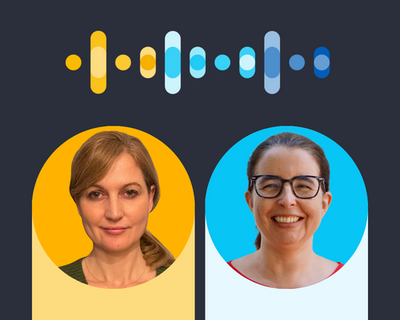
Our host Sharon Jones, is joined by:
- Ana Lisa Tavares, Clinical Lead for Rare Disease Research at Genomics England
- Mel Dixon, Participant Panel member and CEO and Founder of Cure DHDDS
If you enjoyed today’s conversation, please like and share wherever you listen to your podcasts.
“However rare your condition is, someone has a right to have hope. Everybody should have a hope that we should be able to find a treatment.”
You can download the transcript or read it below.
Sharon: What if treatments once designed for just one person could now help many others? Thanks to advances in genomic medicine, regulations are changing and research is expanding.
This opens up more options for treatments for rare conditions. But what does this mean and how close is real change? I'm Sharon Jones, and this is Behind the Genes.
We look at how genomics is changing healthcare, covering everything from cutting-edge research to real-life stories.
Individualised medicines are a fast-moving area, but there's still a big gap between scientific progress and what's actually happening to patients. You could call it the gap between hype and hope.
Ana Lisa: However rare your condition is, someone has a right to have hope. Everybody should have a hope that we should be able to find a treatment.
Sharon: Coming up, we'll hear from Ana Lisa Tavares, Clinical Lead for Rare Disease Research at Genomics England, and Consultant in Clinical Genetics at Cambridge University Hospital, as well as Mel Dixon, member of the Participant Panel at Genomics England and CEO and founder of Cure DHDDS. Mel opens this chat by explaining why developments in individualised healthcare really matter to her.
Mel: This issue is really personal to me. I have three children, two of whom are affected with an ultra-rare DHDDS gene variant, for which there is currently no treatment. Their condition causes symptoms such as, well, it varies between mild to severe learning difficulties, seizures, tremors, and movement and coordination difficulties.
But the, the most worrying thing for us was that this condition is actually also progressive. So over time it becomes more of a Parkinsonism and some patients experience dementia-like symptoms and psychosis. So for us to get a treatment that targets the genetic cause of, of their condition is, like, the most important thing in, in our lives.
If we could intervene now, they could potentially, at the stage they're at, you know, live an independent life with, with some supports. But if the disease is left to progress, it would be a very different outcome for them.
Sharon: I mean, that sounds so difficult and I can't even imagine how life is for you and your family. And I can see what is driving you to find anything to extend the life of your children and to give them that opportunity to, to have a better quality of life. And then Lisa.
Ana Lisa: It's a huge burden for families to carry. And I think at the moment there's an additional layer of burden, which shouldn't fall on families, to feel like they need to forge a pathway for their child to have a chance of a treatment. That's, that's a lot to bear.
Mel: I think as well, families feel they almost have to become mini scientists in their children's specific condition overnight, because you go to these appointments with the consultants and nobody's heard of the condition and they don't know, they just don't really know what to do with you.
So they're asking you, you know, so tell me about this, this gene change. What, what does it do? What does it mean? So you have to become the mini professor in your child's condition to be able to advocate for them. We've had to really learn on our feet so that we're able to advocate and push for research into DHDDS, because without us doing it, nobody else was going to be.
Sharon: Yeah. So that's, you know, that's partly what we're here and what this podcast is for, it's here to support families to, to understand this stuff. And Ana Lisa, can you just break it down to us, what is individualised medicines?
Ana Lisa: An individualised medicine that's made for one individual person. In reality, sometimes there are other individuals that can also benefit from the same medicines, and sometimes actually, although the medicine is made for one specific person, it might be made using a strategy that other patients could also benefit from, either directly, exactly the same, even, or through tweaking them so that they could work for a different patient.
In the context that they're most often referred to at the moment, they're therapies that are being made based on the genetic information about somebody.
Sharon: Thank you. I mean, that sounds amazing. And now coming to you, Mel, what does receiving a diagnosis mean for a family? And how do you navigate the space between finally having answers and the reality that the treatment may not yet exist?
Mel: So for us, I think, we went down the, the diagnostic route in the hope that we would be able to find a treatment for our children, or there would already be a treatment in place. But unfortunately when we got their diagnosis, we were told that their, their condition was ultra rare, neurodegenerative and also newly discovered. So there was, there was no treatment pathway and actually minimal research happening into it at the time.
So it was frustrating, upsetting, um, and it felt like quite a hopeless situation at the start, but actually this was just over three years ago. And through a lot of proactiveness on our part in fundraising, we've been able to better understand the condition and we now have treatments in the pipeline. So in that three-year window, from there being nothing, we now have treatments both in terms of potential drug repurposing candidates and also, um, an individualised therapy called an ASO is also in development for them.
So it was hard, but it's given huge benefit to us. Otherwise, we'd just be going, remaining going from specialist to specialist without having any answers or understanding why their symptoms were progressing.
Sharon: I mean, that sounds really, really tough and you know, coming back to you, Ana Lisa, could you talk us through how genomics is changing the way we can treat rare conditions? You know, what types of individualised medicines now exist and how do they even work?
Ana Lisa: Maybe I'll start with how some of these medicines are working.
So with, without going into details, but the sort of principle that these medicines might be able to, to do something called gene editing. So our, our DNA, uh, the instruction manual is made up of genes and it's now can be possible scientifically to change even a single DNA letter code in somebody to try and ameliorate the symptoms of their rare condition. You know that's phenomenal scientific progress to be able to do that.
I think a lot of people have heard about gene therapy, where one is trying to get into the body a gene or part of a gene that might be able to sort of replace the function of a gene that isn't working as it should. There are various other strategies. So our DNA is actually used to send messages to our body, if you like, to, to decode these instructions.
And so there are medicines that target the next step in this process, the RNA, which are the ASO therapies that Mel was referring to earlier. And really what those are doing are either trying to correct for a protein in our body that isn't working as it should, or to try and get rid of one that shouldn't be there.
And so they can act in different ways. And that's actually quite powerful, because you can, theoretically, use these strategies to correct for different genetic rare conditions. So I think going to the sort of first part of your question, maybe if I can phrase it as "directly at source". If you can go upstream and target in a very direct way the cause of a rare condition, then actually you might be able to apply those same principles to many different types of rare condition.
We know that there are, you know, 8,000 as a very ballpark number of rare conditions, and it might be that these strategies could be used I don't want to say for all rare conditions, but for many rare conditions where we find the genetic cause, these strategies could collectively be a very powerful way to treat them.
And traditionally we've had to understand all the underlying biology, find a druggable target, find a drug that could target that, that's safe, effective, et cetera. And that's a lot of work. And that's still very, very valuable. If we were going to do this for these thousands of conditions, it would probably take us hundreds to thousands of years, collectively.
And these strategies provide a lot of hope for being able to do this in a, in a more efficient way, where we can actually use the information used to treat one rare condition and apply those learnings to another rare condition.
Sharon : I mean, that's really helpful to understand. So if the science is there, why aren't more patients benefiting from it yet? You know, what's standing in the way from your perspective?
Ana Lisa: That's a really good question, and it's complex because the, our whole ecosystem is made up of, of many parts that go from finding a potential strategy that could help a rare condition to a patient benefiting from that. And I think one thing that maybe we haven't touched on yet is the fact that rare conditions can be really rare and affect a really small number of people individually, even though we know collectively they affect so many.
You know, in the past it's been easier, if you're taking a condition that's common, that affects thousands of people, it's easier to see and to be sure whether your new medicine is actually working as you think it does and should, and having the benefits that you think. The, the sort of regulators have really clear guidance.
We have lots of knowledge about how to assess treatments and have a randomised clinical trial, for example. How the reimbursement process may work in a public healthcare system. And when you, when you, when you sort of set down into the really rare, this is difficult for each stage of the journey.
The transformation that's needed is a whole, system-wide transformation to be able to regulate in a scalable, equitable way, these therapies that could actually be an N of one treatment for one individual, that actually maybe one day another individual may also benefit, and sometimes even a group of individuals.
It's not just the, the regulator, it's also how do you make it viable. So again, you have to make it scalable, equitable. And even to implement in the NHS down to this very "N equals one" level, and demonstrate that patients could benefit from these treatments, might require sort of fancier ways of assessing these treatments, whether it's statistics, other methodology and I think it's really the system-wide nature that makes this tricky, but is also a fantastic opportunity for, for collaboration, because that, that sort of end goal and benefits could be so, so great.
Sharon: Yeah, absolutely. And I mean, Mel, for your side of things, it must sound, you know, quite frustrating where the people in the rare community to not see the support being made more readily available?
Mel: Yeah, it is particularly difficult for patients and their families. I think in our case, when you're dealing with a neurodegenerative condition, time is of the essence. So when you know that the science is available or it's ready, but you don't have the systems in place to implement them to the patients so that they can access these much-needed therapies, it's worrying and frustrating.
And also I see our children are affected with, with, you know, one of these N of few conditions that there's, you know, there's only 59 confirmed cases of DHDDS worldwide, and we've seen how the system firsthand doesn't fit ultra-rare patients. We can't, when we were looking at drug repurposing, we can't do a traditional clinical trial because we don't have the patient numbers and we don't have the funding. So a placebo-controlled trial just wouldn't be possible for us when there's only, I think, seven confirmed patients in the UK and, um, four that we're actually in, in, in touch with.
So it does feel, I think, as Ana Lisa was saying, that we really need a system rethink, um, and refit so that it does start to accommodate these ultra-rare conditions, especially now as there's therapies which are showing huge benefit to patients.
Sharon: And so with like all of these challenges, where are you seeing things shift and what does meaningful progress really look like for you?
Mel: At the end of last year, the MHRA announced that they were rewriting the regulatory framework for rare conditions, and that fills us with lots of hope for the future. They're recognising that the traditional systems don't work for particularly ultra-rare conditions, and now that we do have these therapies in the pipeline, we, we want to get the patients to be able to access them. And we're also seeing innovation in how evidence is generated and measured.
We witnessed this firsthand with our son as he was undergoing baseline tests for his ASO therapy. You know, the use of digital biomarkers, of real-world evidence, how they're increasingly being used for these N of one or N of few populations.
And how the individual receiving the treatment becomes their own comparator. So you're not relying on these big natural history studies of the disease or placebo controls. It's you're looking specifically at that individual, getting a really strong baseline and then looking, once they're dosed with the medication, is that improving or stabilising symptoms?
So I think this shift in focus is really meaningful for the ultra-rare community and also for them to be part of the decision-making process of what, what benefits do they want from a drug? Like what is meaningful to them? I think there's much more talk about the patients and how the, what will benefit them most.
It's not necessarily what the scientists would think or research would think would most benefit, but what, what would make a meaningful difference to the patient?
Sharon: I mean, that's good to know because it's kind of putting the person at the centre of, you know, this is what it's all about, isn't it? It's not just the science. We're trying to treat people and it's putting people, people first.
Ana Lisa: Just to build on that, it's exactly that, that awareness that is, is growing, I think, that there are so many people affected by a rare condition and, and however rare your condition is, someone has a right to have hope and that the system should be able to cater for many rare conditions, you know, whether they're an ultra-rare or an actually almost common rare condition, everybody should have a hope that we should be able to find a treatment.
And it's not a hopeless situation that it's, you know, never going to happen or be too difficult. It's quite powerful, hope. If you can solve for the truly individualised medicine, then you at the same time may also be helping everyone in-between a really common condition and a really rare condition, because right now the system works for common conditions. And if you can take it right down to the sort of radical of, example of an individualised medicine made for one person, then you are also forcing the system to a change for everybody else. And I think that's one of the great benefits of thinking about it as a joined-up system.
Sharon: So how do you each navigate between hype versus hope when it comes to rare therapies? Mel?
Mel: I like to focus on hope, because when we got our diagnosis, we felt really hopeless and that's a really dark place for a family to be.
But as we learnt more about their condition and the rare condition landscape and genomics, we actually learned of all these new therapies that were in the pipeline. We were hearing about, you know, recently, conditions like Huntington's Disease that you never, never previously had any disease-modifying treatment, how they're now being able to be treated with gene therapy with really positive effects.
Similarly for other neurodegenerative conditions that have been treated with ASOs, how they're seeing not just disease stabilisation, but improvements. So I know it's, it's still, like, relatively early days with these technologies and therapies, but I think it, it allows families to have hope, which is, which is really, really important, because that statistic, you know, of the, of 95% of rare conditions not having a treatment, it's, it's a really brutal one, uh, to be told at the outset or to learn at the outset.
So, you know, if, if these therapies can, can make a huge dent in that, that would be life-changing. It would make a profound difference to many, many families, and I think there's a lot of reason to have hope, taking all of that into consideration.
Sharon: And then Lisa?
Ana Lisa: I think to work in this area, one needs to be full of hope and optimism because there are so many, um, challenges to overcome as a community. Uh, but I think that means that people are also incredibly collaborative, because they know that we need to work together for this to succeed. And no one, you know, one individual, one organisation can do it on their own.
It truly has to be a crosscutting, collaborative endeavour. The fact that we, in the UK, have resources like the National Healthcare System,Genomics England in partnership with the NHS runs a National Genomic Research Library. And so the fact that you could look at, at tens of thousands of, of genomes for many, many individuals with rare conditions.
That gives me hope because it means that if a treatment is made for another person, it could be in a different country in the world, and if we could find another patient, it doesn't matter what specialty they're under, where they are, we should be able to find them and connect with their clinical team if, you know, if they've consented for the National Genomic Research Library.
And so to me, that feels, that whilst there's, there is a lot of hype in the sense that some of the really well-publicised cases, really had a lot of people working on them and a lot of resources to make it happen. But that gives hope to everybody else that follows that actually it is doable and if we can make better systems, and having these national resources that we do, the fact that, there are a lot of guidelines being written at the moment, both international and national.
And again, they show that the sort of scaffolding is starting to be in place to apply these in an equitable scalable way. It might not be that you're so much looking for a specific rare condition as for a particular type of genetic variant that could be targeted in the same strategic way, and that therefore you could look across many different rare conditions.
So again, all these sort of pieces of the puzzle are, are filling me with, with, with hope.
Sharon: You touched upon, um, inequity there. Now, you know, is there a risk of inequity given what we've talked about in terms of those challenges?
Ana Lisa: I think we, we always have to have the lens of equity in everything we, we do.
And that, and that really does apply to healthcare and, and in fact, probably the whole rare disease community are, are, are not well served in terms of therapies at the moment. There are so few, um, therapeutic options and so I think there's a massive inequity in that this, our systems are not geared, uh, towards rare conditions.
I suppose, you know, different countries have different healthcare systems and some of the sort of first personalised therapies may require a lot of money behind them to, to happen, but they will be pioneers in leading the way for how this can be done. And I think in the UK we have a lot of the infrastructure and the, a sort of a strong, that's very equitable, I think. And so we could do this in a, in a much more open and equitable way.
Sharon: Mel?
Mel: Cost is always, unfortunately, and it, when it's your family that's affected you, you know, you hate the thought that things are coming down to cost and, and money. But I, I think as Ana Lisa said, if, if the system absorbs the initial cost.
You know, it seems that those longer-term costs could come down significantly. We already see with our very small DHDDS community that an ASO, which is an allele specific that was made personally for one, for one child, can actually also benefit my son, even though they have a different variant.
So if the cost of the ASO is 1.2 million per person, but if you suddenly find actually one other person can share that, that's almost halving the, the cost.
And then if then you're finding out that actually, oh no, 3, 4, 5, 10 people can all have that same ASO, suddenly it becomes much more cost-effective and more sustainable. So I think, as we have to think about cost, I think that also allows us to have more hope that these therapies can, the cost of these therapies that are obviously hugely expensive at the moment, can be brought down in the longer term.
Ana Lisa: There are a lot of things that people want to do in the NHS. People can be working under quite hard circumstances, so to talk about making a therapy for one individual can be difficult and people can sometimes, I think, think that it's a pie-in-the-sky conversation.
However, I think that, you know, all the clinicians I know who work with families with rare conditions, what they'd most like to be able to do is to be able to offer a therapy.
And so I think a lot of people see this as a, as a big opportunity, despite these initial hurdles. One thing I often think about is my grandfather, when he was alive, every phone conversation, he would start with, "How many lives have you saved today?" And so I think that's the, that's our challenge.
Sharon: Wow. That's, that's really powerful.
Mel: Just echoing really what Ana Lisa was saying, I feel the, um, inequity lies in rare conditions as a, as a whole, from the point of diagnosis to the lack of pathway, um, to, to the lack of system in place for them. You wouldn't have a patient with a life-changing cancer diagnosis receive that information in a telephone call, and that is the stark reality for many rare disease patients. That's how they receive the, that's how they often receive the news. That was certainly our, our experience. And, and from that point, there was then no pathway. It's just this horrendous feeling of isolation.
And I think now that there are these treatments in place and therapies in, in place, it's about time we change that because often the rare, the rare condition community, and certainly those with ultra-rare conditions as well, they're probably like some of the most underserved members of the community in that it's their parents and their families that have to advocate. Otherwise, without that, they, they often wouldn't stand a chance of understanding the disease, let alone finding a treatment.
So I think the whole system needs to have a reset, to think about these rare condition patients and, put them at the heart as they do for more common conditions.
Ana Lisa : I completely agree. And you mentioned cancer, and there are actually quite a few parallels. So there might be really common cancers that affect a lot of people that are being, uh, subsetted down into different groups depending on the genetics that are related to that particular cancer and therefore what treatments might be most effective.
And so I think there's, there's a lot we can each learn from each other between the rare disease and cancer communities. Perhaps as in rare disease we scale up to apply the same strategies to many different rare conditions and patients. Even if they're being tweaked for their particular genetic variant and cancer, sometimes one is subsetting down to treat specifically that, exactly that cancer subtype.
So there's a lot we can learn and I completely agree that the, the rare disease community deserves the same chance at at treatments, and the hope that that comes with.
Sharon: Thank you. It feels like there needs to be some kind of seismic system change along with this piece around collaboration and how, you know, the science is there, but it's how do we bring it to families who are facing these difficulties with it, you know, their children and, and rare conditions.
We'll wrap it up there. Thank you to our guests, Ana Lisa Tavares and Mel Dixon, for joining me as we discussed the evolving landscape of individualised medicines. And thank you for listening.
If you'd like to hear more like this, please subscribe on your favorite podcast app. Behind the Genes is produced by Deanna Barac, Florence Cornish, Sophie McLachlan and Patrick Wallace at Bespoken Media.