What does the public think of genomics in healthcare?
Genomics is becoming an increasingly important part of healthcare. It helps us identify opportunities to prevent or detect ill health earlier, see which medicines will likely work best for each individual patient, and support overall more personalised care.
In this episode of Behind the Genes, we explore Genomics, Healthcare and You, a national engagement programme that brought together insights from members of the public and healthcare professionals to understand their views on the future of genomic healthcare.
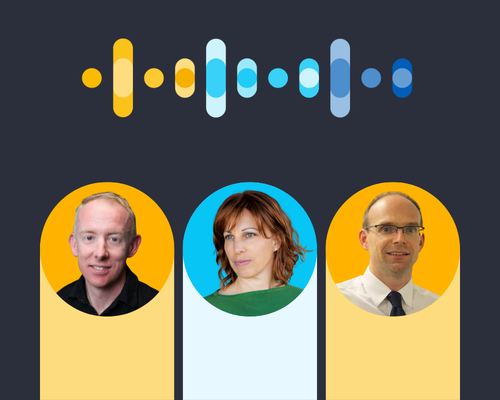
Our host, Sharon Jones is joined by:
- Emma Walters, member of the Genomics England Participant Panel and part of the Oversight Group for Genomics, Healthcare and You
- Henrietta Hopkins, Director at Hopkins Van Mil
- Chiamaka P. Ojiako, Strategic Engagement Lead at Genomics England
All reports and resources from the programme can be found on the Genomics, Healthcare and You webpage. You can also watch the webinar where the team discussed the findings from the programme.
“People said sharing their experiences of conditions that preceded them, the conditions they’re currently experiencing, and how they felt genomic information would empower them to protect their families and also equip their generations unborn.”
You can download the transcript, or read it below.
[00:00:00] Sharon Jones: Hello, and welcome to Behind the Genes, the podcast that brings you the stories, research, and innovations shaping the future of genomic healthcare. I'm Sharon Jones, and today we're discussing Genomics, Healthcare & You, a national engagement program that explored what public and healthcare professionals think and feel about genomics becoming part of routine healthcare in the future.
[00:00:22] Sharon Jones: Some of the topics that we'll be talking about today are covered in previous episodes, How Are We Serving Black Communities in Health Research? and What is Equity? and you can find them in your podcast feed. Joining me today are Amaka Ojioko, strategic engagement lead from Genomics England, Emma Walters from the Participant Panel, and Henrietta Hopkins, director at Hopkins Van Mil.
[00:00:46] Sharon: Welcome to everyone. So, Amaka, we're at a point now where genomics is moving beyond research in rare conditions and cancer and more into the routine personalized healthcare space. Can you talk more about this shift and why it makes public engagement more important than ever?
[00:01:07] Amaka: Hi, Sharon. That's a really interesting question.
[00:01:10] Amaka: So just to provide some context, in the 10-year health plan and the life sciences plan, genomics features really prominently. In fact, I actually geeked out and counted how many times genomics was mentioned, and in the 10-year health plan, it was almost 50 times.
[00:01:27] Sharon: Wow.
[00:01:28] Amaka: And for the life sciences plan, it was almost 30 times.
[00:01:32] Amaka: And basically, there's an aspiration for genomics to play a role beyond diagnosis to actually preventive care.
[00:01:41] Sharon: Mm-hmm.
[00:01:41] Amaka: And what that would entail is looking back at the work we've done over a decade, stemming from the 100,000 Genomes Project to where we are today, you would notice that people would have already presented with a condition and are trying to find answers before they get genomic testing.
[00:01:59] Amaka: But now we're at genomic testing now being part of preventive care. So while that sounds really exciting, it comes with a lot of questions.
[00:02:10] Amaka: How do people want this information returned? Do people want that information to be returned? Under what circumstances? And I think it's also important to state that it would impact both healthcare professionals as well as people.
[00:02:25] Amaka: And so engagement is critical because as much as it might be feasible technically and based on evidence, you can't do it without people.
[00:02:35] Sharon: Yeah.
[00:02:35] Amaka: So on one hand, healthcare professionals who would have to now start interacting with genomics information, you need to understand what their concerns and aspirations are as well.
[00:02:44] Amaka: And for people who usually maybe know nothing about genomics, you also need to understand what is needed to build trust. So it's very critical that public engagement serves as a bridge between science and society, ensuring that we understand where people are, and also ensure that we build trust in such a way that we bring people along.
[00:03:10] Amaka: So that's, that's why it's essential that we do public engagement.
[00:03:14] Sharon: Thank you. And it sounds so simple, but it's kind of not, because there's so many factors to consider, and it feels like there might be a big piece around literacy, around genomic literacy. Would you agree with that?
[00:03:28] Amaka: Yes. In fact, I would say something. Research has shown that there's something called disengaged audience, and there are a number of people that fall under that category. So people who know nothing about science or genomics, people who know and care less, and people who are actually interested but maybe have not had any opportunity.
[00:03:50] Amaka: So when we talk about genomic literacy and engagement, you would find that research has shown that most times people have felt like they were being spoken to, rather than a two-way conversation where people actually connect. I think connection is really critical in that sense, and for us to also understand what our design is, how it fits into a real world setting, what people are thinking about.
[00:04:14] Amaka: Because sometimes you might have a very neat idea, but it's not feasible in the real world. So that's why it's really important again to ensure that we're bringing people along in the design and our thinking and taking into consideration some of the barriers as well as concern.
[00:04:33] Sharon: Yeah. Thank you. I guess it can feel quite abstract.
[00:04:36] Sharon: So before we look at the programme itself, it would be helpful to understand what meaningful public engagement involves. Henrietta, for listeners that don't know, could you explain what a public engagement programme actually is?
[00:04:50] Henrietta: Yes. So that should be a really simple question, shouldn't it? It should be, "it's this."
[00:04:55] Henrietta: But actually, it can be many, many things, and I think what I want to emphasize here is that public engagement has been considered for a very long time. And in 1969, an academic in the US, she's called Arnstein, developed ‘ladder of engagement.’ And I think this is a really useful anchor for us when trying to understand what public engagement is because at the bottom of that ladder, if you imagine a sort of ladder with a pyramid sort of effect, but in the broader base of the ladder is sort of general communications and public awareness campaigns.
[00:05:32] Henrietta: Moving up from that, we get ‘being kept informed and engagement’, and then as we move up the ladder, we get things like testing, exploring with a range of publics what their views are on something, but that could be quite light touch. And then we get to the top of the ladder, and we're talking about really meaningful co-production, co-design, exploring a topic together over time.
[00:05:59] Henrietta: And so this engagement programme was absolutely heading towards the top of the ladder. So this engagement programme wasn't really typical of a lot of engagement programmes. It explored over time with people the issue of genomics and healthcare, and I know we're gonna talk about more about this specific programme, but it was much more in depth.
[00:06:23] Henrietta: It engaged communities from, from where they were in the process. But engagement can mean a lot of things, and I want to be clear that this wasn't necessarily a very typical or straightforward engagement programme.
[00:06:38] Sharon: Yeah. Thanks for explaining that. That ladder gives a real picture of the whole process and, and understanding that it needs to be a two-way collaboration and not just a kind of broadcast information in one direction and really getting people involved at the heart of this 'cause that is who are going to be most affected in the longer term.
[00:07:01] Sharon: So now we understand a bit more about the approach. Amaka, what did Genomics Healthcare and you kind of aim to set out in terms of an engagement programme, and what did it explore?
[00:07:12] Amaka: So Genomics Healthcare & You was keen to explore and understand what healthcare professionals, public, as well as communities that are historically underrepresented in genomic research, what their attitudes, perspectives are as it relates to genomic information becoming a part of preventive care for adults.
[00:07:33] Amaka: And so we were keen to understand the societal implications of that. It sounds like an exciting thing, but what do you think about it on one hand? And then on the other hand, we're also keen to understand what the principles, the values, the parameters people expected for us to translate what we're, whatever we're doing in practice.
[00:07:51] Amaka: So in essence, we ask questions like, do people want to receive this information? How do they want to receive the information? Under what circumstances is it okay to use this information for research or some other purposes? We're also keen to understand what are the things that people need to see to build trust and what are the deal breakers, the things that you shouldn't do and the things that they felt comfortable with.
[00:08:18] Amaka: And just like Henrietta said, we did this across three phases and we're keen to test out what's already out there in terms of evidence versus what's currently obtainable in society that's including healthcare professionals and the public more broadly.
[00:08:33] Sharon: Yeah, that's great. And was there anything that stood out for you that you noticed from what people were saying?
[00:08:41] Amaka: The recurring thread across the different phases, strands, whoever we spoke to, was trust. So on one hand, people were cautiously optimistic. They were excited at the prospect of having information that could empower them with details to help them manage their health better. Some people were thinking beyond themselves.
[00:09:04] Amaka: They were actually thinking about their families. They were thinking about generation unborn. But I think what was really interesting is how specific people were and how precise they were about these are the things that I feel comfortable with, and these are the things that if you do, would breach my trust.
[00:09:19] Amaka: So it's really interesting how genomics comes across as a complex topic. But when you create the right environment and you give people that sense that you're not here to be spoken to, we actually want to hear what you're saying, you'll be surprised how much you would get out of people, and you'd be surprised the extent to which people are willing to help you shape the work that you're doing.
[00:09:43] Amaka: That's what I found really amazing, and interesting.
[00:09:46] Sharon: Thank you. That's interesting about that trust piece, which we are gonna come onto later, and people really feeling that they are heard and what they say will really potentially have that impact longer term. And one of the things you touched upon is about people just even understanding what genomics even is.
[00:10:04] Sharon: So Emma, coming to you with that healthcare perspective from the professional side of the piece, because it is the public and healthcare professionals that we are talking about here. If genomic information is gonna play a greater role in healthcare decisions, why is it important that we understand what the public thinks and feels about this?
[00:10:24] Emma: So I think it's incredibly important and really just to thank you very much for your points to Macca and Henrietta in that they absolutely have already had that discussion about that co-production. And I think that is so important because trust is gonna make or break this project.
[00:10:37] And if we don't get it right initially, the project is gonna be so much poorer for it. I think historically, we've always considered genomics as almost like a standalone in rare disease. It's been something that's quite separate to healthcare, whereas what we're proposing here is really embedding it within the healthcare system, and that's quite different from anything that's been attempted before.
[00:10:59] It was a very mature conversation I heard from both the public and the healthcare professionals, really understanding that genomics doesn't exist in a vacuum at all. And I think people have placed it within that background of an NHS that is really struggling under strain, and how do we introduce this new style of genomic medicine without pressuring the rest of the healthcare system I think they were very, very clear for me about the importance of engagement and also the limitations of what can actually be accomplished.
[00:11:29] We need to be really transparent with people about what can be done and learn from the lessons that we've previously had. There are real concerns from the public about future-proofing of this project, that what is being so deliberately discussed now and conversations really agonised over to make sure we get it right now, that these decisions aren't undone in the future by potentially future governments and differing political opinions, and I think that's so important to consider and get right.
[00:11:59] Sharon: Yeah. It goes back to that trust.
[00:12:01] Emma: It does, absolutely. And I think it's also around making sure that this project represents that wider community. We know that there are areas of the community that we've historically never reached, and that's for a multitude of reasons and really important reasons that it's important that we acknowledge and we hear.
[00:12:18] And I think it's about having those conversations and saying "I'm sorry, we've got this wrong in the past."
[00:12:24] Sharon: Yeah.
[00:12:25] Emma: But it's really, really important that we acknowledge that and tell them we want them to shape that project and have that two-way collaboration. That co-production is gonna be tantamount, I think, to the success of any future projects.
[00:12:40] Sharon: From what I'm hearing, having a broad range of views is so important. It isn't a one-size-fits-all approach when it comes to this engagement program. So, Henrietta, what was taken into consideration when designing this program? From what I understand, it covered a number of areas.
[00:12:55] Henrietta: For the program, we very carefully worked with partners.
[00:13:00] Henrietta: So Hopkins Van Mil led the partnership, but we worked with Rand Europe, who ran the healthcare professional strand. We worked with the social agency, People Street and The Leap, who ran the inclusive community strand, and Hopkins Van Mil ran the public deliberation, the public dialogue strand. So there were these three strands of engagement, all which had a series of considerations that we took into account as we were designing the process together.
[00:13:32] Henrietta: We couldn't take a blanket approach. We shouldn't. And it was one of our principles that we would actually tailor our approaches for each strand, each community that we were working with, to make sure it was appropriate for them. A sort of key principle is that we start from where people are, not where we want them to be.
[00:13:50] Henrietta: Whatever feelings and thoughts they had about genomics, whatever misunderstandings, whatever truth they knew about genomics, we tried to work with the groups to reach shared agreements on terminology, on language. But again, that's starting from where they are. So what does genomics mean for you, for your people, your community?
[00:14:12] Henrietta: And that mattered as much in the healthcare professional strand as in the inclusive communities and in the public dialogue. I should say that for each group, our approaches were different for different reasons The inclusive community strand included waves of community researchers working with communities in Bradford, in East London, and in Birmingham to, to bring them along, taking them from where they are to what they wanted to discuss, what matters to them when they think about genomics and healthcare.
[00:14:47] Henrietta: That culminated in in-person workshops in each of those locations. For the public dialogue, we recruited people who've not engaged with this kind of discussion before, a really diverse group of people from across society, broadly reflective of the population. Whereas the inclusive community strand was groups of people who, from different communities and taking an intersectional approach, so not just looking at one aspect of people's lives, but all their aspects so that they could bring what they have to the discussion.
[00:15:23] Henrietta: We use creative, engaging, and in some cases, innovative approaches to the discussions. So one thing we never do is ask a question and get an answer. We are exploring the process through a series of discussions, activities, ways of exploring the topic which people can really engage with. And that includes accounting for different cultures, for different practices, for different lived experiences as we, as we speak to them, and ensuring there's an appropriate value in taking part.
[00:15:57] Henrietta: So this must never be a tokenistic or an extractive process. It's going to be one where people can see mutual benefit in exploring this topic, because then I might, my community might have more trust in the process. We might feel we have a voice, and it's being heard, and those things are, are really important.
[00:16:19] Henrietta: I just want to add one more thing about public dialogue, which is that is a quite a specific form of engagement where we ask specialists to speak to participants on a level playing field, in panel discussions, in presentations, but where participants can really explore that topic. And we had some amazing conversations where people who work in the field are consultants in genomics, they're clinicians, and they were having these really honest, fascinating interactions with participants, so that they could really explore all the dimensions of this topic before they reach their conclusions.
[00:16:59] Henrietta: Genomics England want to understand the values, the principles people hold, but you can only do that if they know they're coming into this and will genuinely be heard, and what they say will have an impact on, in this case, the research study.
[00:17:15] Sharon: Thank you. It sounded so comprehensive. I wanted to bring back one of the points you said about the kind of language and, and that kind of accessible piece.
[00:17:25] Sharon: What were you finding or what were you hearing about how people understand what genomics are and even sort of the language around genomics?
[00:17:32] Henrietta: So I think it’s interesting that people came at the term 'genomics' from their own experience. So that could mean for some communities actually a real focus on DNA, and their experience of that was actually as being an immigrant to this country, and then things like paternity tests and things that actually perhaps wouldn't be obvious to Genomics England at first of all that this would come into it.
[00:18:01] Henrietta: So people came at it from where they were, and in the healthcare professional strand, people said, interestingly, that they felt they had a pretty good grasp of what genomics was. But then one of the findings was that they actually wanted to have more support and training and information to understand how genomics would work in healthcare.
[00:18:22] Henrietta: And in the public dialogue piece, there was clearly a huge range of understandings of genomics and interpretation of the language, and that was really helpful. And I think that feeds into more broadly what we heard about, as Amaka has already said, about trust, about equity and participation, and that there's a real need for the language to be clear from Genomics England's side and from the broader healthcare perspective because people don't want to be given reassurance.
[00:18:57] Henrietta: They don't want to be patted on the head and told them, "It's all right. This is a good thing. You know, embrace this." They want honesty. They want to know what, what the full dimensions of genomics in healthcare could, could look like. So language is complex, and it's nuanced, and it's subtle, and that's what we heard.
[00:19:16] Sharon: Yeah, yeah. That's interesting. Thank you. And, Amaka, I understand the programme consisted of these three phases with engagement activities across all these different groups. Can you just tell us a little bit why we adopted that approach?
[00:19:28] Amaka: Yeah, sure. So prior to doing this engagement programme, we commissioned a literature review.
[00:19:35] Amaka: Fava Health conducted that literature review, and basically that literature review assessed what the current evidence is as it relates to people's views, and that includes healthcare professionals as well as the public, what their motivations, their attitudes, perspectives, and concerns are as it relates to population level genetic testing.
[00:20:00] Amaka: And as a result of that literature review, we had a sense of what the existing evidence and knowledge was and where the gaps were.
[00:20:11] Sharon: Yeah.
[00:20:11] Amaka: And so our engagement programme, if you notice, is quite robust because it took into consideration some of those gaps that were identified, and we tried to design the engagement programme to bridge some of those gaps.
[00:20:24] Amaka: So I'll point out some of the gaps. Not all, just some specific ones. So one of the gaps was that we have very limited understanding of the perspectives of non-genetic healthcare professionals. And how that influenced the way we went about our programme is that we sought to expand the people we engage with beyond the usual suspects, people that have broad knowledge and understanding of genomics or use it in their day-to-day based on that understanding of the shift and expansion we spoke about earlier on.
[00:20:59] Amaka: So if people are going to be interacting with genomic information, but that's not their scope, it's very important that we understand what their perspectives are. The second thing was we have very limited understanding, or we have very limited scope as it relates to engaging underserved communities, what their understanding is, what their concerns are, what their attitudes are as it relates to genomic testing.
[00:21:23] Amaka: And just like Henrietta mentioned earlier on, we designed the engagement programme to have the inclusive community engagement phase. And in that phase, we had something we called the immersion phase and a place-based approach where we were keen to understand how do you engage with communities who historically maybe have not had access to information around genomics, maybe have not interacted with genomics in the course of their healthcare?
[00:21:54] Amaka: How do we engage with them? How do we address some of the historical antecedents, people, things people already have as their impression of genomics as a result of maybe history, trial, science? How do we get people to trust us enough to open up to have that conversation with us? And so the literature review was very helpful in giving us pointers on this is, this is the evidence basis, this is what is currently available, and these are the areas you should look into in terms of the programme.
[00:22:33] Amaka: And that influenced how we designed the kind of questions that we sought to get answers to, who we engage with, as well as some of the methodologies that we deployed.
[00:22:43] Sharon: Moving on around that healthcare professional audience, Emma, they told us that they felt confident in their understanding of genomics.
[00:22:50] Sharon: But how does that compare with your own experience of talking to healthcare professionals about genomic information?
[00:22:57] Emma: Yeah, I found it fascinating that the healthcare professionals felt they were comfortable with genomics 'cause certainly from our experience, that's not the impression that we get.
[00:23:06] Emma: Pretty much any interaction that I get with any healthcare professional that isn't a clinical geneticist or, you know, a genetic specialist, the first 10 minutes of any consultation will involve me actually explaining what genetics is, what the genetic testing we've undergone for my son is. So yeah, I find that really fascinating, and I do wonder whether that speaks to people not wanting to almost acknowledge the fact that there is that knowledge gap there, and that feeling they're being judged for that knowledge gap.
[00:23:36] Sharon: Right. Right. Right.
[00:23:37] Emma: I think it was really fascinating what Amaka was saying around kind of literacy around genomics because that's gonna be so important to get right. I know when I was reading through the overarching report and looking at the consent thing, you know, you've got to be aware that when you're consenting somebody for any kind of genetic testing, even if we're looking at pharmacogenomics or polygenic scoring, we're essentially testing the whole family.
[00:24:03] Emma: So that was really, really important that we get that right, that consent process. So we very much spend a lot of our time actually educating healthcare professionals about the impact of genomic testing. The emotions that surround that are so, so important and I think can't be underestimated, the emotions.
[00:24:20] Emma: Even for, you know, an adult program such as ourselves, there are still many really important emotions that are raised up that it's so important to understand, and I think that speaks to the drivers as to why people might be involved in genetic research.
[00:24:35] Sharon: Massively. I don't know if that was one of the themes that came up around emotions being a driver, but I'd be curious from Henrietta, what were some of the consistent themes that did come out of these conversations across the engagement program?
[00:24:49] Henrietta: The, the overarching finding was across all the strands was a conditional optimism about genomics in healthcare.
[00:24:58] Sharon: And for listeners who don't know what that means, could you dig into that a little bit?
[00:25:02] Henrietta: Yeah. So when, when we're talking about genomics in healthcare, we were looking at broadly - how do people respond to genomic data being used to inform healthcare decisions.
[00:25:15] Henrietta: This conditional support was why they were optimistic because they felt this could pivot society to a more, a more preventive view of healthcare so that people could take responsibility for their own healthcare knowing about their genomic data, if there is genomic data about them.
[00:25:38] Henrietta: The conditionality was on four conditions, so one being that genomic data is used for healthcare purposes, and there was a real unease about possible genomic data being used by other things. So, they could be used for other aspects of societal policy, and there was really an unease about that. And that was partly because of direct experience of discrimination and, for example, something like the Windrush scandal.
[00:26:12] Henrietta: So they felt genomic data is a very powerful tool which could be misused, so they wanted genomic data to be used only for health purposes, that the benefits of that genomic data reach everyone equitably, that it's not a postcode lottery, that it's, that people can benefit from whatever their background, their heritage, their community.
[00:26:35] Henrietta: And they were discussing this in the context in which we see the NHS being really under pressure, and they wanted genomics to be embedded in healthcare where it could be adequately resourced, where healthcare professionals could be properly trained in what it means. And the NHS is structurally ready to return findings to people about their genomic data and to give them support to receive whatever information that would throw up.
[00:27:08] Henrietta: That context piece was really important. So as Amaka has said, trust was a thread. But trust could be undermined if this programme of genomics being used routinely in adult care wasn't seen in this broader political and social context. There were two main areas of genomic research that we asked participants to explore.
[00:27:37] Henrietta: One is pharmacogenomics, which is tailoring of medicines so that they suit your particular genetic makeup. And for most people across the strands, this was really the positive area. This is the area that could help with people getting the right medication the first time. It stops people getting completely the wrong medicine because their genetic, uh, makeup means that they would react very badly to it.
[00:28:06] Henrietta: So they said the trial and error approach now undermines confidence in medicine, in healthcare. Having this embedded in the healthcare system could really build confidence and trust. But where there was less clarity or certainty for people was where findings could be returned in relation to your risk of a condition based on your genetic data.
[00:28:32] Henrietta: And where people were more uncertain was where in conditions where there isn't a clear pathway to treatment. So things like cardiovascular disease and some cancers, they felt a bit more confident about that because they felt actually there are routes, there are treatments that can be made. But if we're talking about dementia or some other thing where there aren't clear pathways to treatment, then that was more challenging and, and they felt Genomics England should look at that more cautiously.
[00:29:01] Henrietta: But there's trust, equity, and participation. As I've said, people want honesty over reassurance. They want to be represented in genomic data. Why currently is it not effective in capturing all communities, the diversity of the UK population? They want data protection measures which are future-proof so that somehow there can't be a sort of mission creep where it goes beyond healthcare, and they want transparency about who's seeing the data, how they're seeing it, and where.
[00:29:34] Henrietta: And they really stress this wider ecosystem readiness that, you know, if the system isn't ready for genomics to be embedded routinely in healthcare, then that will cause all sorts of problems which need to be addressed early on in the design of this research study.
[00:29:54] Sharon: Yeah. Thank you. So we've got trust, we've got participation.
[00:29:57] Sharon: There's the equity, there's a lot around communication, the readiness for us to even embark on this on a broader long-term scale. What are the risks of not doing work like this, Henrietta? Like, what could happen if we don't understand people's perspectives and concerns around genomics as part of routine adult healthcare?
[00:30:17] Henrietta: I think the most obvious is the counterbalance to the trust thread that we've seen in these findings, that it would generate mistrust. One of the big things that was really evident in the inclusive community strand, but also in across the piece, is please see this as the beginning of a conversation.
[00:30:35] Henrietta: Don't see this as the, as, "Well, we've done that piece of engagement. Good for us. Now we know." Continue the conversation. See this as a starting point for ongoing engagement with all of us who will be affected by the decisions that are made about how genomics is embedded in healthcare in the future, and that will bring benefits for everyone, they felt.
[00:30:59] Sharon: Yeah, and this is a theme that we've covered in a lot of the podcasts this past year. Did anything come up about, like, reciprocity around with this engagement piece in terms of if we are giving our views, you know, what do we get back from contributing in this way?
[00:31:14] Henrietta: Absolutely. And, and it was really a big theme across the piece, and that's where the trust comes in again.
[00:31:23] Henrietta: It is reciprocal. They could see it's reciprocal because the healthcare system will benefit. So at a societal level, perhaps we will save money in the NHS. Perhaps our NHS can be better. At a community and individual level, our health can be better. The health of future generations can be better.
[00:31:43] Henrietta: We will take away some of the uncertainty but that will only happen if, if you involve us and engage us and speak to us.
[00:31:52] Sharon: So Emma, I know you talked about the kind of difference between what you heard in those conversations and maybe what you've experienced. Was there anything else that you heard in the conversations that surprised or challenged your thinking?
[00:32:05] Emma: I was really surprised at the perhaps non-traditional ways of genetic testing that are already being undergone in communities. So particularly when Henrietta spoke to the inclusive communities, actually the sickle cell community and the way they also undergo genetic testing and marriages are being undertaken based on, you know, who are carriers of sickle cell disease.
[00:32:28] Emma: And I think it's really important that, yeah, we understand those non-traditional routes into genetic testing or, or disease that perhaps, you know, I would never have been aware of before. I think the other thing that really challenged me and was really important to understand was when we talked about digitalization of the health service, and I know that's one of the big pushes in the NHS 10-year plan, was the importance people placed on that human interaction, particularly around that ongoing human interaction.
[00:33:00] Emma: It was very important what Henrietta just mentioned around closing that feedback loop, that people have been really honest. They've given us these conversations, and it's important that we have the ability to go back to them and explain to them what their conversations have allowed us to demonstrate.
[00:33:16] Emma: That's that two-way communication that's gonna be so important to building trust.
[00:33:23] Sharon: Thank you. And, you know, going a bit further into that trust piece, and we've talked about communities who have historically felt mistrust towards this area of healthcare. Amaka, can you go into a bit more detail about what we did to engage with inclusiveness in communities, and what perspectives did they bring?
[00:33:43] Amaka: Yeah, so I, one thing that I found really interesting and still resonates with me from the inclusive community engagements is the importance of understanding that for us or for, you know, Genomics England and people working within this space, genomics might be a technology, it might be science, but to people it's their experiences.
[00:34:05] Amaka: Just like Henrietta mentioned, for someone it could be what needs to be done before they make a marriage decision. So for certain communities, before getting married, they would investigate the other family. For some people, it was an immigration experience, having to undergo a paternity test. So people came into those conversations with different understanding of what genomics meant to them.
[00:34:31] Amaka: So imagine if we had gone blindly and started talking about genomics without understanding how people perceived or understood it, it would have been, it would have been a missed opportunity. And so for me, I think one of the key things was the kind of methodologies we used, how flexible we were. We are very sensitive to the communities we're engaging with, and we adapted our methods and our ways of communication to suit who we were communicating with.
[00:35:00] Amaka: So let me give you an example. For Birmingham, we adopted a methodology called the Good Ancestor Model. So it's a book. There's a TED Talk about it And I was just really fascinated at how well people were open to it. So it's basically helping people see that the decisions they make, their actions and inactions today doesn't only impact them, but could impact the generations unborn.
[00:35:27] Amaka: So are you a good or bad ancestor? And so using that method, it made people pause and think, "What were the conditions that my grandparents or great-grandparents, what are those conditions that they had? What are the conditions that I have now, and how do I want to be responsible about handling that information for the future?"
[00:35:50] Amaka: Just having that context made people begin to see what this meant for them. People said sharing their experiences of conditions that preceded them, the conditions they're currently experiencing, and how they felt genomic information would empower them to protect their families and also equip their generations unborn.
[00:36:09] Amaka: And believe you me, the committees we're talking to wouldn't want to have that conversation normally. Also using tools, for instance, explaining to people how genomics contributes to the entire picture as well as other environmental risk can be quite complex. Using something like Lego bricks to show what that distinction helped people related to it, and it helped them to understand what we were saying.
[00:36:37] Amaka: And also giving people the opportunity, taking out time to allow people to talk about their own experiences, because I think this is really important. People found it really difficult to separate the NHS, their experiences with the NHS, with genomics. So giving people the opportunity to talk about their experiences, how they felt about the NHS, how they felt about healthcare services they've obtained, their hopes, as well as their concerns It kind of broke the ice and gave us that environment for them to see what the future could look like.
[00:37:13] Amaka: They saw genomics as a potential tool to give them agency. They saw it as a potential tool to mend and improve the relationships that they have with their healthcare providers. They saw it as an empowering tool for them to manage their healthcare and also contribute in the process of making health and healthcare services more efficient, effective, and precise.
[00:37:34] Amaka: So I think the key lesson is for people, genomics is more than science, it's their experiences. And so breaking that ice and allowing people to connect what it is to their lived experiences. Going back to what I said again about disengaged audiences, people don't wake up in the morning and think ‘genomics.’
[00:37:52] Sharon: No.
[00:37:53] Amaka: So you have to break it in such a way that people can relate to what you're saying, and I think we did that with inclusive community engagement, public dialogue, and healthcare professionals. But more importantly, giving the historical context and how people feel about science for certain communities.
[00:38:09] Sharon: Yeah. Thank you. That's really comprehensive, and it sounds like something that Henrietta said earlier about using these innovative, creative ways to bring out that conversation, which ordinarily would be quite difficult if you're just asking someone a question and expecting an answer going in cold. You talked about Lego.
[00:38:26] Sharon: Were there other techniques that were used?
[00:38:28] Amaka: Yeah, just a quick one. Dancing and art.
[00:38:30] Sharon: Oh, love this.
[00:38:32] Amaka: Dancing and art. You'd be surprised how people begin to open up when they dance and, and when you give them activities that loosens them up. So that was a really interesting experience.
[00:38:50] Amaka: So seeing Genomics England staff interacting with participants, dancing, and playing was really amazing to see, and people felt really excited that an organization that felt really distant could make out time to dance with them, have conversations with them, and answer their questions.
[00:39:08] Sharon: Oh, that sounds amazing.
[00:39:10] Emma: I think what was really important as well was the fact that the communities were led by community leaders in some of the inclusive community workshops where they said they were undertaking the language that was comfortable to the individuals.
[00:39:23] Emma: It was hugely important, I think, to absolutely meet people where they were. You know, because we have a real risk of alienating people if we make thing only digital or we make things only undertaken in English. We're gonna have a real risk of bias, aren't we? I think it was really important that we understand from what Amaka was saying, that actually people don't view genomics in isolation, that people don't tend to say that there's Genomics England, there's the NHS, there's my GP.
[00:39:54] Emma: They view the NHS as a whole. And I think it's really important that we acknowledge that. And actually, if they have a bad experience at the NHS, that mistrust is then going to move throughout the whole ecosystem that I know people like to call the system, but actually there's no differentiation for people who are receivers of healthcare.
[00:40:15] Henrietta: I think our approach is always to be creative, to start where people are.
[00:40:23] Henrietta: So bringing in things like drawing something or what does this mean for me might not be a question of a straightforward conversation. Having really expert facilitators as well as community members working so we could create a space of huge respect for each other's views of trust, and that might not sound terribly innovative, but actually it's quite hard, and it isn't always done.
[00:40:53] Henrietta: And to know people are, are valued and so that they could think, "What would good look like here? Can I imagine a future where this is a good thing and it's happening well?" But then what would stop that looking good? Looking at it round the question is often the most creative thing you can do to generate these sort of brilliantly rich conversations.
[00:41:14] Sharon: We've covered a lot today from why public engagement matters and to how people's views can shape decisions made about its future.
[00:41:22] Sharon: Before we finish, I'd like to ask you the same question. So looking ahead to the future, what does success look like, both for genomic healthcare and for the way that we involve the public in shaping it? And I will come to Emma first.
[00:41:36] Emma: So I think for me it's about real collaboration, a real co-production and closing that feedback loop.
[00:41:43] Emma: Very often when we get involved in healthcare research, it can be a case of we take that information from people and then they never hear back. I think it's really important to almost undertake a ‘you said, we did’ approach, and really help people understand how their sharing of information has really influenced how this has progressed the project and research project forward.
[00:42:07] Sharon: Henrietta?
[00:42:08] Henrietta: For me, it's about never underestimating the value of ongoing communications beyond sharing information. So ongoing collaboration, as Emma has said, I think is so important. Ongoing commitment to engage people really meaningfully in discussions around genomics healthcare and them, and their communities, and all of us.
[00:42:35] Henrietta: And I think without that it can't be successful, so I really hope that that's embedded in everyone's thinking from now.
[00:42:44] Sharon: Absolutely. And Amaka?
[00:42:47] Amaka: I think learning, being open to challenge. I think Genomics Healthcare and You was an amazing programme. It exemplifies what happens when an organisation invests and puts their money where their mouth is, empowers people to actually do this work, provides an environment where people can actually have open conversations.
[00:43:12] Amaka: I just want to conclude by saying a big thank you to Henrietta, all the partners who were involved in this programme. They were amazing. I want to thank Emma, the oversight group, the participant panel working group who helped as our critical friends and made this programme a success. And I also want to thank all the participants, all the Genomics England staff that took out time during the weekend to be part of this programme.
[00:43:37] Amaka: I just want to say that without you, there wouldn't be a Genomics Healthcare and You, so it's really amazing and I hope that we continue with this energy in the future in providing platforms for people to feel safe enough to share their thoughts and perspectives.
[00:43:53] Sharon: Thank you. And on that brilliantly positive note, we'll wrap up there.
[00:43:57] Sharon: A huge thank you to our guests, Amaka, Emma, and Henrietta for joining me today as we discuss genomics entering routine healthcare. If you enjoyed this podcast and you'd like to hear more, please subscribe to Behind the Genes on your favourite podcast app. I've been your host, Sharon Jones, and Behind the Genes is produced by Deanna Barac, Sophie McLachlan, Florence Cornish, and Patrick Wallace at Bespoken Media.