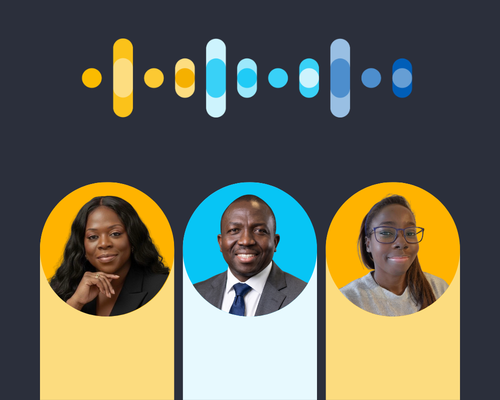
What is equity in healthcare?
In this explainer episode, we’ve asked Sasha Henriques, Director of Equity Assurance at Genomics England, to explain what we mean by the word equity in healthcare and genomics.
You can also find a series of short videos explaining some of the common terms you might encounter about genomics on our YouTube channel.
If you’ve got any questions, or have any other topics you’d like us to explain, let us know on [email protected].
You can download the transcript or read it below.
Florence: What do we mean by the word equity? My name is Florence Cornish, and today I'm joined by Sasha Henriques, who is Director of Aquity assurance here at Genomics England, and also has a PhD specifically looking at social justice in genomics. And Sasha is here with us today to tell us much more about the topic.
So Sasha, I think with this topic, when it comes to discussing equity in healthcare, a good place to start might be by acknowledging that not everyone has the same experience with accessing healthcare or the same outcomes even when they do access it.
Could you maybe tell us a bit more about why that is and what factors are at play there?
Sasha: Hi, Florence. Thanks. It's a really interesting question because it's a really big problem. So, the reasons that we don't have access to the same things can have multiple different ways that we're affected, from where we're born, to the schools that we go to, to the education that we have access to. Lots of those things are outside of our control, and they're determined by the political landscape that we're born into, whether we're born in a rich country or a poor country, or a rich part of the country or a poorer part of the country.
So those are kind of the structural things that might make things different. So, when we come to access healthcare, there might be different healthcare that's available to us. We might be able to negotiate the system differently because of what we understand about how healthcare works and what's available to us.
And then there might be personal things about us that make those things more challenging, so the abilities that we have or don't have, both kind of the ways that we learn, the ways that we hear, the ways that we see. All of those things kind of change our access, so the way the system treats us, but also how we show up in the system are all things that can affect us when we come to engage with healthcare.
Florence: And obviously, the topic of this podcast is equity, and we hear this word equity a lot, especially in conversations around healthcare and genomics. But could you explain for any listeners who maybe aren't quite sure what exactly equity actually means?
Sasha: Yeah. So I think lots of times people hear equity, and they think it's just about fairness, and it's just about treating everybody the same way.
But what equity does is that conversation, that question that you asked me about, like, why do people experience healthcare different, there are all sorts of places in our lives where we will have different access, different benefits, different ways that we can participate.
And what equity says is that because we're all different in those different ways and we have different needs, different ways that we're discriminated against, and different ways that we're privileged, what equity means is how do we design a system, how do we offer something or do something that enables everyone to have the same outcome of that benefit?
So for example, you could make a research leaflet really easy for everybody to access. And what that would mean is that everybody gains more access to that information. But if you are discriminated against because of the way that you read information or the way that you access information, that's not really helped you.
So it's helped everybody, so we can move everybody along, and that's kind of what we would call equality. But actually, you don't all get the same outcome at the end. And what equity means is that we understand the different needs that people have so that when we look at where everybody arrives to at the end, that's where we see the benefit, rather than just making a change that's the same for everybody.
Florence: Can we dive a little bit deeper into that? That difference between equity and equality. Could you maybe explain a little bit more about that specifically?
Sasha: Yeah. I guess there are different ways that people illustrate the difference between equality and equity.
And so equality could mean, for instance that everybody needs to get to a certain position, like from position A to position B, and everybody needs a particular bike to get from position A to position B. And so equality would be that we give everybody the same bike. So we make sure that your bikes have the same speed, your bikes are the same make, that your bikes are as new as each other, so nobody is given a worse bike than the other to get from position A to position B.
But it might be actually that you've given this bike to somebody who isn't able to ride a bike because they have a problem with their legs, or it might be that you've given a bike of everybody's bike is the same size, but some people are shorter than other people.
And so while equality means kind of treating everybody the same, equity actually means that we take consideration of the fact that we may need to treat people differently, so that they can get the outcome.
So everybody can make the journey, but not everybody's going to make the journey in the same way. And equity is about what do we do so that people can all experience things and benefits in the same way, rather than treating everybody the same way.
Florence: Mm-hmm. And do you think there are any challenges in equity specifically to the field of genomics?
Sasha: Yeah. So I think that's a really simple explanation that I gave between the difference of equality and equity, and genomics is a really interesting point to show why that's a really simplified version of thinking actually what equity means.
So when we think about genomics, there are a number of particular things about genomics and the history of genetics that make that equity conversation and the way that people's benefits and outcomes may be shaped really critical when we think about genetics.
So one is, I spoke before about, you know, where you're born in the world can have a really big impact on what you're able to access and what you're not. And genetics is one of those things that kind of really changed the world but hasn't changed the world for everybody. And so the people who were studied, the people whose DNA was looked at, all of the things that give us the knowledge about how genetics should work, was largely done in only particular places in the world, so particular northern European countries, parts of the US, some of those studies have been done in Japan.
So lots of the knowledge that we have around what genetics means for different groups and different people doesn't actually think about all of the people in the world. So when it comes to genetics, we're kind of using references and data that actually are already not equal with the people that we want to serve.
So there's something like really embedded in the way that genetics works, that we're kind of already starting from an uneven landscape.
And then genetics sits within healthcare, it sits within research, it sits within all these other places, which again, are affected by things like money and things like politics, political stability, geography, whether your country has legislation or policies for those things. So, I guess those are the kind of structural things that make genetics kind of different and more challenging when we think of those inequities that already exist.
Florence: Yeah.
Sasha: But then genetics itself is about finding information that, yes, is about you, but might also be information that we share with lots of other people, so people within our families, people within our populations. And so actually thinking about who has the rights over genetic information, how genetic information is shared, how the genetic information benefits everybody that it should, are other, like, really particular questions that come with genetics.
So, there are all these different ways that the structure can build inequity into what we're thinking about genetics because of the history of where genetics has come from, but also the ways that the system kind of uses genetics, and the ways that genetics can be used against us. So I think it's really important, that conversation about equity in genetics, that it's not just about getting from place A to place B, it's about what is the road like? And what experience will you have? And when you get to the end of the road, what are people going to do with the information?
Yeah. So actually, that really simple explanation that I gave can become really quite complicated when you think about something like genetics.
Florence: And so you took on the role of director of equity assurance at Genomics England. Tell me a little bit more about that. What’s the purpose of this role? Do you have anything specific that you'd like to work towards or achieve?
Sasha: So the reason that that role came about is because of some of those problems that I've mentioned, that you want organisations like Genomics England, research organisations, healthcare organisations, we often have missions and strategies that are about the benefit for society, that we do this work for the benefit of all, for the benefit of society. We want a world where everyone can benefit from genomic healthcare, for instance.
These are really common kind of strategies, motivations, and intentions that organisations have, but they're so top level that actually what does that mean on a practical day-to-day?
So my role really came about from Genomics England being really committed to the idea of equity and wanting to achieve it. But actually, in reality, how you make that happen in the different functions of an organisation can be really quite tricky.
So how do we think about equity when we think about the science, when we think about the research, when we think about the data, when we think about recruitment, when we think about someone's experience of being part of research? There are equity questions in all of those places.
Florence: Mm-hmm
Sasha: Importantly, the thing that I want to achieve is to really appreciate the fact that everyone thinks that this is important, and give them some of the skills so they can think about what kind of dealing with inequity in their area kind of means.
But also kind of importantly, what the role also means is, like, there's equity and also there's assurance. So one of the things that doesn't quite always get attached to sometimes these conversations about equity, is that actually you can measure those things.
So you can measure patients' experience. You can measure whether there was a benefit. You can measure whether there was a change in clinical outcome.
So again, kind of using that example of the people on the bike, we can change things to meet people's needs, but actually we need to then kind of measure the times at the end of the race to see whether actually we improved the times for people now that we've made those adjustments. So that's what the equity and the assurance means, right?
So the equity is kind of putting things in the system or in the design that we want to have the impact of fairness, but the assurance is, and how am I monitoring and measuring that so that I can say, "Well, actually, that was a successful change. I would do that again, or I wouldn't do that again."
Florence: Well, I think we'll finish there, but that was such an interesting conversation, Sasha, thank you so much for coming on and, and taking the time to talk to us.
Sasha: No problem. Thank you.
Florence: If you want to hear more Explain episodes like this, you can find them on our website at www.genomicsengland.co.uk or wherever you get your podcasts.
Thank you for listening.