Can blood cancer be inherited?
Blood cancers are the fifth most common group of cancers in the UK. But for a small number of people, the condition may have an inherited genetic cause.
In this episode of Behind the Genes, we explore the role of genetics in blood cancer, and what an inherited risk means for patients and their families. Our guests explain what blood cancer is, how inherited factors can increase risk, and why multidisciplinary teamwork is key to supporting families. They also look ahead to future advances, from whole genome sequencing to prevention trials.
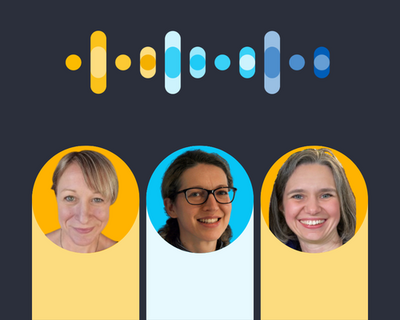
Our host Amanda Pichini, Clinical Director at Genomics England, is joined by:
- Dr Katie Snape, Principal Clinician at Genomics England and Consultant Cancer Geneticist
- Bev Speight, Principal Genetic Counsellor
- Dr Sarah Westbury, Consultant Haematologist
“By doing whole genome sequencing we get all of the information about all of the changes that might have happened, we know whether any are inherited, but importantly, we’re certain of the ones that have just occurred in the cancer cells and can help guide us with their treatment.”
You can download the transcript or read it below.
Amanda: Hello, and welcome to Behind the Genes.
Sarah: When we think about blood cancers, it’s a whole range of different conditions and when you talk to patients who are affected with blood cancers or are living with them, their experiences are often really different from one another, depending in part on what kind of blood cancer they have. We also know that blood cancers affect not just the cell numbers but also the way that those cells function, and so the range of symptoms that people can get is really variable.
Amanda: I am your host, Amanda Pichini, clinical director at Genomics England and genetic counsellor. Today I’ll be joined by Dr Katie Snape, principal clinician at Genomics England and a consultant cancer geneticist in London, Bev Speight, a principal genetic counsellor in Cambridge, and Dr Sarah Westbury, and haematologist from Bristol. They’ll be talking about blood cancers and the inherited factors that increase blood cancer risk. If you enjoy this episode, we’d love your support, so please subscribe, rate and share on your favourite podcast app. Let’s get started.
Thanks to everyone for joining us today on this podcast, we’re delighted to have so many experts in the room to talk to us about blood cancer. I’d love to start with each of you introducing yourself and telling us and the listeners a little bit about your role, so, Sarah, could we start with you?
Sarah: Sure. It’s great to be here. My name’s Sarah Westbury, and I’m a consultant haematologist who works down in Bristol. And my interest in this area is I’m a diagnostic haematologist so I work in the laboratories here in the hospitals, helping to make a diagnosis of blood cancer for people who are affected with these conditions. And I also look after patients in clinic who have different forms of blood cancer, but particularly looking after families who have an inherited predisposition to developing blood cancer. And in the other half of my job, I work as a researcher at the University of Bristol. And in that part of my job, I’m interested in understanding the genetic basis of how blood counts are controlled and some of the factors that lead to loss of control of those normal blood counts and how the bone marrow functions and works.
Amanda: Thank you. That’s really interesting, we’ll be looking forward to hearing more about your experience. Bev, we’ll come to you next.
Bev: Thank you. Hello everyone, I’m Bev Speight, I’m a genetic counsellor, and I work at Addenbrooke’s Hospital in Cambridge. I work with families with hereditary cancers in the clinical genetic service, and for the last six years or so have been focused on hereditary blood cancers. So we’ve been helping our haematologists across the region to do genetic tests and interpret the results, and then in my clinic seeing some of the onward referrals that come to clinical genetics after a hereditary cause for blood cancer is found. I’m also part of the Council for the UK Cancer Genetics Group.
Amanda: Thank you, Bev. And Katie, over to you.
Katie: Hello, I’m Katie Snape. I’m a genetics doctor and I am a specialist in inherited cancer. So we look after anyone who might have an increased chance of developing cancer in their lifetime due to genetic factors. I am the chair of the UK Cancer Genetics Group, so that’s a national organisation to try and improve the quality of care and care pathways for people with inherited cancer risk in the UK. And I have a special interest in inherited blood cancers through my work at King’s College Hospital, I work in the haematology medicine service there seeing individuals who might have or have been diagnosed as having an inherited component to their blood cancers. So it’s great to be here.
Amanda: Excellent, thank you for those introductions. I’d like to then dive right in and understand a little bit more about blood cancers. So, Sarah, could you tell us a little bit more about what blood cancer is?
Sarah: Yes, sure. The term blood cancer is used to describe a whole range of different kinds of cancer, all of which affect some part of the blood or sometimes parts of the immune system that kind of gets represented as part of the blood. So it’s really describing a big group of conditions rather than one single kind of condition or entity itself. But like any form of cancer, we understand blood cancers as being conditions where because cells as part of the blood system are rapidly dividing and normally doing so under really well controlled circumstances to produce just the right balance of blood cells and just the right number of those cells. In a cancer affecting those cells, we see that that loss of control results in either too many of one type of blood cell being produced or too few, or that balance being lost. And like any form of cancer, this is because of genetic changes that happen in individual cells that then go on to grow in a way that is not controlled and well regulated.
And because when we talk about blood cancer we’re talking about such a wide range of different kinds of cancer affecting different cells within that blood system, there’s a really wide range of different conditions. From conditions that we might think of as being like a form of acute leukaemia, so something that produces often symptoms and signs in patients very quickly and they can often feel quite unwell quite soon and then get picked up with having this condition because they present feeling unwell. All the way to chronic and slow growing cancers that can be found completely by chance and serendipity when blood tests are done for other reasons. So when we think about blood cancers, it’s a whole range of different conditions. And when you talk to patients who are affected with blood cancers or are living with them, their experiences are often really different from one another, depending in part on what kind of blood cancer they have.
We also know that blood cancers affect not just the cell numbers, but also the way that those cells function. And so the range of symptoms that people can get is really variable, again depending on which of the blood cells are really affected by that. And it may be that during the course of some of the conversations we have today in this podcast, we’ll perhaps focus on particular kinds of blood cancer. But like any cancer, it’s that disruption of the normal growth and development of cells that means that the number and function of those blood cells has been disrupted in some way.
Amanda: Thank you so much for explaining that, Sarah, that’s really helpful. In terms of across the range of blood cancers, is that something that people can get at any age, and how common is it?
Sarah: It does depend, as we were sort of talking about that really wide range of different disorders that make up that group of blood cancers. And individually each of those blood cancers is reasonably uncommon compared to cancers that we might typically think of, like breast cancer or colon cancer. But actually, if you group blood cancers together, they make up quite a sizeable proportion, and they’re actually as a group the fifth most common form of cancer that’s diagnosed in people in the UK. In adults in particular we think that perhaps people diagnosed with leukaemia would make up about 3% of the new diagnosis of cancer made in any year.
Amanda: So coming to you, Bev, when we talk about inherited blood cancers, what are the differences between those and blood cancers more generally?
Bev: So at point of diagnosis, it may not be obvious that somebody with a new blood cancer diagnosis is one of the minority of people in that big group as Sarah has described, who has an inherited cause. So it may not be immediately obvious. However, in the last few years certainly, it’s become more and more routine to do quite broad genetic testing. Often on a bone marrow sample or blood, because that is done looking for genetic changes, which are part of all cancer and we find within cancer cells, that can help with treatment planning. It can also find that there is an inherited cause to that new blood cancer diagnosis. Sometimes that might not be clear cut, sometimes that might be inferred from the genetic tests that are done on the blood or the bone marrow. And the proportion of blood cancers in that huge group which do have an inherited cause is fairly small, the actual proportion will depend a bit on the age of the patient and the specific subtype of blood cancer.
Amanda: Okay, and could you talk us through how some of those inherited genetic factors can increase the chance of a person developing blood cancer, how does that work?
Bev: Yes, so if we know that there is an inherited cause for blood cancer, then what we mean by that most of the time is that a change in a single gene has been found. And that there is enough research evidence and enough known about that specific change in that gene to say to the person who’s been diagnosed, there is at least in part or perhaps a full explanation for why that blood cancer has developed and this could be shared in the family. So at that point it’s information that not only has implications for the person in treatment, but also their relatives. Depending on what sort of gene alteration it is and which gene it’s found in, there are different inheritance patterns, and that changes the sorts of information that we give about risks for relatives. So for lots of the genetic tests that detect an inherited cause in adults when they’re diagnosed, that’s most often what we would call an autosomal dominant inheritance pattern. Essentially that means you only need to have one gene alteration which is in that person’s normal non-cancerous DNA inherited from a parent and can be passed onto a child. And for people in the family who have inherited this one genetic change, then they are likely to be at increased risk of developing blood cancer.
Sometimes with particularly the children’s blood cancers, if an inherited cause is found, it can be a different pattern, which we call autosomal recessive. And that’s where two gene changes are found and one has been inherited from each parent. So parents might be what we call carriers and have one each just by chance, both have been passed onto a child who has developed blood cancer either in childhood or possibly later on, and that’s the pattern we call autosomal recessive. There are other inheritance patterns too. The third one that we come across being X-linked, and so that has a gender component. That’s where there’s a change on the X chromosome, women have two X’s, and men have one X and one Y. So sometimes with the X-linked conditions we’re more likely to see the clinical signs of a condition in boys and men because they’ve only got that one X chromosome. But those are less common in the context of talking about hereditary blood cancers.
Amanda: Thank you. That’s really helpful to understand. So it sounds like you're saying that these forms of blood cancers that are caused by a single gene are relatively rare. And also by having one of these changes, it’s not a given that that person will develop a blood cancer, but it makes them more likely, and how likely that is might depend on the inheritance pattern or the type of condition.
Bev: That’s right. So what we’re saying is it can give either part of full explanation for the blood cancer diagnosis, and it could confer a risk to family members, but that doesn’t mean they definitely will develop it. We’re talking about an increased risk compared to the population risk.
Amanda: Right. I can imagine for those families to some extent it might be helpful to know the underlying reason why they had that blood cancer, but again, that’s just a small proportion. So, Katie, could I come to you next? What about the rest of all the blood cancers, how do they occur?
Katie: Yes, thanks, Amanda. So most blood cancers will occur just by chance. We also know that there are some environmental factors that can increase the risk of blood cancers, so, for example, serious radiation exposure, something like that. What Bev has described is where there is this sort of quite rare condition where there is a kind of single gene that’s really important for the blood cells in terms of keeping those control mechanisms that Sarah described. And that’s not working properly, which has increased the risk of a blood cancer. But we also sometimes see some families where there is more blood cancer, or the same type of blood cancer in that family than we might expect by chance. We think that’s probably not due to a single high risk genetic factor, but might be due to kind of multiple lower risk genetic factors that are sort of shared by close family members and can add up together to increase the risk a little bit. And we call that familial risk or polygenic risk.
We don’t have a test for that at the moment. We wouldn’t offer usually any extra screening or testing to those families, but we would just suggest obviously family members are aware of any signs of symptoms of blood cancers and seek any advice if they’re concerned. But, you know, the majority of blood cancers are not due to genetic factors, and it’s sort of environmental or chance or bad luck.
Amanda: Okay, so it’s clear that obviously blood cancer is almost an oversimplification, within that category there’s so many different types, so many ways that it could happen in a person. So, Bev, if we’re dealing with that type of blood cancer that is inherited or has some heritability, can you tell us more about what that means for the family? What kind of impacts do you see that having for them?
Bev: Yes, of course. So clearly this is another layer of information that’s often coming at a family during a time where somebody is often recently diagnosed with blood cancer of one sort or another and is having to take in a lot of information about treatment and all of the uncertainty and anxiety that goes with that. So for this minority of patients and families where there is new information about an inherited cause, that needs conveying in a timely but sensitive way, bearing in mind what else is happening. And for some people it can come as a major shock and really an additional burden at that time. I think the reaction to that will of course depend on lots of factors. And what we also see is that this question about a new cancer diagnosis of any sort, including blood cancers, can generate the question in people’s mind, particularly if they’ve got children, about does this change the risk for relatives? So sometimes this new information that, actually, there is an inherited cause is an answer to a question that families have already got. And that might be because of what Katie’s described as familial clustering, there might already have been this known history in the family.
So sometimes this information can feed into that and actually be quite a helpful answer. But it’s quite normal for families to feel quite mixed about this and for different family members to have a different approach to it. When there’s the offer of what we would call predictive testing, if we found a change in a single gene in somebody with blood cancer which we’re saying is a hereditary cause for that, that might open the door for relatives to access predictive testing. I.e., the opportunity to discuss and possibly take up a genetic test for themselves when they haven't had cancer themselves, but there’s an opportunity to try and quantify whether or not they’re at increased risk. We know in families the uptake of those kinds of tests is different, and a lot of it is to do with timing and the way people respond to this in families might depend on their response to the cancer diagnosis in their relative, and of course what else is going on in their life at the time.
This aspect for the family is where clinical genetic services come in, because these initial tests in the person with blood cancer are done in their haematology/oncology setting, and normally the results about an inherited cause has been found are conveyed through that service. That’s when a referral to clinical genetics happens. And in our specialist service we’re addressing those additional concerns for the family which arise because of this diagnosis.
Amanda: Thanks, Bev, for explaining that. Sarah, coming back to you. Could you tell me then if someone has an inherited blood cancer does it also change the way that the patient is treated?
Sarah: Well, it certainly can do, and again, it does depend a little bit on the specific circumstances of that particular person and the form of inherited blood cancer predisposition that they have. But certainly if we think about treatment as a whole, then for a lot of people it does affect the way that we might recommend treatments or look after them and their families. So, for example, for some patients who have a diagnosis of an inherited form of blood cancer, we know that some treatments might be more or less effective for their particular set of circumstances. And so that can sometimes influence the specific treatment recommendations that we would make, particularly thinking about, for example, the risks that the cancer might come back again after it’s been treated. Or thinking about whether or not some of the typical drug regimes that might be used might be perhaps more likely to cause them side effects or problems with tolerating that treatment. So it can certainly make some changes in that respect.
For some people, to be fair a minority of people with blood cancers, they may need a stem cell transplant as part of their treatment to hopefully cure them of their blood cancer. And this as I say is a treatment that’s required for a minority of patients as a whole who have a diagnosis of a blood cancer. But for those people who have got an inherited predisposition and who might be recommended a stem cell transplant as part of their treatment, then knowing about a familial risk for this condition can also be really important. For making sure that if a family member is being considered as a donor for example that we’re being really careful to make sure that we’re not choosing a donor that might also be affected by the same underlying blood cancer predisposition. Because this can obviously cause problems for the person that’s receiving the stem cells if it turns out that the person they’re receiving them from actually has the same inherited condition as them. So in that respect knowing about the underlying predisposition and genetic cause for their cancer can be helpful.
But in a more sort of general sense, yes, the other thing that it can have a big difference for is that some of these inherited cancer predispositions and syndromes also have other health conditions associated with them. So it might be that that genetic diagnosis predisposes somebody not only to a form of blood cancer but to other health conditions as well. And so actually knowing about that diagnosis can help their haematologist then make sure that they’re linked in with the right other medical teams to make sure that those other health conditions are identified if they’re present and taken care of. And then I think really coming back to what Bev has already touched on, there’s the sort of bigger picture of just how people are looked after in their own right but also as part of their family unit. And making sure that they’re given the right information and advice about their health, but also thinking about other family members. And particularly for younger patients who perhaps either are just starting their own families or for whom that’s not yet a consideration, making sure that they’ve got the information to understand what might be relevant for future family members, if that makes sense.
So it’s not necessarily true to say that for every individual patient knowing that there’s an inherited blood cancer present will necessarily directly affect the way that the treatment is offered. But you can see that as a part of a bigger picture for a lot of patients, it will make a difference to their care as a whole.
Amanda: And you can really see how the impact is very sort of multigenerational and is going to affect people at all ages and stages of their life, so that’s really interesting. Katie, Bev spoke a little earlier about the fact that there are genetic tests that can help tell us if blood cancer is inherited. Could you tell us more about what the tests involve, and some of your experience taking families through this?
Katie: There’s sort of two main different ways that we might identify somebody has an inherited cause for their blood cancer through testing. So traditionally what has happened, as Bev and Sarah sort of discussed before, is that when a person is diagnosed with a blood cancer, we either take a sample of their blood or bone marrow. To try and look at what are the changes within those cells that have driven that cell to become a cancer cell and have driven this blood cancer to develop. And a lot of the time, as we’ve said, it’s not inherited, it’s not genetic, so they’re what we call acquired changes, they’re changes that have just happened in the bone marrow or to the blood cells that have caused that kind of particular cell to become a cancer cell. And it’s really important that we look at those because that can help both diagnose the blood cancer, it can give us information about how serious that blood cancer might be, and it can also help us guide our treatments and therapies.
And so if we do those testings, they’re primarily done within haematology for those sort of diagnostic or prognostic or treatment purposes. We do sometimes see then a change that looks a bit suspicious that it might be inherited for various reason. And if we see something that is in the cancer and it looks like there’s a potential it could be inherited, we would go on and do a second test. So usually because we can’t do a blood test because the cancer’s in the blood, we would take a skin biopsy. And then we would look and see, well, is this change also present in the skin? And if it is, then that indicates that that change is in all of the cells of the body, because it’s in both the blood cancer and it’s in the skin, and therefore it’s likely to be inherited. So that’s one thing that we do.
And I think that that can be quite challenging for patients. Because they go in to have a test for their blood cancer and then suddenly were being told, “Well, actually, we’ve also found something that might be inherited,” and it is something then that other members of the family might have. And as Sarah said, potentially that means that even if your relative was offering to be a bone marrow donor for you, they might not be able to if they also carry the same thing. And so that can be quite tricky just in terms of making sure that we’re guiding the patient and their family members through that process.
And then thinking about the work that Genomics England does, particularly with whole genome sequencing, and this is particularly offered for children and young adults in the paediatric setting. But I think we’re also increasingly, as we progress we’ll perhaps talk about this a bit, moving towards whole genome sequencing for adult blood cancers more routinely as well, that that is offered as a sort of standard of care. And what whole genome sequencing is, is it is looking at the entire genetic instruction manual in both the blood cancer cells and in the cells that we’re born with, to look at the inherited or germline genome as well. And the reason that we look at both the cancer cells and the inherited or germline genome is because what we’re trying to understand is firstly, are there any inherited changes that have led to the blood cancer developing? But also, what are the changes that have just occurred in the cancer cells that are going to help us to diagnose and treat that blood cancer?
So by doing whole genome sequencing we get all of the information about all of the changes that might have happened, we know whether any are inherited, but importantly, we’re certain of the ones that have just occurred in the cancer cells and can help guide us with their treatment. And so, again, when we’re talking to patients, we have to explain to them that we’re going to be looking at their entire genetic information. And what’s interesting about that is it might find things that are not only relevant to blood cancer, but very rarely other findings, incidental findings as well, or we might find things that we don’t know about. But I think certainly that’s something that patients often feel very comfortable with having because it gives them the maximum amount of information.
Amanda: Thanks, Katie. So it really sounds like there’s a lot of advancements that are being made in genetic technology which potentially brings a lot of new things for you and Bev as genetic specialists, but also for you, Sarah, as a haematology specialist. What does that kind of change for you, and I assume it’s really important then for you all to be working together as a multidisciplinary team?
Katie: Yes, I mean, I think for clinical genetics, we were not involved in sort of haematology pathways for a really long time, and the haematologists are absolute experts in the genomic factors that drive blood cancers. And certainly in my practice, it’s really only been as the technology advanced that we really started finding more and more of these inherited factors, particularly in the adult setting. Because I think in the paediatric and childhood setting, the haematologists again have been managing those conditions very well for years. And I think there’s places that we really interface and we really need to work together as a multidisciplinary team, understanding the genetic information, really understanding when something that we’ve seen in the blood cancer or the bone marrow could be inherited. Do we need to check that? What should that pathway look like? But I think as you’ve said, a lot of these are actually really quite new conditions, particularly in the adult setting. And we don’t yet 100% know why do some people get blood cancer and some people don’t when they have the same inherited factor. What’s the actual risk? Are there any other factors modifying it? What makes some people progress to develop a blood cancer and some people not?
And for that we really need to work together to try and gather the data and sort of capture people that have these inherited changes. And hopefully develop a system and an infrastructure that we can follow it long-term and get a lot of information about long-term outcomes, both for individuals with cancer but also their families. And also from looking at doing population studies. Because I think we know that lots of people in the general population might carry some of these inherited changes and never develop a blood cancer as a result of this, certainly ones that seem a bit lower risk. So we really need to work together to understand all of that. But I’d be really interested in Sarah’s views on that as well.
Sarah: Yes, sure. So I think, as you say, Katie, haematologists have got a long history of understanding and interpreting genetic findings in the sort of acquired or somatic changes that we know are what occurs in some blood cells to drive the cancer forming in the first place. But this kind of newer integration of that with the germline testing is something that is becoming much more mainstream in haematology now, and I think something that people have had to sort of acquire new skills in this area to interpret that alongside. I think as you say, that multidisciplinary working, where we’re able to benefit from both sides of our expertise and knowledge and put that together is so valuable, particularly in those circumstances where there is some uncertainty. And I think as a haematologist, one of the things that I really find a benefit both personally and professionally to help me navigate these tricky questions but that I also think patients benefit from is your expertise and ability to have those really quite tricky conversations with people who are not haematology patients, if that makes sense.
So they may be the relatives of patients who have a haematological diagnosis for example. Who at the moment are entirely well and were just going about their daily business, and they’re now told that they may or may not potentially have this inherited predisposition. And I think that as haematologists, we’re very used to dealing with potentially quite poorly patients, potentially quite scared patients who find themselves, you know, the recipient of all this quite difficult information. But we’re not necessarily so skilled and experienced at holding conversations with people who don’t yet have that diagnosis. And I think that that’s a really rich area of mutual aid to one another as haematologists and genetic doctors, if that makes sense. And I think your points about understanding actually the real risks and the nature history, as we would call it, of what happens to people who carry these variants that predispose them to blood cancers is something that we can probably only work out by working together. And of course, working with the patients and families that are affected by these conditions so that hopefully for both sides in the future we’ll be able to give much better advice to patients and their families.
Amanda: So, Bev, from your experience and as a genetic counsellor, what do you feel are the important things that patients and their families should know as they’re going through this testing and diagnosis process?
Bev: The things I think families where there is a hereditary cause found should know is that with this new information comes a whole new referral to a dedicated service. Who want to help patients and their family members at risk to navigate this, to adjust the information, and to make decisions that fit with them, about whether to have testing and the timing of that. As we already said, where there is a hereditary blood cancer risk, that risk in family members is rarely 100%. Depending on what the hereditary predisposition is in the family, we may be able to quantify that risk, sometimes we can’t always. And the other thing to know which links to that is that there is growing interest in research in this area. That will really help us to improve care in terms of, for example, being able to quantify the risk of developing a blood cancer in relatives who are perfectly well that may have inherited these predisposition gene changes. Or, for example, the other obvious place where we want to make improvements in terms of some sort of evidence-based surveillance for those people who want to find out that they have inherited the genetic change and are at increased risk.
Amanda: Thank you. And overall there’s been a lot I think we’ve been covering today that’s probably going to be very new to many people. Why do you think it’s important to raise public awareness of inherited blood cancers?
Bev: There have been lots of public awareness campaigns about other cancers, as listeners probably can think about, in terms of for women checking their breasts and breast cancer awareness. And perhaps there’s been a bit less of that in general for blood cancers. As we’ve already talked about, clinical genetics were not so involved in all of the genetic testing happening in blood cancers. Because it wasn’t so long ago in the history of how we think about inherited cancers in general that our suspicion of inherited causes in leukaemia was much lower than it is now. So I think that awareness in the public probably will take a bit more effort to bring up. But clearly public awareness about blood cancers in general, symptom awareness, and the fact that occasionally it can be something that is running in the family, clearly better public awareness of that means that people are empowered to ask the right questions. And the questions that might already be in some way going through their minds of their haematology doctors or perhaps of their GP, if they’ve got a family history but are not affected themselves.
Amanda: Wonderful. So, looking now to the future, Katie, what genomic advancements are we seeing or are we likely to see that could impact on the care of people with an increased genetic risk of blood cancer?
Katie: We touched a little bit, I think that whole genome sequencing is expanding. And as we can turn that test around and get it back more quickly that might become more commonplace. And I know Genomics England and the UK Haemato-oncology Network of Excellence have been doing a lot of work in that area. We are very lucky now we have a national inherited cancer predisposition register that NHS England have set up with the National Disease Registration Service. So that will enable us to capture individuals that have these sort of rarer but single gene disorders or conditions that increase the chance of developing blood cancers. And that will enable us to do that sort of longer-term follow-up and get really more information. We’ve touched on this already but I think there’s really amazing research happening, why do some people develop blood cancers and some people don’t, even though everyone carries the same underlying change that increases the risk?
And then I think really importantly, we’re seeing now in some conditions, clinical trials of certain medications to see if that can actually prevent people who carry these inherited changes from progressing to developing blood cancers. So I think all of those things are really exciting and will give us lots more information that we can then help patients and their families, particularly the sort of treatment and trials aspects.
Amanda: And, Sarah, on treatment and trials, how do think genomics might improve the treatment, but also the diagnosis of people with inherited blood cancers in the future?
Sarah: I think, you know, hopefully when we are able to accrue more information about these underlying genetic predispositions and how they actually then affect people’s likelihood of developing blood cancer, we’ll be able to build on what we have so far to make that just feel much more robust and evidence based. And it feels like at the moment there are many of us struggling to bring together small threads of evidence that have been accrued in the UK but in other centres around the world that are also interested in understanding this inherited blood cancer risk. In such a way that we can actually give patients and their families more clear information and advice about what that means to them. And I think that in terms of the diagnosis of blood cancer, I think this is something that Bev alluded to. If we could better understand who might benefit for example from having regular screening or monitoring blood tests performed to see whether we can detect an emerging blood cancer. Versus identifying those people who actually, the chances of them developing a blood cancer are so small that doing those tests is likely to do them more harm than good. Perhaps by just causing them to be anxious or have other sort of unintended consequences of that kind of testing.
So understanding something more about that natural history, as we’ve already alluded to, will hopefully improve our ability to go from the diagnosis of the predisposition condition to working out how to then diagnose the blood cancer on the back of that. And with time, I think as Katie has alluded to, thinking about more specific treatments and more tailored treatments to the individual predisposition condition and the blood cancer. So whether it’s that you're intervening before the blood cancer has developed to try and reduce that happening, or whether it’s that you're then treating the blood cancer after it’s developed. Understanding the genetic basis and what it is that causes that transition would be really helpful and I think that is something that will come but will take time.
And I think on a sort of national level what I would really hope to see over time is that we’re able to use that improvement in evidence base to then be able to bring together perhaps more defined patient pathways. So that if you're diagnosed with a particular condition, one of these leukaemia predisposition syndromes or another form of blood cancer predisposition, there’s a recognised strategy and set of steps that should be taken for all of those patients. To make sure that they’re getting equity of care and make sure that everything is being done in a way that feels safe, sensible and appropriate across the country. While still then enabling us to give really personalised treatment to that individual person and what that diagnosis means for them. But I think until we’ve gathered more information and more evidence we are just in the process of trying to do that to then bring about those changes.
Amanda: If you enjoyed today’s episode, we’d love your support. So please subscribe, share and rate us on wherever you listen to your podcasts. I’ve been your host, Amanda Pichini. This podcast was produced by Deanna Barac and edited by Bill Griffin at Ventoux Digital. Thank you for listening.