What Does the Diagnostic Odyssey Really Mean for Families?
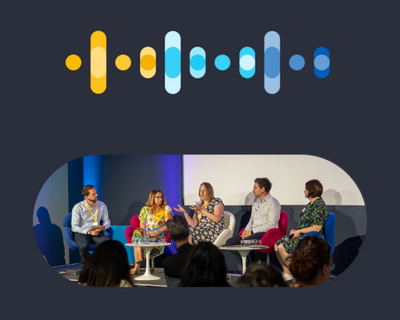
In this special episode, recorded live at the 2025 Genomics England Research Summit, host Adam Clatworthy is joined by parents, clinicians and researchers to explore the long, uncertain and often emotional journey to a genetic diagnosis. Together, they go behind the science to share what it means to live with uncertainty, how results like variants of uncertain significance (VUS) are experienced by families, and why communication and support matter just as much as genomic testing and research.
The panel discuss the challenges families face when a diagnosis remains out of reach, the role of research in refining and revisiting results over time, and how collaboration between researchers, clinicians and participants could help shorten diagnostic journeys in the future.
Joining Adam Clatworthy, Vice-Chair for the Participant Panel, on this episode are:
- Emma Baple – Clinical geneticist and Medical Director, South West Genomic Laboratory Hub
- Jamie Ellingford – Lead genomic data scientist, Genomics England
- Jo Wright – Member of the Participant Panel and Parent Representative for SWAN UK
- Lisa Beaton - Member of the Participant Panel and Parent Representative for SWAN UK
Linked below are the episodes mentioned in the episode:
Visit the Genomics England Research Summit website, to get your ticket to this years event.
You can download the transcript, or read it below.
Sharon: Hello, and welcome to Behind the Genes.
My name is Sharon Jones and today we’re bringing you a special episode recorded live from our Research Summit held in June this year. The episode features a panel conversation hosted by Adam Clatworthy, Vice-Chair of the Participant Panel.
Our guests explore navigating the diagnostic odyssey, the often-complex journey to reaching a genetic diagnosis. If you’d like to know more about what the diagnostic odyssey is, check our bitesize explainer episode, ‘What is the Diagnostic Odyssey?’ linked in the episode description.
In today’s episode you may hear our guests refer to ‘VUS’ which stands for a variant of uncertain significance. This is when a genetic variant is identified, but its precise impact is not yet known. You can learn more about these in another one of our explainer episodes, “What is a Variant of Uncertain Significance?”
And now over to Adam.
--
Adam: Welcome, everyone, thanks for joining this session.
I’m always really humbled by the lived experiences and the journeys behind the stories that we talk about at these conferences, so I’m really delighted to be hosting this panel session. It’s taking us behind the science, it’s really focusing on the people behind the data and the lived experiences of all the individuals and the families who are really navigating this system, trying to find answers and really aiming to get a diagnosis – that has to be the end goal. We know it’s not the silver bullet, but it has to be the goal so that everyone can get that diagnosis and get that clarity and what this means for their medical care moving forwards.
So, today we’re really going to aim to demystify what this diagnostic odyssey is, challenging the way researchers and clinicians often discuss long diagnostic journeys, and we’ll really talk about the vital importance of research in improving diagnoses, discussing the challenges that limit the impact of emerging research for families on this odyssey and the opportunities for progress. So, we’ve got an amazing panel here. Rather than me trying to introduce you, I think it’s great if you could just introduce yourselves, and Lisa, I’ll start with you.
Lisa: Hi, I’m Lisa Beaton and I am the parent of a child with an unknown, thought to be neuromuscular, disease. I joined the patient Participant Panel 2 years ago now and I’m also a Parent Representative for SWAN UK, which stands of Syndromes Without A Name.
I have 4 children who have all come with unique and wonderful bits and pieces, but it’s our daughter who’s the most complicated.
Adam: Thank you. Over to you, Jo.
Jo: Hi, I’m Jo Wright, I am the parent of a child with an undiagnosed genetic condition. So I’ve got an 11-year-old daughter. 100,000 Genomes gave us a VUS, which we’re still trying to find the research for and sort of what I’ll talk about in a bit. And I’ve also got a younger daughter.
I joined the Participant Panel just back in December. I’m also a Parent Rep for SWAN UK, so Lisa and I have known each other for quite a while through that.
Adam: Thank you, Jo. And, Jamie, you’re going to be covering both the research and the clinician side and you kind of wear 2 hats, so, yeah, over to you.
Jamie: Hi, everyone, so I’m Jamie Ellingford and, as Adam alluded to, I’m fortunate and I get to wear 2 hats. So, one of those hats is that I’m Lead Genomic Data Scientist for Rare Disease at Genomics England and so work as part of a really talented team of scientists and engineers to help develop our bioinformatic pipelines, so computational processes.
I work as part of a team of scientists and software engineers to develop the computation pipelines that we apply at Genomics England as part of the National Health Service, so the Genomic Medicine Service that families get referred to and recruited to, and we try to develop and improve those.
So that’s one of my hats. And the second of those is I am a researcher, I’m an academic at the University of Manchester, and there I work really closely with some of the clinical teams in the North West to try and understand a little bit more about the functional impact of genomic variants on kind of how things happen in a cell. So, we can explore a little bit more about that but essentially, it’s to provide a little bit more colour as to the impact that that genomic variant is having.
Adam: Great, thank you, Jamie. Over to you, Emma.
Emma: My name’s Emma Baple, I’m an academic clinical geneticist in Exeter but I’m also the Medical Director of the South West genomic laboratory hub, so that’s the Exeter and Bristol Genomics Laboratory. And I wear several other hats, including helping NHS England as the National Specialty Advisor for Genomics.
Adam: Thank you all for being here. I think it’s really important before we get into the questions just to ground ourselves in like those lived experiences that yourself and Jo and going through.
So, Lisa, I’m going to start with you. The term ‘diagnostic odyssey’ gets bandied around a lot, we hear about it so many times, but how does that reflect your experience that you’ve been through and what would you like researchers and clinicians to understand about this journey that you’re on, essentially?
Lisa: So I think ours is less an odyssey and more of a roller-coaster, and I say that because we sort of first started on a genetic journey, as it were, when my daughter was 9 weeks of age and she’s now 16½ – the half’s very important – and we still have no answers.
And we’ve sort of come a bit backwards to this because when she was 6 months old Great Ormond Street Hospital felt very strongly that they knew exactly what was wrong with her and it was just a case of kind of confirmation by genetics. And then they sent off for a lot of different myasthenia panel genes, all of which came back negative, and so having been told, “Yes, it’s definitely a myasthenia, we just need to know which one it is,” at 4 years of age that was removed and it was all of a sudden like, “Yeah, thanks, sorry.”
And that was really hard actually because we felt we’d had somewhere to hang our hat and a cohort of people with very similar issues with their children, and then all of a sudden we were told, “No, no, that’s not where you belong” and that was a really isolating experience.
I can remember sort of saying to the neuromuscular team, “Well is it still neuromuscular in that case?” and there was a lot of shrugging of shoulders, and it just… We felt like not only had we only just got on board the life raft, then we’d been chucked out, and we didn’t even have a floaty. And in many ways I think I have made peace with the fact that we don’t have a genetic diagnosis for our daughter but it doesn’t get easier in that she has her own questions and my older children – one getting married in August who’s already sort of said to me, you know, “Does this have implications for when we have children?” And those are all questions I can’t answer so that’s really hard.
Adam: Thank you, Lisa. Yourself, Jo, how would you describe the odyssey that you’re currently experiencing?
Jo: So my daughter was about one when I started really noticing that she was having regressions. They were kind of there beforehand but, I really noticed them when she was one, and that’s when I went to the GP and then got referred to the paediatrician.
So initially we had genetic tests for things like Rett syndrome and Angelman syndrome, which they were all negative, and then we got referred on to the tertiary hospital and then went into 100,000 Genomes. So we enrolled in 100,000 Genomes at the beginning of 2017, and we got our results in April of 2020, so obviously that was quite a fraught time.
Getting our results was probably not as you would want to do it because it was kind of over the phone and then a random letter. So, what I was told in that letter was that a variant of uncertain significance had been identified and they wanted to do further research to see if it might be more significant. So we were to be enrolled into another research project called Splicing and Disease, which wasn’t active at the time because everything had been put on hold for COVID, but eventually we went into that. So, I didn’t know what the gene was at that point, when I eventually got the form for going to get her bloods done… So that went off and then that came back and the geneticist said, “That gives us some indication that it is significant.”
So, since that point it’s been trying to find more information and research to be able to make it a diagnosis. There have been 2 sort of key things that have happened towards that but we’re still not there. So one of the things is that a research paper came out earlier this year so that’s kind of a little bit more evidence, it’s not going to give us a diagnosis but it kind of, you know, sits there. And the other thing is that my geneticist said, “Actually, yeah, it looks like it’s an important change.” That’s as far as we’ve got. So we’ve still got work to do to make it a diagnosis or not. Obviously if it is a diagnosis, it is still a one-of-a-kind diagnosis, so it doesn’t give me a group to join or that kind of thing.
But now I’ve got that research paper that I’ve read and read, and asked ChatGPT to verify that I’ve understood it right in some places, you know, with the faith that we put into ChatGPT (laughs), I’ve got a better understanding and I’ve got something now that I can look back on, the things that happened when my daughter was one, 2, 3, 4 and her development was all over the place and people thought that I was slightly crazy for the things I was saying, that “Actually, no, I can see what’s happening.”
So, it’s like the picture’s starting to come into focus but there’s work to do. I haven’t got a timeframe on that, I don’t know when it’s going to come together. And I always say that I’m a prolific stalker of the postman; ever since our first genetic tests you’re just constantly waiting for the letters to drop through the door. So a diagnostic odyssey to me is just waiting for random events.
Adam: I think what you’ve both kind of really clearly elaborated on is how you’re the ones that are having to navigate this journey, you’re the ones that are trying to piece this puzzle together, and the amount of time you’re investing, all whilst navigating and looking after your child and trying to cope with the daily lived experience as well.
And something you’ve both touched on that I’d love to draw out more is about how exactly was the information shared with you about the lack of diagnosis or the VUS or what’s going on, because in our case you get this bit of paper through the post that has all these numbers and it’s written in clinical speak and we had no conversation with the geneticist or the doctors.
You see this bit of paper and you’re reading it, scared for what the future will hold for your child, but I’d love to know like how were you communicated whilst all this is going on, how did you actually find out the next steps or any kind of future guidance.
Lisa: So I think in our case we kept sort of going onto neuromuscular appointments, and I think for probably the first 5 years of my daughter’s life I kind of had this very naïve thought that every time we turned up to an appointment it would be ‘the one’ and then… I think it would’ve been really helpful actually in those initial stages if they had said to us, “Actually, we don’t know when this is going to happen, if it’s even going to happen, you need to kind of prepare yourself for that.”
It sounds fairly obvious to say but you don’t know what you don’t know. And in some ways we were getting genetic test results back for some really quite horrible things and they would tell us, “Oh it’s good news, this mitochondrial disorder hasn’t come up,” and so part of you is like, “Yay!” but then another part of you is thinking, “Well if it’s not that what is it?” And we’ve very much kind of danced around and still don’t really have an answer to whether it’s life-limiting.
We know it’s potentially life-threatening and we have certain protocols, but even that is tricky. We live in North Yorkshire, and our local hospital are amazing. Every time we go in, if it’s anything gastro-related, they say to me, “What’s the protocol from Great Ormond Street?” and I say, “We don’t have one” (laughs) and that always causes some fun. We try to stay out of hospitals as much as we absolutely can and do what we can at home but, equally, there’s a point where, you know, we have to be guided by where we’re going with her, with the path, and lots of phone calls backwards and forwards, and then is it going to be a transfer down to Great Ormond Street to manage it.
And actually the way I found out that nothing had been found from 100,000 Genomes was in a passing conversation when we had been transferred down to Great Ormond Street and we’d been an inpatient for about 6 weeks and the geneticist said to me, “So obviously with you not having a diagnosis from the 100,000 Genomes…” and I said, “Sorry? Sorry, what was that? You’ve had the information back?” And she said, “Well, yes, did nobody write to you?” and I said, “No, and clearly by my shock and surprise.”
And she was a bit taken aback by that, but it happened yet again 2 years later (laughs) when she said, “Well you know everything’s been reanalysed” and I said, “No.” (Laughs) And, so that’s very much, it still feels an awful lot like I’m doing the heavy lifting because we’re under lots of different teams and even when they’re working at the same hospital they don’t talk to each other. And I do understand that they’re specialists within their own right, but nobody is really looking at my daughter holistically, and there are things that kind of interrelate across.
And at one of the talks I attended this morning they were talking about the importance of quality of life, and I think that is something that has to be so much more focused on because it’s hard enough living without a diagnosis, but when you’re living with a bunch of symptoms that, I think the best way I can describe it is at the moment we’ve got the spokes of the umbrella but we don’t have the wrapper, and we don’t know where we’re going with it. We can’t answer her questions, we can’t even necessarily know that we’re using the most effective treatments and therapies for her, and she’s frustrated by that now, being 16, in her own right, as well as we are.
And I’m panicking about the navigation towards Adult Services as well because at the minute at least we have a clinical lead in our amazing local paediatrician but of course once we hit and move into that we won’t even have him and that’s a really scary place to be, I think.
Adam: Jo, is there anything you wanted to add on that in terms of how you’ve been communicated to whilst all this is going on?
Jo: Yeah, so I think part of what makes it difficult is if you’re across different hospitals because they’re not necessarily going to see the same information. So obviously it was a bit of a different time when I got our results, but I got our results on a virtual appointment with a neurologist in one hospital, in the tertiary hospital, and because he could see the screen because it was the same hospital as genetics, and he said, “Oh you’ve got this” and then the letter came through later.
When I had my next appointment with the neurologist in our primary hospital, or secondary care, whatever it’s called, in that hospital, he hadn’t seen that, so I’m telling him the results, which isn’t ideal, but it happens quite a lot.
What I think is quite significant to me is the reaction to that VUS. I have to give it, the doctors that look after my daughter are brilliant, and I’m not criticising them in any way but their reaction to a VUS is “I’m so grateful for the persistence to get to a diagnosis.”
Neurologists are a bit more like “Oh it’s a VUS so it might be significant, it might be nothing.” Actually, as a patient, as in a parent, you actually want to know is it significant or not, “Do I look at it or not?” And, I mean, like I said, there were no research papers to look at before anyway until a few months ago so I didn’t have anything to look at, but I didn’t want to look at it either because you don’t want to send yourself off down a path. But I think that collective sort of idea that once someone gets a VUS we need a pathway for it, “What do we do with it, what expectation do we set the patients up with and what is the pathway for actually researching further?” because this is where we really need the research.
Adam: Thank you, Jo. So, Emma, over to you in terms of how best do you think clinicians can actually support patients at navigating this odyssey and what’s the difference between an initial diagnosis and a final diagnosis and how do you then communicate that effectively to the patients and their family?
Emma: So I think a key thing for me, and it’s come up just now again, is that you need to remember as a doctor that the things you say at critical times in a patient’s or parent’s journeys they will remember – they’ll remember it word for word even though you won’t – and thinking about how to do that in the most sensitive, empathetic, calm, not rushed way is absolutely key.
And there are some difficulties with that when you’re in a very high-pressure environment but it is absolutely crucial, that when you are communicating information about test results, when you’re talking about doing the test in the first place, you’re consenting the family, you’re explaining what you’re trying to do and those conditions, you balance how much information you give people.
So, you were talking earlier about “So you haven’t got this diagnosis, you haven’t got that diagnosis,” I often think it’s… We’re often testing for numerous different conditions at the same time, I couldn’t even list them all to the parents of the children or the patient that I’m testing. It’s key to try and provide enough information without overwhelming people with so much information and information on specific conditions you are just thinking about as a potential. Sometimes very low down your list actually but you can test for them.
Because people go home and they use the internet and they look things up and they get very, very worried about things. So, for me it’s trying to provide bite-sized amounts of information, give it the time it deserves, and support people through that journey, tell them honestly what you think the chance of finding a diagnosis is. If you think it’s unlikely or you think you know, sharing that information with family is helpful.
Around uncertainty, I find that a particular challenge. So, I think we’ve moved from a time when we used to, in this country, declare every variant we identified with an uncertain significance. Now, if we remember that we’ve all got 5 million variants in our genome, we’ve all got hundreds and hundreds… thousands and thousands, in fact, of variants of uncertain significance in our genetic code. And actually, unless you think a variant of uncertain significance genuinely does have a probability of being the cause of a child’s or a patient’s condition, sharing that information can be quite harmful to people.
We did a really interesting survey once when we were writing the guidelines for reporting variants of uncertain significance a few years ago. We asked the laboratories about their view of variants of uncertain significance and we asked the clinicians, and the scientists said, “We report variants of uncertain significance because the clinicians want them” and the clinicians said, “If the labs put the variant of uncertain significance on the report it must be important.” And of course, if you’re a parent, if the doctor’s told you the variant is a variant of uncertain significance of course you think it’s important.
So, we should only be sharing that information, in my opinion, if it genuinely does have a high likelihood of being important and there are things that we can do. And taking people through that journey with you, with the degree of likelihood, the additional tests you need to do and explaining to them whether or not you think you will ever clarify that, is really, really key because it’s very often that they become the diagnosis for the family. Did I cover everything you think’s important, both of you?
Lisa: I think the one thing I would say is that when you are patient- or parent-facing, the first time that you deliver that news to the parent… you may have delivered that piece of news multiple times and none of us sit there expecting you to kind of be overcome with emotion or anything like that but, in the same way that perhaps you would’ve had some nerves when, particularly if it was a diagnosis of something that was unpleasant, you know, to hold onto that kind of humanity and humility. Because for those patients and parents hearing that news, that is the only time they’re ever hearing that, and the impact of that, and also, they’re going on about with their day, you don’t know what else they’re doing, what they’re juggling.
We’re not asking you all to be responsible for kind of, you know, parcelling us up and whatnot but the way information is imparted to us is literally that thing we are all hanging our hats on, and when we’re in this kind of uncertainty, from my personal experience I’m uncomfortable, I like to be able to plan, I’m a planner, I’m a researcher, I like to sort of look it up to the nth degree and that, and sitting in a place without any of that is, it’s quite a difficult place to be. And it’s not necessarily good news for those parents when a test comes back negative, because if it’s not that then what is it, and that also leaves you feeling floundering and very isolated at times.
Adam: Yeah, and you touched upon the danger of like giving too much information or pushing families down a particular route, and then you have to pull them out of it when it’s not that.
You talked about the experience you had, you felt like you’d found your home and then it’s like, “Well, no, no, sorry, actually we don’t think it’s that.” And you’ve invested all of your time and your emotion into being part of that group and then you’re kind of taken away again. So it’s to the point where you have to be really sure before you then communicate to the families, and obviously in the meantime the families are like, “We just need to know something, we need to know,” and it’s that real fine line, isn’t it?
But, Jamie, over to you. Just thinking about the evolving nature of genomic diagnosis, what role does research play in refining or confirming a diagnosis over time?
Jamie: So it’s really, really difficult actually to be able to kind of pinpoint one or 2 things that we could do as a community of researchers to help that journey, but perhaps I could reflect on a couple of things that I’ve seen happen over time which we think will improve things. And one of that’s going back to the discussion that we’ve just had about how we classify genetic variants. And so, behind that kind of variant of uncertain significance there is a huge amount of effort and emotion from a scientist’s side as well because I think many of the scientists, if not all, realise what impact that’s going to have on the families.
And what we’ve tried to do as a community is to make sure that we are reproducible, and if you were to have your data analysed in the North West of England versus the South West that actually you’d come out with the same answer. And in order to do that we need guidance, we need recommendations, we need things that assist the scientists to actually classify those variants.
And so, what we have at the moment is a 5 point scale which ranges from benign to likely benign, variant of uncertain significance, unlikely pathogenic variant and pathogenic variant. It’s objective as to how we classify a variant into one of those groups and so it’s not just a gut feeling from a scientist, it’s kind of recordable measurable evidence that they can provide to assist that classification.
So in many instances what that does is provide some uncertainty, as we’ve just heard, because it falls into that zone of variant of uncertain significance but what that also does is provide a framework in which we can generate more evidence to be able to classify it in one direction or another to become likely pathogenic or to become likely benign. And as a research community we’re equipped with that understanding –– and not always with the tools but that’s a developing area – to be able to do more about it.
What that doesn’t mean is that if we generate that evidence that it can translate back into the clinic, and actually that’s perhaps an area that we should discuss more. But kind of just generating that evidence isn’t always enough and being able to have those routes to be able to translate back that into the hands of the clinicians, the clinical scientists, etc, is another challenge.
Adam: And how do you think we can drive progress in research to deliver these answers faster, to really try and shorten those diagnostic journeys, like what are the recommendations that you would say there?
Jamie: So being able to use the Genomics England data that’s in the National Genomic Reference Library, as well as kind of other resources, has really transformed what we can do as researchers because it enables teams across the UK, across the world to work with data that otherwise they wouldn’t be able to work with.
Behind that there’s an infrastructure where if researchers find something which they think is of interest that can be reported back, it can be curated and analysed by teams at Genomics England and, where appropriate, kind of transferred to the clinical teams that have referred that family. And so having that pathway is great but there’s still more that we can do about this. You know, it’s reliant on things going through a very kind of fixed system and making sure that clinicians don’t lose contact with families – you know, people move, they move locations, etc. And so, I think a lot of it is logistical and making sure that the right information can get to the right people, but it all falls under this kind of umbrella of being able to translate those research findings, where appropriate, into clinical reporting.
Adam: Thank you. And, Emma, is there anything you would add in terms of like any key challenges that you think need to be overcome just to try and shorten the journeys as much as possible and find the answers to get a diagnosis?
Emma: I think trying to bridge that gap between some of the new technologies and new approaches that we’ve got that we can access in a research context and bringing those into diagnostics is a key area to try to reduce that diagnostic odyssey, so I really want to see the NHS continuing to support those sorts of initiatives.
We’re very lucky, as Jamie said, the National Genomic Research Library has been fundamental for being able to reduce the diagnostic odyssey for large numbers of patients, not just in this country but around the world, and so trying to kind of look at how we might add additional data into the NGRL, use other research opportunities that we have in a more synergistic way with diagnostics I think is probably key to being able to do that.
We are very lucky in this country with the infrastructure that we’ve got and the fact that everything is so joined up. We’re able to provide different opportunities in genomics for patients with rare conditions that aren’t so available elsewhere in the world.
Adam: Great, thank you. I think we’re it for time, so thank you very much to the panel. And I’d just say that if you do have any further questions for ourselves as participants then we’re only too happy to pick those up. Thank you for lasting with us ‘til the end of the day and hope to see you soon.
--
Sharon: A huge thank you to our panel, Adam Clatworthy, Emma Baple, Jo Wright, Lisa Beaton and Jamie Ellingford, for sharing their insights and experiences.
Each year at the summit, the Behind the Genes stage hosts podcast style conversations, bringing together researchers, clinicians and participants to discuss key topics in genomics. If you’re interested in attending a future Genomics England Research Summit, keep an eye out on our socials.
If you’d like to hear more conversations like this, please like and subscribe to Behind the Genes on your favourite podcast app. Thank you for listening.
I’ve been your host, Sharon Jones. The podcast was edited by Bill Griffin at Ventoux Digital and produced by Deanna Barac.