What is informed consent?
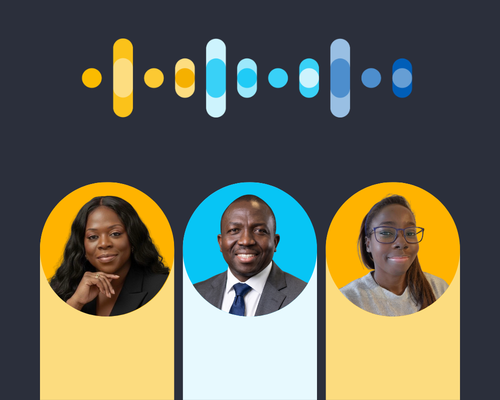
In this explainer episode, we’ve asked Réka Novotta, Research Ethics Operations Manager at Genomics England, to explain what informed consent is.
You can also find a series of short videos explaining some of the common terms you might encounter about genomics on our YouTube channel.
If you’ve got any questions, or have any other topics you’d like us to explain, let us know on [email protected].
You can download the transcript or read it below.
Florence: What do we mean by informed consent? My name is Florence Cornish, and today I'm here with Réka, who is Research Ethics Operations Manager here at Genomics England, and she's going to be telling us much more about it.
I think it would first be helpful Réka, if you could explain the word consent.
Réka: The broad definition of consent is that it's the voluntary agreement given by an individual to participate in a particular activity.
We all probably give consent to a lot of different things each day without really realizing it. So, you go on to read the news in the morning, and the website asks for your consent to process cookies. You maybe go to a routine GP appointment later, and you stick your arm out for them to measure your blood pressure. Maybe you even go to a podcast and you give consent to a host to record your voice. So, these are all based on affirmative action made by you while taking into consideration the information that's available to you.
The technical definition of consent often includes that it's freely given, meaning that you are not coerced. That it’s specific, meaning when you stick your arm out for your doctor, you're only agreeing to that part of the examination, and perhaps most importantly, that person needs to be adequately informed for the consent to be meaningful.
Florence: So you gave lots of really interesting examples there. I think it would be good to understand what we mean by informed consent and where this distinction comes in. How does it differ?
Réka: By informed consent, we mean that the person consenting has been provided with all relevant and necessary information about the activity, in a format that is accessible and understandable for them.
And that latter part of the sentence is really important, because if you go to the doctor and the doctor speaks to you in French, if you speak French, then wonderful, you have all the information that you need. But if you don't, even though the information is technically there, you not understanding it makes it impossible for your consent to be informed.
Similarly, if you think about maybe an older person who's not familiar with technology, if they see a QR code, they might not necessarily know what to do with it, even if it would technically lead to all of the information that they would ever want to know about Genomics England.
Florence: So you mentioned Genomics England, obviously we both work for Genomics England, this is a Genomics 101 podcast. So what do we mean by informed consent in the context of genomics? Where does it come into play?
Réka: So if we think about informed in a traditional research study, they test a drug, the treatment either works or it doesn't work, and there's analysis of that data, and that's sort of the end of the process.
With genomics, there's a huge amount of information that gets generated and analysed, and the field itself is rapidly evolving. So we may not have an answer today, but we might do tomorrow, which puts our participants' data in the research resource that we manage in a really unique position.
Because of that, it's even more important perhaps for this consent to be ongoing. Consent is often incorrectly considered a tick box exercise, where you receive information, you consider the information, you make a decision, and that's sort of it. Whereas for genomics, it's important that it is an ongoing conversation and it doesn't just stop at the signing of a form.
We also employ what's called a broad consent model. Genomics England manages the National Genomic Research Library, which rather than being a single study, is a resource for a wide range of research uses. It allows us to gain permission via the informed consent conversations for the storage and the use of data and samples for upcoming studies that we don't yet know about.
And this eliminates the need to reconsent each participant every time a researcher starts to use their data for a new research project, and in turn, and this also feeds back to the need for ongoing conversation, a fully informed consent is very hard to achieve at the time of consenting.
Florence: So you mentioned the National Genomic Research Library, and we actually did a previous explainer podcast episode about this. So, if listeners would like to learn more about it, you can check out our previous Genomics 101 episode: What is the National Genomic Research Library?
Réka, I'd be interested to know, are there any challenges related to informed consent that are specific to the field of genomics?
Réka: Yeah, so there’s many fascinating challenges. There's one that I really want to highlight, which is the family aspect. It's a lot more pronounced in genomics than it is in traditional medicine. The information that you receive, it doesn't only affect you, but it also affects your parents, your siblings, your existing, or even your future children, which is quite unique, and there's a challenge in how we articulate that without causing further anxiety.
Florence: So speaking of the challenges there, the family aspect and the fact that genomics as a field is rapidly evolving, I think this highlights how important it is that we embed informed consent into our practices.
Could you tell me a bit about how we're doing this at Genomics England?
Réka: We follow best practice in informed consent called information layering, where we provide materials for our research in different formats. And this can ensure that participants can get the depth of understanding that they need, without feeling overwhelmed by a massive amount of information from the outset.
So this includes longer and shorter information sheets, providing materials and training for healthcare professionals so that they can have conversations with potential participants. We also have lots of different copy on our website. We have videos, and this podcast as well.
And it's all part of what we call patient and public involvement and engagement or PPIE, which means that we co-produce our materials involving members of the public and patients in the design of our materials, making sure that they present accessible and understandable information.
It is really important for us not to, as you say, mark our own homework. What makes sense to one person might not make sense to another, and it's important to get lots of different perspectives. And I just wanted to shout out the Participant Panel who's a committee of wonderful people who help us, and also keep us accountable in everything that we do.
Florence: What would happen if say, somebody gave informed consent for their data to be stored in the National Genomic Research Library, but then they change their mind and they want to take it back? What would happen then?
Réka: So we offer 2 types of withdraw from a resource. There is an option to withdraw partially or to unsubscribe, which means that you can leave your de-identified donated data for researchers to analyse, but not receive any updates or contact from us going forward.
You can also decide to withdraw your participation fully, and that's where we make your data unavailable for future research. One of the key pillars in informed consent and the consent model that Genomics England employs, is that research participants can withdraw their consent to participate at any time without giving us a reason.
So, it doesn't matter if you submit your request on a website or on a paper form or if you call us, we will respect your decision with no questions asked.
Florence: Thank you so much for coming on and for walking us through the meaning of informed consent, and why it's so important in the context of healthcare and research.
If you want to learn more about terms we use in genomics, check out our other podcasts at www.genomicsengland.co.uk, or, wherever you get your podcasts. Thank you for listening.