What happens after a new rare genetic condition is discovered?
Two years after researchers identified ReNU syndrome, where are we now?
In 2024, two independent research teams identified the genetic cause of ReNU syndrome, a rare neurodevelopmental condition affecting thousands of people worldwide. The discovery marked the beginning of a new chapter for families searching for answers and opened up exciting new avenues for research.
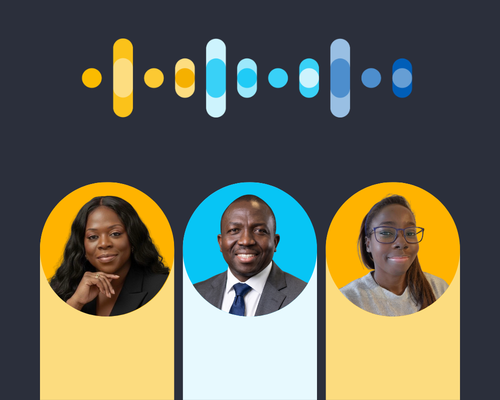
In this episode, host Sharon Jones revisits the story to explore what has happened since that breakthrough. She is joined by:
- Professor Nicky Whiffin, Associate Professor and Wellcome Career Development Fellow at Big Data Institute and Centre for Human Genetics, University of Oxford
- Christina Cox, Co-founder of ReNU Syndrome UK and parent of a child with ReNU syndrome
- Dr Ana Lisa Tavares, Clinical Lead for Rare Disease at Genomics England
Together, they discuss how researchers around the world have built on the original discovery to deepen our understanding of ReNU syndrome, why studying the non-coding regions of our DNA is revealing previously unknown rare conditions, and how collaboration between researchers, clinicians and families is accelerating progress. They also explore how the growing ReNU community is supporting newly diagnosed families and what the future could hold for new treatments.
Links:
“It's been only two years since our paper came out about this, and in that time, there are now patient family groups that have been set up all around the world. There is the one in the UK led by Christina and the others. There's the one in the US that's led by a group of four women, and there are ones in France, Spain, like, literally all around the world. And all of these groups are also somewhat coordinated. The leads of these groups meet with each other. They've organised meetups. I've been to ones in the US, the UK, and in France. So the fact that they can mobilise all of that and create such a community so quickly is absolutely incredible.”
You can download the transcript, or read it below.
[00:00:00] Sharon: In 2024, two independent research teams identified a genetic cause of a rare neurodevelopmental condition affecting thousands of people around the world. Since then, that initial groundbreaking discovery has grown into something much bigger, bringing together families, researchers, and clinicians, and building a clearer picture of what we now know as ReNU syndrome.
[00:00:26] Sharon: Welcome to Behind the Genes, the podcast that covers everything from cutting-edge research to real-life stories in genomic healthcare. I'm Sharon Jones, and in today's episode, we're looking at what's happened since that discovery, what researchers are continuing to learn, and what the future could hold for people living with ReNU Syndrome and their families.
[00:00:46] Sharon: To help us understand more, I'm joined by Professor Nicky Whiffin, Christina Cox, and Dr. Ana Lisa Tavares. So, two papers were published around the same time for this condition. To start us off, Nicky, you worked on one of these papers. Could you explain how this journey first began?
[00:01:05] Nicky: Yeah, so this was two years ago now, back in early 2024, where two research teams, so us based in Oxford and a, a group based in New York, were both looking at the data within the National Genomics Research Library, and we both kind of somewhat simultaneously found that there was variance in this very, very small gene, it's called RNU4-2, were found in individuals with previously undiagnosed neurodevelopmental disorders.
[00:01:39] Nicky: And this was very, very striking because we initially actually identified the same single DNA change or mutation in 40 or so different individuals within the National Genomics Research Library, and we normally expect to see a whole host of different variants. We don't expect to see the same one.
[00:01:59] Nicky: So this was a really, really surprising finding. And it was through a collaboration, large scale collaboration across the world where we started contacting our other collaborators who have similar collections of patients who have been genome sequenced to ask if they had any individuals with DNA changes in this gene.
[00:02:17] Nicky: And we found some in the US, some in, in Australia, some in France and Germany. So very, very quickly built up this, this complete picture of variants in this gene, causing this rare neurodevelopmental disorder
[00:02:35] Sharon: of people finding it at the same time, what, what did that feel like?
[00:02:39] Sharon: Like, give us a ense of, like, that compelling, "We think we found something." What was that like?
[00:02:46] Nicky: I didn't believe it initially. You're always told when you're a scientist that if it looks too good to be true, it's, it's not true, and this basically lit up like a beacon. There's this particularly one DNA change that we found in, um, I think it was about 40 different individuals, and we don't really expect that to be the case.
[00:03:04] Nicky: We normally expect these genetic variants to be somewhat randomly distributed across the genome. So to find 40 individuals with exactly the same DNA change was very, very surprising. So initially, I didn't believe it. The whole team, including folks at Genomics England, spent a lot of time trying to check that these variants were real and tried to disprove the result, tried to find any other way in which any other reason why we would be seeing this.
[00:03:31] Nicky: And after a little while, we had to concede that we couldn't disprove it, so it must be true, and that, that was a very exciting moment.
[00:03:38] Sharon Jones: Was it the case that over in the States, the exact same thing was happening?
[00:03:42] Nicky: I think we found out when we were both speaking at the same conference, actually. So we didn't actually know that we, that we'd both come across the same result.
[00:03:49] Sharon: If you want to check out our previous episode on this initial discovery, you'll find a link to it in the episode description.
[00:04:00] Sharon: So Christina, tell us a bit about your situation, your family situation, and for our listeners, what ReNU is.
[00:04:05] Christina: So ReNU is, to us, is a family. We got a family when we got diagnosed with ReNU. Beau - Arabella - already had other diagnosises, but people had always said to us, "Oh, there's something else. There's something else.
[00:04:20] Christina: We're not sure what it is, but there will be something." And then when we got ReNU, it was like, "Oh, okay, amazing. What do we do? What is it?" Because there was only four lines on Wikipedia when we first got told about it, and there wasn't anything that, ourselves could find. So we kind of went onto Facebook and looked for groups and different people, and there wasn't really anything except for Jess in America.
[00:04:46] Christina: And then it grew, and then it kind of, we ended up finding more people in the UK and, like, all over. But for us, it didn't really change how we perceived Beau. It just made life easier. Like, knowing there was other families out there that we could find advice from and support from, and that we kind of knew what we had and going forward then, like, finding researchers and connecting with everybody.
[00:05:15] Sharon: Yeah. And for those who don't know, can you talk about what ReNU is? Like, how does it affect Beau?
[00:05:20] Christina: So with Beau and ReNU , it affects her with developmental delay. She's non-verbal. She's incontinent. She suffers for walking, so she can do a little bit of walking, but she needs a wheelchair It affects her mood swings.
[00:05:38] Christina: It just affects everything. Although she has it, she's still a happy, outgoing, very stubborn, just kind of "keep-going" child. But it affects her in everything, like eating, sleeping.
[00:05:51] Sharon: It sounds like life is, you know, very challenging on a day-to-day basis, lots of considerations. How did you feel when you finally got this diagnosis after years of wondering and waiting, not knowing?
[00:06:02] Christina: Finding out was, like, really emotional because it was like, "Oh, wow, so we have this diagnosis. Now what? What are we looking for? What's going to happen?" And then we were kind of like, "Oh, but there's not many people that had it." Because we found out in the August, so then it was trying to find people. But it has been life-changing to know that we're not on our own and that there is other people around.
[00:06:28] Sharon: Yeah, tell us a bit more about that. How did it feel to get that diagnosis?
[00:06:32] Christina: It was quite strange because our pediatrician rang us and said, "Oh, we've got a diagnosis. She's got RNU4-2." And we were like, "Okay, so what's that?" And she's like, "I don't really know. There's four lines on Wikipedia at the moment."
[00:06:46] Christina: She goes, "I don't like Wikipedia," but we still kind of... That was it. So then we went on a mission to find and look for where we could find support and find other families.
[00:06:58] Christina: At that point, I didn't know of anybody in the UK, and my husband found Jessica in America. What then, kind of, we had somebody to talk to, and then families in the UK kind of started appearing.
[00:07:09] Christina: So we ended up getting a whole network of people to bounce ideas off and talk about how it affects their children and what's for the future and things like that. It was really nice.
[00:07:22] Sharon: Yeah, yeah, I can imagine. So Ana Lisa, how do these findings contribute to a growing understanding of the condition?
[00:07:29] Ana Lisa: So this was an amazing discovery. Although we're finding new rare conditions quite often, not on this sort of scale. It was also an amazing finding because a lot of the genes that we know are associated with rare conditions are genes that encode proteins, and in the 100,000 Genomes Project, we were doing whole genome sequencing, and Nicky and her team were looking in the parts of the genome that don't encode for proteins.
[00:08:03] Ana Lisa: And so this was, uh, exciting from that point of view as well. So the vast majority of our genome, more than 98%, does not encode for proteins, but it's relatively unexplored. And if we think about our genome and the letter code that makes it up, which is the manual for how our bodies are built, and grow and function day-to-day.
[00:08:30] Ana Lisa: Those 3 billion letters, if you, if you printed them out in a 12 font regular print, it would stretch so far you could fly, I think, from London to Paris several times, maybe three times or something. And so, this actual gene is a very, very small gene, less than 150 of those letters. So again, it was incredible to find that by comparing across many, many different genomes in the National Genomic Research Library.
[00:09:00] Ana Lisa: Going back to your question about a growing understanding of a condition, it was a completely new condition, but it also opened up looking at other related genes and actually now more disorders that are being found, like RNU2-2 by colleagues in the US, and that might be one of the most common recessive genetic neurodevelopmental disorders.
[00:09:27] Ana Lisa: So it's really, really opened up this understanding about these types of disorders and also those non-coding parts of our genome and the power of collaboration and being able to look across many different whole genomes at the same time.
[00:09:44] Sharon: Yeah. And Nicky, you've been involved in much of this research journey.
[00:09:50] Sharon: What have been some of the biggest advances or learnings for you so far?
[00:09:55] Nicky: I think the biggest one is just how common, or how frequent, these disorders are. So what we discovered recently in terms of new genetic disorders were rarer and rarer conditions, and that's why we hadn't seen them before. But from going from looking at the protein coding genes to looking at these non-coding genes, we found something that was as frequent as disorders that were found in the early 2010s when we first had large-scale sequencing projects that looked at the protein coding genes.
[00:10:26] Nicky: So that was really, really surprising. And we now know there's this whole class of disorders. So RN4-2, this gene encodes this -- Well, it produces this small RNA that works in this huge molecular machine that is called the Splicer Zone, that mediates the processing of most of the other genes across the genome.
[00:10:50] Nicky: And there are lots of these little RNAs that work in this molecular machine that are called the small nuclear RNAs or the snRNAs And we now know that there are a whole multitude of different disorders associated with different ones of these spliceosomal small nuclear RNAs, and that's really incredible.
[00:11:09] Nicky: And for RNU4-2 itself, we also now know that there are, there's not just RENE syndrome, uh, which is a dominant disorder caused by chance de novo variants that are newly arisen in a child, but also a recessive disorder where a child inherits one, uh, gene mutation from each parent. And also another finding that there is a region of the gene where we find DNA changes that cause retinitis pigmentosa, so a retinal phenotype. So we now know a huge amount more about this single gene, but also all of this different class of genes or RNAs that work in the same molecular machine, uh, which is, is really fascinating biologically
[00:11:52] Ana Lisa: Vicky, while you were talking, I was thinking about the splicing and how a bit like this podcast recording, you're going to splice out the kind of extreme, the noise that wasn't supposed to be there.
[00:12:03] Ana Lisa: And actually, you could make slightly different versions of this podcast, couldn't you? And that's, that's what, what's happening in our bodies for a lot of our genes that, that the kind of output can be varied slightly.
[00:12:15] Sharon: So Christina, how has collaboration been involved across the community and with researchers?
[00:12:21] Sharon: You know, what sort of things have you been doing?
[00:12:23] Christina Cox: So it's amazing to have researchers that are so open and amazing to work with the families. So at the moment, we are just putting together like a panel to discuss questions from families, to then be able to answer families, to work very closely with the researchers for what things are happening and the progress within.
[00:12:47] Christina: It's just amazing to be able to work with researchers. They're just fantastic.
[00:12:52] Sharon: And from what I understand, like, you, you have a charity, don't you? Can you tell us a bit more about that and how that came about?
[00:12:58] Christina: So we have ReNU Syndrome UK, and it came about as there was a group of us parents that were like, we wanted to be able to support other families, knowing what it was like for us when we first started.
[00:13:12] Christina: It was very difficult. So we wanted to start a charity that can support families and signpost them, give them the opportunity to have family meetups once or twice a year, so we can work with scientists and specialists to keep everybody in the community, like the ReNU family, up to date. But being able to connect with so many families, because a lot of the doctors don't really know of ReNU Syndrome yet.
[00:13:46] Christina: So if we have a problem or a question, we put it in the WhatsApp group, and then somebody can answer it because they've been through it, or they, they've just asked the question. So it's just an amazing resource for everybody
[00:14:02] Sharon Jones: That sounds amazing, and it sounds like you've all obviously become experts by experience.
[00:14:04] Sharon: So, like you say, you kind of know more, you know, as the science develops, but you're living it every single day
[00:14:10] Christina: It's kind of, you go into the hospital and they're like, "Oh, what's ReNU Syndrome?" And then you're like, "Ugh." So, then you just have to say it all. But, and then it's kind of them bringing, teaching new people who don't know about it in the medical professional.
[00:14:26] Christina: We always give them the website so that they can go and then find, but being able to put more medical stuff on the website, it just helps everybody, and it's just broadening it out to as many people as possible. Because there's still a lot of people undiagnosed with RNU syndrome. It's, now it's easier to be signposted, but it's just keeping that connection.
[00:14:49] Sharon: Yeah. And, and from what I understand, it's got quite an interesting sort of origin of a name, RNU. Where did that... Do you know much more about where that came from?
[00:14:57] Christina: So, Nicky is the amazing person who, um, sorted the name and um, the origin. So, I'll pass that over to Nicky to answer that question because she's just amazing
[00:15:11] Nicky: Uh, so the name ReNU syndrome is an interesting story.
[00:15:13] Nicky: So, a lot of disorders or diseases are named after people. So, we all know Alzheimer's, Parkinson's, etc. And they're often scientists or clinicians that have spent a lot of time working on them. I think that's a little bit odd. I don't think it's the first thing that somebody should know about a disorder, is the name of somebody who's, who's worked on it or studied it.
[00:15:36] Nicky: But they're a very, it's very hard to find an alternative. When we were initially doing the press release around our paper, we had a quote from one of the mothers, Nicole Cedar, who has a, a wonderful daughter called Mia Joy, and she said that within their family, they like to refer to RNU, to RNU4-2 as ReNU, which is a really nice play on the RNU in the gene name.
[00:16:00] Nicky: So then I had an idea, okay, let's just change the spelling to make the, the kind of big R, little E, large N-U, then it would link to the gene name, but also would be a name that speaks to hope and the renewed hope of being given a diagnosis.
[00:16:13] Sharon: Yeah, absolutely, and that's a great, a great story and a great way of kind of making it feel like there is, there is always hope.
[00:16:20] Sharon: So, you know, Nicky, you're now part of the patient community. In a way. You know, so how does it feel to be on that other side of it from that sort of research perspective and now kind of, you know, in that, in that community?
[00:16:34] Nicky: It's amazing. I've got a new family as well. It's not, not just Christina and everybody.
[00:16:39] Nicky: I kind of, I'm a, a basic scientist. I'm not a clinician. Up until this point, we've always been one or two steps removed from actually interacting with the families themselves. Um, so my life has changed an awful lot over the last couple of years, uh, where now, um, I kind of talk to Christina or the folks in the US, really regularly, kind of on a weekly basis.
[00:17:02] Nicky: Um, so that's really different. And I just kind of want to highlight just what these families have achieved. So it's been only two years since our paper came out about this, and in that time, there are now patient family groups that have been set up all around the world. There is the one in the UK led by Christina and and the others.
[00:17:26] Nicky: Um, there's the one in the US that's led by a group of four women, and there are ones in France, Spain, like, literally all around the world. And all of these groups are also somewhat coordinated. The leads of these groups meet with each other. They've organised meetups. I've been to ones in the US, the UK, and in France.
[00:17:46] Nicky: So the fact that they can mobilise all of that and create such a community so quickly is absolutely incredible. And they've got families, they've got so many researchers that are interested in the cause. They're interacting with the pharma companies. They've upskilled themselves to learn so much about genetics.
[00:18:04] Nicky: And it's just an absolutely incredible thing to watch. They're so, so inspiring.
[00:18:09] Sharon: And from what I understand, Christina, you feel, you know, very passionate about Nicky in the same way, about your paths crossing in this way.
[00:18:16] Christina: Oh, my, yes. Every time I see Nicky, I've met her a couple of times, like, in person now, I just cry.
[00:18:22] Christina: I literally, we saw her at the UK meetup, and she walked in the door, and that was it. I was done. I was like, it's just meeting somebody who has changed so many lives and brought a community to other families. It's just amazing. And the support that Nicky's giving us weekly, daily, is just amazing. It is just life-changing for all of us.
[00:18:49] Sharon Jones: It's such a powerful connection. So Ana Lisa, why is collaboration between researchers, clinicians, and families so valuable in the rare disease research space? You know, and what role do large scale research projects and data sharing play in discoveries like this?
[00:19:06] Ana Lisa: Collaboration is completely incredibly valuable and for progress in the rare disease space where there's just so much still to learn.
[00:19:16] Ana Lisa: So more than half of patients and families where, uh, they're seeking a potential diagnosis, we're not yet able to, to find one, and there's so much yet that we still need to learn, and collaboration in so many different spaces and directions and across different spheres enables this progress. So for example, the fact that we have a really connected, uh, National Health Service and really close working between the NHS and Genomics England so that we can, for those patients and families that, that consent to their de-identified data being shared in the National Genomic Research Library, be able to work with many, many different researchers, uh, whether they're academic, institutions, industry, and try and find all the patients that could benefit from a new diagnosis and, uh, potentially new therapies in future clinical trials.
[00:20:21] Ana Lisa: And without that collaboration, it would be really, really hard to find all those people So because we sort of have a clinical research interface where we can go back to clinical teams and therefore to patients and families, even if there's a really, really ultra-rare condition with very few people known to have it that could be under different specialties in different regions, we would be able to contact their clinical team.
[00:20:51] Ana Lisa: So I think that, that collaborative working with the NHS is really powerful across researchers worldwide. Like in this example where a group in Oxford and a group in US were able to make this finding and then all the other findings that are coming from it. And really, without being able to compare across thousands of genomes, one wouldn't have been able to see this, this particular signal and see that there were more than 100 patients, and that was really powerful.
[00:21:20] Ana Lisa: If you just had one genome, you could never have made this novel discovery. I think the other thing is that, and Nicky will say that, you know, she, she then contacted her collaborators who also had access to, to, to data that had been shared by other families and could compare. And again, it's a whole sort of network across the globe.
[00:21:41] Ana Lisa: And we know that there are going to be many more diagnoses to be found. But also, um, I think collaboration will allow us to find new, new treatments. So if we can start to design treatments that target the DNA and RNA at, at source, then actually you could collaborate and say, "Well, this type of genetic mechanism could be targeted in the same way, potentially across even more than one rare condition and reach even more patients."
[00:22:13] Ana Lisa: And actually the power of collaboration across the ecosystem is that hopefully we'll end up with a pathway that can actually go from finding a new genetic finding, like Nicky and her team made, to helping all the people who could benefit from a diagnosis, having one, and then can one develop a treatment and get it to as many patients?
[00:22:42] Ana Lisa: And, and I think that will really demonstrate the power of collaboration.
[00:22:47] Sharon: Yeah. Absolutely, and it can only, you know, benefit those families who have to wait such a incredible amount of time.
[00:22:55] Ana Lisa: There's been such a diagnostic odyssey, and as more diagnoses are made, it becomes obvious that there's, uh...
[00:23:03] Ana Lisa: and it was, it's already well-described, the therapeutic odyssey. Um, but hopefully these sort of novel understanding of our genome and opening up new biological avenues to treat, um, hopefully will also enable many more new treatments to be developed.
[00:23:21] Sharon: Absolutely, and that is the key word there is, is that hope.
[00:23:24] Sharon: So, so looking ahead, Nicky, what developments are you most hopeful about over the next few years?
[00:23:31] Nicky: That's a difficult question. There's so much, so much happening. One thing is that we are gearing up to do large scale studies across the world to understand more about the progression of ReNU. So you might call them large scale natural history studies or just large scale profiling studies where we can do a range of different tests on ReNU patients and, and monitor them over time.
[00:24:02] Nicky: So do those at regular, regular intervals over time so we can see what the progression looks like. And that's really important for trying to think about whether we can treat RNeU syndrome. And on that note, I'm very also excited about the potential for therapeutics. There's lots of people all around the world, both, uh, in academic settings, but also in pharma companies trying to work out whether this is something that we can treat.
[00:24:30] Nicky: There's some very promising early data to show that we can selectively remove the RNA containing the mutation from cells, uh, leaving the copy of the RNA that doesn't contain the mutation intact so that can do the correct function. And biologically, we think this should be an effective treatment.
[00:24:54] Nicky: Um, so we can do that in cells in a dish. We don't yet know whether we can do that in a patient with ReNU. Uh, but that's really, really promising early data. Um, so I'm very hopeful about where that, those studies might lead.
[00:25:08] Sharon: And Ana Lisa, what role will genomics continue to play in improving understanding and care for rare conditions like this?
[00:25:15] Ana Lisa: So following on from what Nicky said, I think the really big hope is that we will be able to develop many, many new treatments collaboratively across the world. And whether these are individualised treatments made for one patient but then shared because we can find perhaps other patients who could benefit from the same treatment, whether we understand the genetics better so that we can design treatments from the start that will work for a lot of patients.
[00:25:46] Ana Lisa: So I think there will be sort of fancier and fancier ways of targeting rare conditions. And right now we're in a phase where the ecosystem is trying to work out how could we make an end-to-end pathway with initiatives like the Rare Therapies Launchpad in the UK, and that's going to require truly collaborative working.
[00:26:08] Ana Lisa: No single organisation can do that. And I think having these incredible use cases will be really powerful for turbocharging the development of these pathways. And the hope is that once you've worked out how to do this across a range of different rare conditions, that one might reach a stage where one could do that a lot faster for many other rare conditions.
[00:26:35] Ana Lisa: Because at the moment they're so underserved in terms of treatments available and there's a huge gap between being able to make a genetic diagnosis and then having treatments. The big hope is that understanding the genetics better will help to open up new pathways to treatment. I do hope that we'll also understand other aspects.
[00:27:02] Ana Lisa: So for example, it might be that understanding the genetics better also helps us to understand different ways a condition might manifest in somebody, why it may be different from one person to another, why somebody might be more mildly affected and somebody perhaps more severely. And that might, may also help us to understand ways to treat a condition by getting, gaining these insights which are, are useful in and of themselves and may also lead to new therapeutic, uh, possibilities.
[00:27:36] Ana Lisa: I think that would be one of my hopes that a lot of these areas overlap and lead to real benefit for patients and families, that we can translate that hope into concrete improvements in treatment for rare conditions.
[00:27:57] Sharon: Do you have a sense of time, how long you think this could all take, that amount of collaboration?
[00:28:06] Ana Lisa: Yeah, and I think this is actually another reason why sometimes it's quite tricky to make progress in this area because being able to predict those timelines is notoriously difficult when you look back historically. I'd like to hope that we're on the cusp of having an explosion of novel treatments that can target DNA and RNA, for example, or treatments that target something in the underlying biology that we now understand that we didn't before.
[00:28:34] Ana Lisa: And I do think that there is going to be a big shift. But I think that the sort of confidence intervals around how big that range of time might be is very hard to predict. And that's why I think Christina and Nicky being able to share these stories and about their collaborative working really shines a spotlight on, on what could be done and how progress can happen.
[00:29:02] Ana Lisa: That's really exciting. The other day at a conference, someone from industry stood up and said, "Oh, actually, we set up a clinical trial in the UK because we knew there were patients who could benefit from our work in the National Genomic Research Library," and that was really exciting for us because that's what we want to do; move forwards the opportunities for treatment for patients.
[00:29:28] Sharon: And so finally, Christina, as a parent and member of this community, what are your hopes for the future, and what would you say to families who may still be searching for answers today?
[00:29:39] Christina: It is a long journey, but there is the support and the help out there. If you have any inclination that you think you might have ReNU, reach out to your paediatrician or your doctor to see if you can get your genetic testing done because it's fighting to get the test, to go to people and say, "I think this is what we may have. Can we look into getting it tested?" And reach out to other families and the website and things because it's all about community and supporting and helping people find that diagnosis.
[00:30:16] Sharon: Thank you, Christina, and we'll put the website in the episode description. A huge thank you to Professor Nicky Whiffin, Christina Cox, and Dr. Ana Lisa Tavares for joining me today and sharing their insights and experiences. To learn more about ReNU Syndrome, visit renusyndromeuk.org. If you'd like to hear more stories about the people, research, and discoveries helping to shape the future of healthcare, subscribe to Behind the Genes on your favourite podcast app.
[00:30:45] Sharon: Thank you for listening. I've been your host, Sharon Jones. Behind the Genes is produced by Deanna Barac, Florence Cornish, Sophie McLachlan, and Katie Revell at Bespoken Media.